
Essential Support for Every Stage: How a High-Quality Maternity Pillow Improves Pregnancy Sleep and Nursing Comfort
A good maternity pillow can make side sleeping easier, ease pressure on your hips and back, and stay useful after birth for feeding and recovery. The best choice is the one that supports where you hurt most, fits your bed, and is safe for the way you plan to use it.
If you keep waking up at 2:00 AM with one hip aching, your belly feeling heavy, or rolling over suddenly becoming a whole project, you are not doing pregnancy sleep wrong. In a 2019 NIH-funded analysis of more than 8,700 first-time mothers, sleep position through 30 weeks was not linked to higher pregnancy-complication risk, which is reassuring, while later-pregnancy guidance still favors falling asleep on your side. You’ll get clear, practical ways to set up your pillow tonight, choose the right kind of support, and use that comfort wisely after baby arrives.
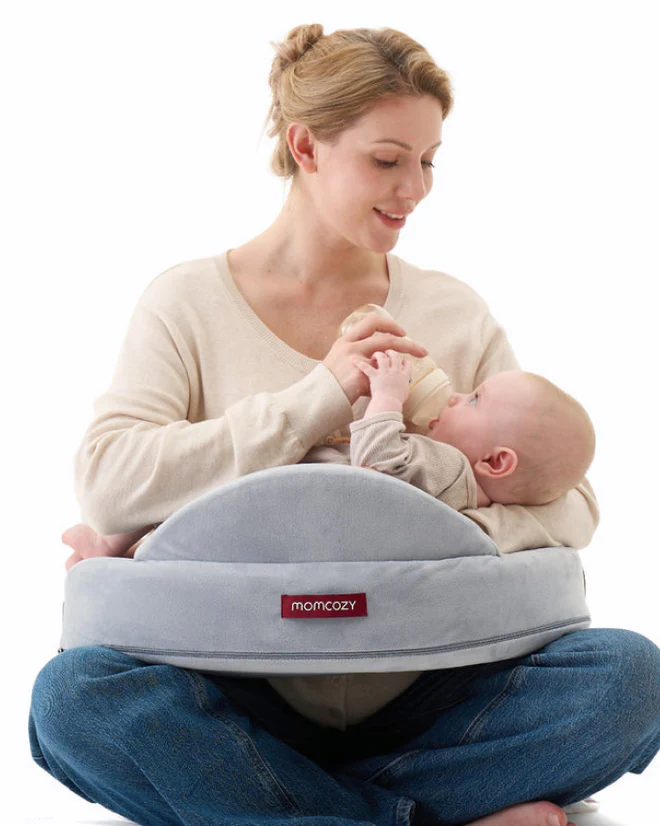
Why the Right Pillow Helps So Much
It fills the gaps your body suddenly notices
Pregnancy changes how your weight rests on the bed. Areas that used to feel fine, like the space under your belly, between your knees, or behind your back, can start pulling on your hips, pelvis, and lower back. A good maternity pillow helps fill those empty spaces so your body is not twisting all night.
That matters more than the pillow’s shape name. The real job is simple: keep your spine, hips, and legs in a more neutral line while taking pressure off sore spots. Support under the belly can reduce that dragging feeling. Support between the knees and ankles can ease hip strain. A little support behind the back can make side sleeping feel less fragile.
Better support usually means less fighting the bed
Many pregnant moms are not just tired. They are tired and uncomfortable. WebMD and CHI Health both describe how side sleeping can bring on neck, shoulder, and hip pain if the body is not supported well, especially on a soft mattress. That is often why a regular bed pillow helps for 10 minutes and then slips away.
A maternity pillow can also make movement easier, not harder, if it matches your real pain points. If your main problem is one sore hip, a smaller setup may work better than a giant full-body pillow. If you need front-and-back support because you keep rolling or feel unstable, a larger body pillow can be worth the bed space.
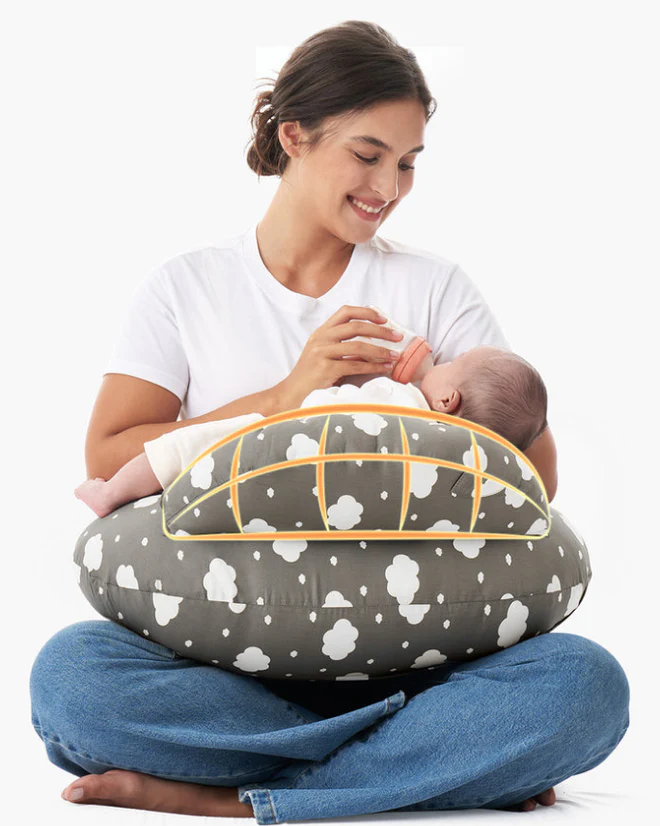
Side Sleeping Guidance, Without Panic
Early and mid-pregnancy: reassurance matters
Here is the plain version: you do not need to panic if you wake up on your back early in pregnancy or even through much of the second trimester. The NICHD summary of NIH-funded research found that back or side sleeping through the 30th week was not linked to higher risk of stillbirth, growth problems, or high blood pressure disorders in pregnancy.
Later in pregnancy, especially in the third trimester, the advice shifts toward going to sleep on your side. Tommy’s and many OB resources use a calm, practical message: aim to fall asleep on either side, and if you wake up on your back, just roll back onto your side. Either side is okay. Left side may feel best for some people, but this is not a test you need to pass perfectly.
What is common, and what needs a call
Common:
Waking up on your back sometimes
Needing more pillows as your belly grows
Hip soreness from side sleeping
Feeling like one side is comfortable for only part of the night
Having to prop yourself up a bit for heartburn
Call your clinician promptly if you have:
Vaginal bleeding
Leaking fluid
Regular contractions before term
New trouble breathing, especially when lying flat
A severe headache, vision changes, or sudden swelling in your face or hands
Baby moving less than usual later in pregnancy
That split matters. Position discomfort is common. Warning signs are different, and they deserve actual medical care, not just a pillow adjustment.
Pillow Setups You Can Try Tonight
The easiest fixes for hip, back, and belly pressure
If side sleeping hurts, start small. Bend your knees slightly, place a pillow between your knees and ankles, and add a second pillow or small wedge under your belly. If your back feels exposed or you keep rolling, place a pillow behind you. CHI Health also suggests filling the gap between your ribs and the mattress with a towel or small pillow if your waist feels unsupported.
If heartburn is the problem, raise your upper body a little instead of stacking your neck forward. If you feel short of breath late in pregnancy, side lying with support usually feels better than flat-on-back rest. If you have been a lifelong back sleeper, try a wedge or propped position while settling down, then let your body shift to a supported side position.
Which style helps which problem
You do not need the biggest pillow on the market. You need the one that matches your body and your night.
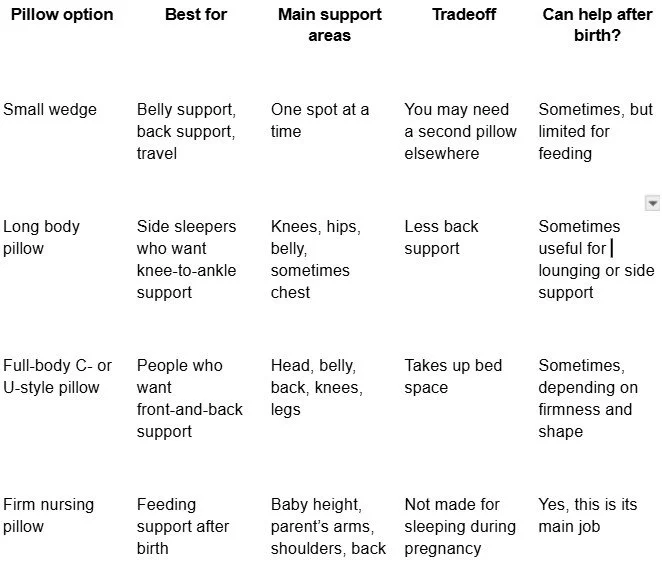
A useful rule is this: if your pain is very specific, go smaller first. If your whole body feels hard to settle, a fuller pillow may make more sense. If you are comparing a large all-in-one shape with piecing together separate pillows, an F-shaped option such as the Original F Shaped Pregnancy Pillows with Adjustable Wedge Pillow can be one middle-ground approach because it pairs a full-body shape with an adjustable wedge.
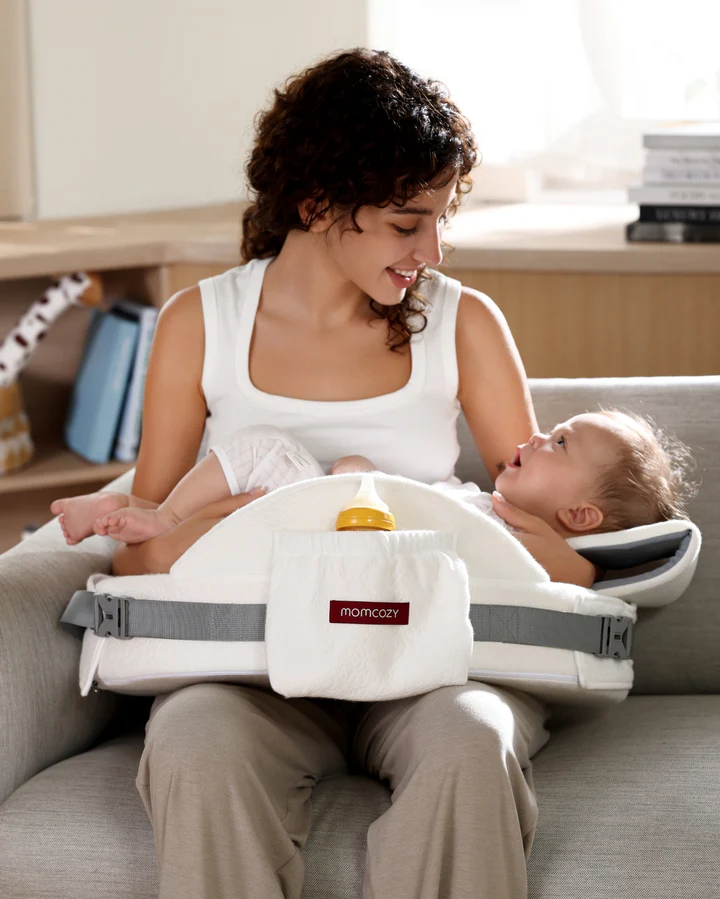
What to Look for in a High-Quality Maternity Pillow
Choose support before marketing
A high-quality pillow should hold you up without collapsing flat. If you sink straight through it, it will not keep your hips and spine aligned for long. If it is too firm, it can feel like sleeping against luggage. The sweet spot is support with a little give.
Fill matters here. Sleep Foundation notes that polyester fiberfill is common in larger pregnancy pillows because it is soft, supportive, breathable, budget-friendlier, and usually easy to clean. Memory foam contours well and can feel great in smaller wedges, but it may sleep warmer. If you already run hot at night, that detail matters more than the product photos.
Think about bed space, washability, and real life
A pillow can be wonderful in theory and still fail in your bedroom. If you share a bed, a giant pillow may become one more thing to wrestle with at 3:00 AM. If you like your own head pillow, make sure a full-body style will let you keep it. If you move from bed to couch often, a lighter or modular option may get used more.
Washability is not a bonus. It is basic. Look for a removable, machine-washable cover. In pregnancy and postpartum life, sweat, lotion, milk drips, and spit-up happen. A pillow that is too fussy to clean usually becomes annoying fast.
Can One Pillow Work for Pregnancy and Nursing?
Sometimes yes, but not always equally well
Some full-body maternity pillows do stay useful after birth. They can help with side-lying rest, propping your arms, or making a couch or bed more comfortable during recovery. That is especially welcome if you are sore, healing from a C-section, or just spending a lot of time sitting with a newborn.
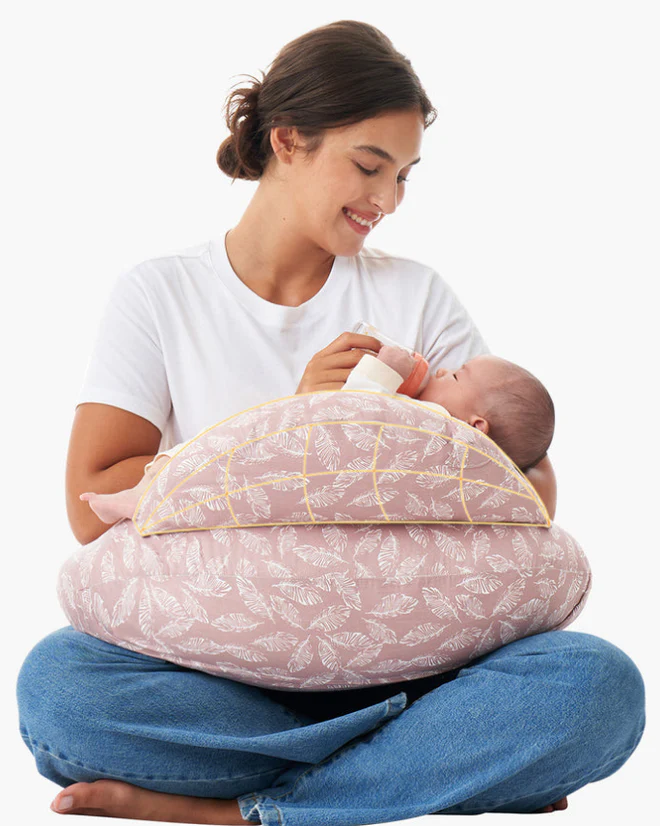
But a sleep pillow and a nursing pillow are not the same tool. A pregnancy pillow is meant to support your body while resting. A nursing pillow is meant to raise and support the baby during feeding while you are seated and awake. If you want one product to do both, check whether it is firm enough for feeding and practical enough to position around your waist without constant slipping.
Feeding comfort matters because you repeat it all day
A newborn typically feeds 10 to 12 times a day, often every two to three hours. That means even small posture problems add up. A good nursing setup brings the baby to you instead of making you hunch down to the baby. That can ease strain in the neck, shoulders, arms, and lower back.
This is also where firmness becomes important. Many parents find a firmer feeding pillow easier than regular bed pillows because it stays in place. For some families, especially after a C-section, a pillow can also create a buffer between the baby and the abdomen. Helpful does not mean required, though. Feeding can go well without a special pillow, but the right one can make the hours much easier on your body.
Safe Nursing Support After Baby Arrives
Use feeding pillows for feeding, not for sleep
This is the part worth being very direct about: a nursing pillow is not a safe sleep space for a baby. Consumer Reports noted that nursing pillows were linked to more than 150 infant deaths between 2010 and 2022, mostly when they were used for sleep, propping, or unsupervised lounging. HealthyChildren and the American Academy of Pediatrics make the same point in simpler terms: babies should sleep on a firm, flat surface, on their backs, in a crib, bassinet, or play yard.
That means no naps on the nursing pillow, no leaving baby propped there after feeding, and no carrying baby in or on it. If baby falls asleep while feeding, move them to a safe sleep space as soon as you can do so safely.
What safer use looks like
Use the pillow while you are seated, awake, and watching the baby closely. Keep the baby close enough that you do not need to lean forward. A helpful cue from Consumer Reports is that your baby should be close enough to kiss. If you are breastfeeding, turn the baby fully toward you rather than feeding with the head turned away. If you are bottle-feeding, a more upright position often works better.
If you are shopping new, it is also worth knowing that the CPSC’s stricter U.S. nursing pillow standard applies to products manufactured after April 23, 2025. That does not mean every older pillow is unsafe in every moment, but it does mean hand-me-downs deserve a harder look, especially if they are very soft, deep, or shaped in a way that could let a baby sink in.
FAQ
These are the questions many parents ask when they are tired, uncomfortable, and trying not to overthink every bedtime choice.
Q: Do I need a maternity pillow in the first trimester? A: Not necessarily. Some people want one early because of breast tenderness, bloating, or old back and hip pain. Others do not need one until the second or third trimester. Start when your usual sleep setup stops working, not because a calendar says you should.
Q: Is it bad if I wake up on my back? A: Usually, no need to panic. The NIH-funded study up to 30 weeks was reassuring, and later-pregnancy advice is simply to return to your side when you notice. If lying flat makes you dizzy, breathless, or unwell, use more support and mention it to your clinician.
Q: Can I just use regular pillows instead? A: Yes, sometimes. A lot of parents do well with two or three regular pillows: one between the knees, one under the belly, and one behind the back. A dedicated maternity or nursing pillow becomes more useful when regular pillows slide, flatten, or need constant adjusting.
Practical Next Steps
The best pillow setup is the one that makes tonight easier and tomorrow less sore. Think in this order: where it hurts, how you sleep, how much bed space you can spare, and whether you want postpartum feeding help too.
Action checklist:
Notice your main problem first: hip pain, belly pull, back strain, heartburn, or rolling onto your back.
Try a simple side-sleep setup tonight with one pillow between the knees and ankles and one under the belly.
Add a pillow behind your back if you feel unstable or keep rolling.
If your pain is focused in one area, consider a wedge before buying a large full-body pillow.
If you want postpartum use too, check firmness, waist fit, and washable covers before you buy.
Use any nursing pillow only while awake and feeding, never as a baby sleep space.
Call your clinician if discomfort comes with bleeding, leaking fluid, trouble breathing, severe headache, or less fetal movement.
A high-quality maternity pillow is not about having more gear. It is about giving your body support exactly when sleep, recovery, and feeding ask the most from it.


Since the beginning of summer, the question has been raised as to whether the United States is experiencing a food safety outbreak; while some clinical cases remain within average ranges, others exceed them, leaving the public with an unsettling impression.