Alexis Plaen Invites You to "Enjoy the Void"
Photo courtesy of Alexis Plaen
Chicago-based singer-songwriter Alexis Plaen just released her new album, “Enjoy the Void.” The project was born out of the mass isolation felt during the recent COVID-19 lockdown and carries a confrontational energy towards society. Incorporating activism into her music, Plaen has performed at benefit concerts to provide support for families in Gaza and hosted her album listening party in partnership with the mutual aid group Yardsales against F4ascism. To learn more about Alexis Plaen and the Void, read on.
Where are you based?
Chicago, IL
What inspired you to start making music?
I’ve loved to sing since I was little, and songs started coming to me at a pretty young age. Learning instruments was just a way to bring my writing to life, and writing has always been an important emotional outlet for me to understand what I’m feeling and going through. It was born out of a place of both joy and necessity.
Congratulations on your new album ‘Enjoy the Void’! What inspired this album? What are some things listeners can expect to hear from it?
Thank you! Most of this album was written during the COVID-19 pandemic while in quarantine. It was born out of isolation and as a confrontation of the many downfalls of society, and ultimately seeks human connection as a way out of these dark mental spaces. I describe the album’s story as a “journey through an existential crisis”, and this interpretation is deeply inspired by my mental health experience as a teenager which was wrought with existential questions and no way to resolve them. Over the years, studying philosophy and spirituality has helped me to reframe these existential questions, and it has really changed my life. I figured that if this kind of art was something that I needed at one point in my life, then there has to be other people out there who would benefit from it too. Listeners can expect to hear a lot of genre exploration, introspective moments, epic arrangements, and hopefully some thought-provoking questions that encourage them to dig deeper.
What is the “Void” to you and what does “Enjoy the Void” mean to you?
The Void represents a few things to me — it’s the space that encompasses all of existence, and at the same time it’s something that exists inside of us. There is a cognitive dissonance that comes from being human, it stems from us being self-aware creatures who long for meaning and purpose, and yet we exist in a cold, silent universe that provides no official answers to our deepest existential questions. This is the void, and philosopher Albert Camus also refers to this as “the absurd” in his essay The Myth of Sisyphus (which deeply impacted the world of the album, you can even spot the book in the album announcement trailer). By the end of his essay, he comes to a conclusion that humans need to confront and rebel against this meaninglessness rather than give into despair, and this is essentially the takeaway from the album and its title, Enjoy the Void. The narrator first confronts the absurd and then learns to live in spite of it — not by denying its existence, but by recognizing this void and choosing to build your own meaning anyway. In the album’s story, the Void is brought to life as an abstract, surrealist mental space that you go to when you’re on this personal journey of confronting the absurd and finding meaning.
Your fourth single release, “Temporary Creatures,” is a bold punk narrative. What is the story behind this song?
This song was written at the very beginning of the COVID-19 pandemic, and it was a time when we as a society were confronted with our own mortality in a way that I think my generation had yet to experience. Every time you opened your phone, you were informed of the most recent death toll. I find it very interesting how humans tend to run towards the things that make us feel like we’ll live forever (drugs, sex, religion, etc.), when that kind of mindset can actually make you miss out on what’s in front of you. The unspoken message of the song is that perhaps we should live like we are going to die, because that awareness just makes you use your limited time that much more intentionally. When you really sit with the idea of your own impermanence, you can’t help but live differently.
Photo courtesy of Alexis Plaen
On the tracklist for “Enjoy the Void,” you have a few short songs, “Daughter of Xaos,” “Web of Echos,” and “Voided,” that play more into building an atmosphere around the album. Why did you decide you wanted to add these and how do they work to connect with the other songs on the album?
There was always a plan to have an album intro and outro as sort of conceptual bookends to the record, emphasizing the growth that happens between the beginning and end of the story. The “Daughter of Xaos” interlude began as less of a creative decision and more of a practical one. The song before that interlude, “Come Clean”, is the heaviest track on the album, and it transitions into the most electronic song on the record, “Needle in a Groove”. The sonic difference between the two really required a transition to make the album playthrough less jarring. Transformation is a big theme on the album, and we leaned into that for this glitchy, cinematic transition that ended up becoming a narrative touchstone of the record — representing a shadow self that emerges from this Void mental space. And then, because the rest of the album’s A and B sides are direct mirrors of each other (either thematically or sonically), it only made sense to even out the mirror by adding an additional interlude on the B side, “Web of Echoes”. This interlude acts as more of a meditation that leads to realization, and we amplify this by using binaural beats in the arrangement to encourage the listener to enter that introspective headspace.
A lot of your lyricism focuses on exploring themes of existentialism in a capitalist society. With the direction the U.S. is heading in, why is writing about these themes important to you?
Oh boy, I could write a book about this. Currently in the U.S., we are living under late-stage capitalism and so many of our society’s current struggles are directly tied to this crumbling institution. The core philosophy around capitalism requires continual growth year after year, and over a long period of time, the only way you can continue that trend is by making significant sacrifices at the expense of the workers, consumers, and environment, with only those at the very top benefitting. American media and education strongly condition us to believe our country and our economic system are the best things to have ever existed. I believe that the majority of people want the same things, yet many cannot see the flaws in our current system because of their own conditioned beliefs and what we’re taught. In order to actually change anything and build a system that works for everyone, we first need to recognize our current system for what it is, and recognize that it’s unfortunately working in exactly the way that it was designed to. This is where art comes in, and I hope writing about these themes can shake at least one listener to make them question any false narratives about our society that they’ve accepted to be true. Change and progress can be slow, but it starts at the individual level — which makes art the perfect vehicle for evolution.
What do you hope listeners take away from your music?
I hope listeners take away some thought-provoking questions that encourage them to self-reflect and dive deeper into themselves and their communities. My house burned down during the making of this record, and that experience really led to this body of work becoming a map of my healing journey and my way back to my community — and I say the word “map” very intentionally, as I hope that others can follow it and hopefully find some healing themselves.
Earlier this year you performed at a benefit concert in Chicago for families in Gaza and Lebanon. Can you tell us more about this concert and how you got involved? What organizations were the funds donated to?
Yes! So one of my good friends, Sabrina Ali, is Lebanese and she visited her family in Lebanon this past spring. Her family lives along the border of Palestine where there’s a history of Israeli military occupation, which leads to neighborhood conflicts. A lot of people don’t realize that Palestine is not the only country being affected by Israel’s violence — most of her family’s neighborhood had been flattened by bombs, and they are under constant surveillance by both Israeli armed forces and incessant drones flying overhead. Unfortunately while she was visiting, Israel began dropping bombs on their neighborhood for several hours. Thankfully her and her family were okay, but that’s a kind of trauma that stays with you, and that environment is disgustingly the normal day-to-day experience of her family members. I picked Sabs up from the airport when she landed home, and she immediately knew she wanted to do something here in Chicago to try and help. A lot of my friends are musicians, and she has organized fundraising events in the past, so it made a ton of sense for us to come together and put on a benefit concert. From our one small event, we raised $1.2k that went to the Lebanon Solidarity Collective and directly to families in Gaza under Watermelon Connections, and my friend has since gone on to organize larger benefits in other cities.
Photo courtesy of Alexis Plaen
You also hosted an album listening party in Chicago in partnership with the mutual aid organization Yardsales Against F4scism. Can you tell us a bit about this organization and why you decided to partner with them for your album listening party?
I did! So one of my closest and oldest friends (actually who I wrote “Evergreen” about) is involved with the local group, Yardsales Against F4scism, who organizes a biweekly sliding scale yardsale pop-up that donates all of their money to mutual aid efforts, primarily to families in Palestine. They were also involved in the benefit concert selling some goodies along with my merch, and having them do a pop-up at the listening party was kind of a no-brainer for me as an easy yet effective way for guests to give back, to boost visibility for these ongoing issues, and to encourage connection within our community. Community is a big theme on the album, and so we also had a custom-made mutual aid directory for the event that allowed guests to find a collective in their neighborhood.
How are you able to utilize music as a form of communication and connection for you? How does your humanitarian work tie into your music?
I’ve always felt a responsibility to try to leave this world better than I found it, and my art is just an extension of that. Writing songs is the best way I know how to communicate, and if I can use that unique skillset to talk about issues that need to be highlighted and hopefully enact some change, then why wouldn’t I? I don’t think you can separate art from the artist, as much as people might try, and I can only hope to continue building this platform as a force for good and real human connection.
What advice do you have for young girls looking to pursue music?
Oh gosh, so many things. But I would say the biggest is to be unapologetic, to take up space, and to like what you like without fear of judgement. Music is obviously a very male-dominated industry, and I think the best thing you can do is to trust your gut and try to block out the noise so that you can always hear your inner voice.
Are there any upcoming projects you are currently working on that we should be on the lookout for?
Always! There will be another evolution of Enjoy the Void that will come out next year along with the live show (I’m so excited!), and I have an exciting long-form visual collaboration that should be out before the end of the year.
Photo courtesy of Alexis Plaen
It has been a crazy few years, and we expect at least four more. How have you been staying positive?
To be completely honest, it depends on the day, and there have been a lot of days where it’s hard to stay positive. But what keeps me going in those moments is to seek out the acts of kindness that people are doing every day. I truly believe that humans are good at our core, even though we’re so often misled and hurt, but I think it is just a matter of time before it becomes too difficult for people to ignore the truth of our situation. Everything exists within patterns and cycles, and we’re just living through a very conservative swing of the pendulum. The reminder that, with our help, the pendulum will find its way back to a place of kindness and care helps to keep me grounded on those harder days.
What is your motto in life?
I would say that I have two — one from my mom, who always says “Just be.” For me it’s a reminder to stay present and that there is always peace amongst the chaos. It works for so many situations. And then the other comes from a more spiritual place, “Harm ye none”, which ties into my lifestyle ethos of harm reduction as a way of moving through the world (although this is not to be construed with complete pacifism).
To learn more about Alexis Plaen, please check out the links below:
Instagram
The groups I mentioned above are wonderful organizations and giving directly to mutual aid groups is one of the best things you can do:
Watermelon Connections
I also highly recommend seeking out or starting mutual aid groups within your own community! We need to take care of each other more now than ever.

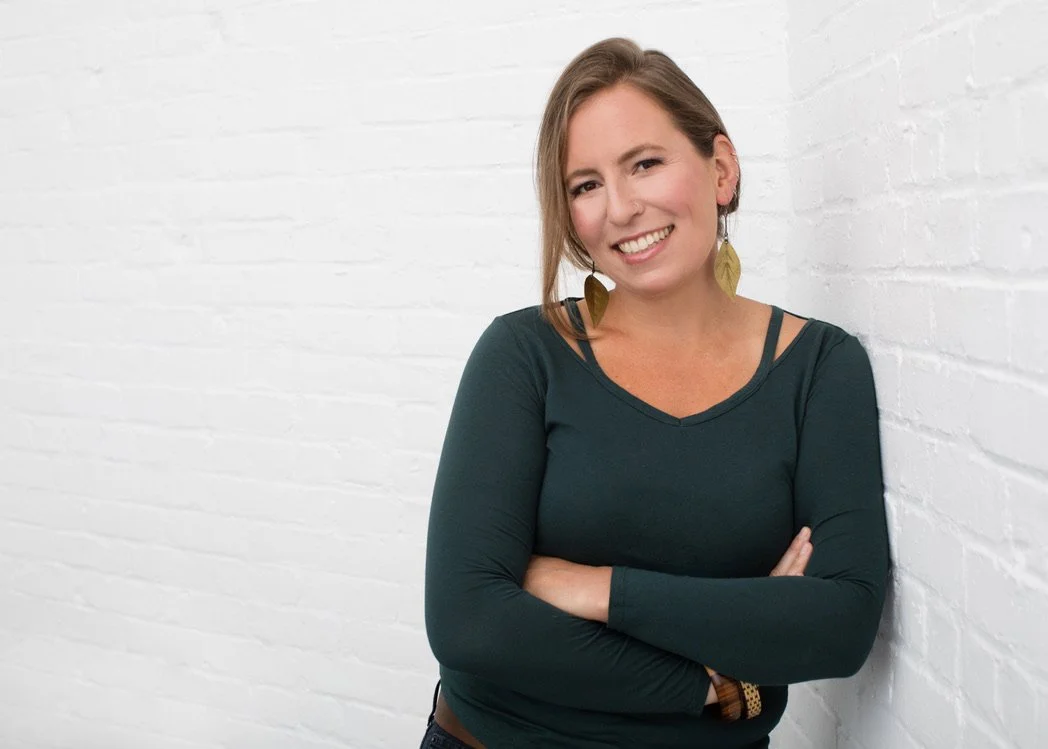
Sarah Louise is a UK-based songwriter specializing in contemporary pop. Through her music, she has found a way to support charities such as Cancer Research UK and Sands, as well as organizations like St Helena Hospice, The Royal British Legion, and Chain, while performing at numerous fundraising and community events and forging a path of humanitarian aid through song.