
Best Golf Simulators for Accurate Outdoor Course Experience
Most golfers don't realize how wide the gap is between a mediocre simulator setup and one that actually replicates outdoor ball flight. The best golf simulators close that gap with precise spin-rate capture, accurate launch-angle tracking, and course libraries that feel genuinely real. Choosing one gets complicated fast, especially when ceiling height limits your options, hardware costs stack up quickly, and budget constraints push you toward systems that underperform on mis-hit shots. After reviewing the top options across residential and commercial categories, this guide breaks down five of the strongest contenders on the market.
The vetting process for this list
Each option was assessed using publicly available information pulled from official websites, review platforms, and third-party directories. Product feature details, customer feedback patterns, and track records specific to the golf simulation space were all examined. Only companies with a documented history of performance in golf and sports entertainment made the final cut.
→ See the full research breakdown
Foresight Sports - Best for premium residential golf simulation and professional-grade launch monitor systems
Simply Golf Simulators - Best for golf simulator and equipment sales for residential and commercial customers
Red Stakes Golf - Best for golf simulation systems and in-home/commercial golf entertainment
LaunchPad Golf - Best for year-round golf entertainment and corporate/social gatherings
Friendly Golfer - Best for home golf simulator research and reviews
The Difference the Right Golf Simulators Makes
Picking the wrong simulator setup doesn't just waste money. It creates a frustrating practice environment where ball flight feels off, spin data doesn't match real-world results, and the whole experience loses its value fast.
Space constraints make this harder. Many home setups have ceiling-height limitations that rule out certain tracking systems entirely, and low-budget hardware often struggles to capture accurate spin rates during partial swings or mis-hits.
The right system changes all of that. Ball speed measurement stays within tight deviation ranges from real-world numbers, spin rate capture becomes consistent across shot types, and a strong course library keeps the experience fresh.
That kind of accuracy is what separates a simulator that genuinely improves your game from one that just fills a room.
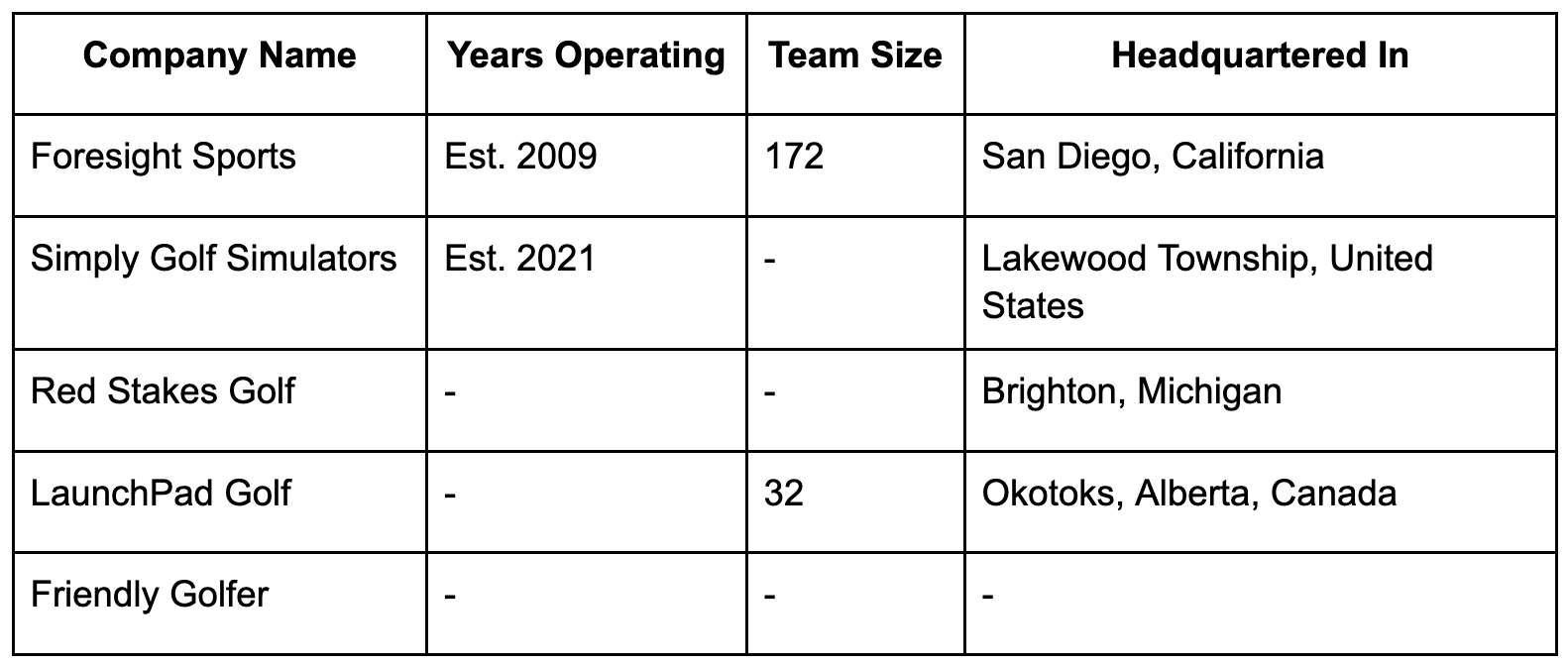
The 5 Best Golf Simulators: Quick Comparison
Note: All data in this table is sourced from review platforms and the official websites of the listed companies.
1) Foresight Sports - Best for Premium Residential Simulation and Professional-Grade Launch Monitors
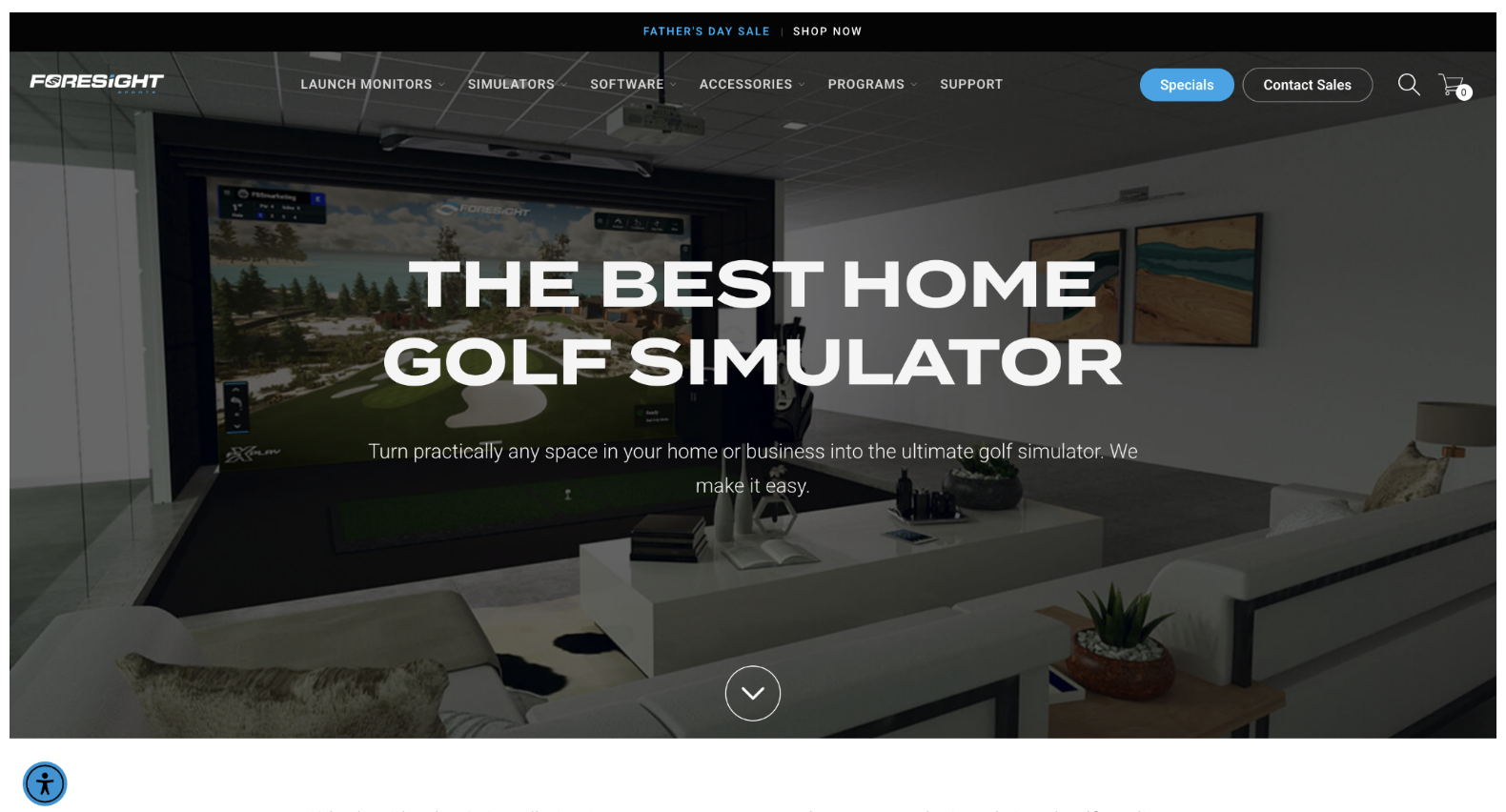
What Does Foresight Sports Offer?
Foresight Sports designs and manufactures launch monitors, simulation software, and smart mobility systems out of San Diego. They've deployed more than 15,000 GC launch monitors globally across retail, commercial, and residential settings. Golfers looking at golf simulators from Foresight Sports will find a fully integrated ecosystem, from hardware to software, built around professional-grade shot data accuracy. Their GCQuad launch monitor sits at the top of the product line, tracking ball speed, spin rate, launch angle, and smash factor with a level of precision that competing systems rarely match at scale.
Why Is Foresight Sports a Contender for Golf Simulators?
When accurate ball flight data isn't negotiable, Foresight Sports delivers a system built from the ground up for measurement precision rather than one patched together from general consumer tech. Four consecutive Golf Digest Editors' Choice Awards for the GCQuad, plus adoption by nearly 60% of competitors at the Fifth Major, show their approach holds up at the highest levels of play.
From the User Reviews:
Honestly, the feedback pattern around Foresight Sports is remarkably consistent. Equipment manufacturers, tour players, and media outlets all point to the same thing: accuracy and reliability you can count on across thousands of sessions. Users at both residential and commercial levels rarely question the data, which is a rare thing in this category.
2) Simply Golf Simulators - Best for Residential and Commercial Simulator Sales
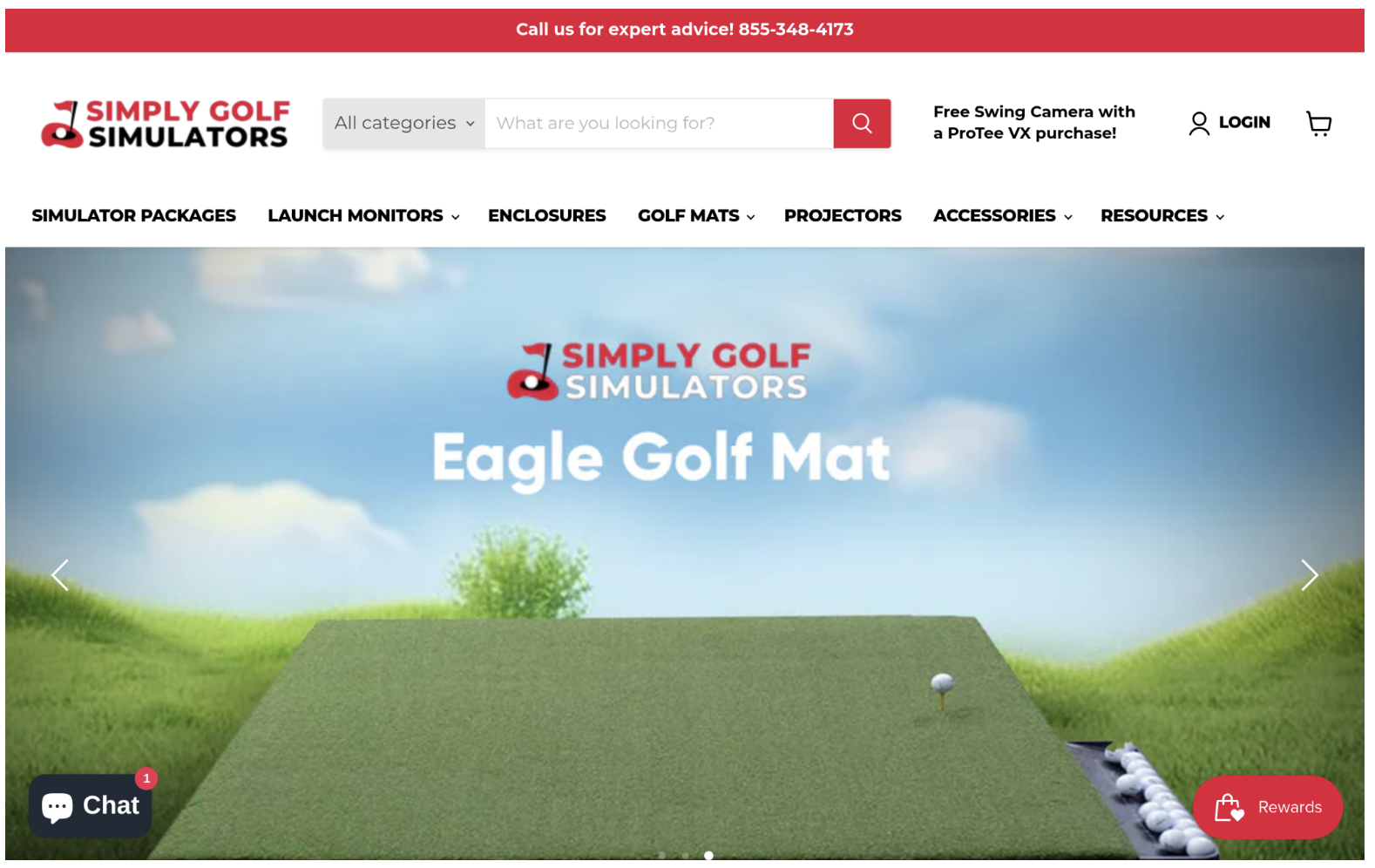
What Does Simply Golf Simulators Offer?
Simply Golf Simulators runs as an online retailer covering a wide range of simulator equipment including launch monitors, enclosures, hitting mats, projectors, putting greens, and full custom packages. They serve homeowners, training studios, golf shops, sports bars, and event spaces across the continental United States. What sets them apart from a standard equipment shop is their focus on carrying only premium products, backed by free shipping, a price matching guarantee, and a 30-day return policy that actually reduces the risk of buying a high-ticket item without seeing it in person first.
Why Is Simply Golf Simulators a Contender for Golf Simulators?
Buying a simulator without touching it first is a real concern for most customers. Simply Golf Simulators directly addresses that friction with buyer-friendly policies that remove the guesswork. Their award-winning customer service reputation, paired with regular free guides and blog content, makes them a genuinely useful resource rather than just a transactional storefront.
From the User Reviews:
Customers consistently point to the responsiveness and knowledge of the support team. The price matching guarantee comes up often as a deciding factor, and the return policy gives buyers real confidence when committing to larger purchases. That kind of trust is hard to manufacture.
3) Red Stakes Golf - Best for In-Home and Commercial Golf Simulation Systems
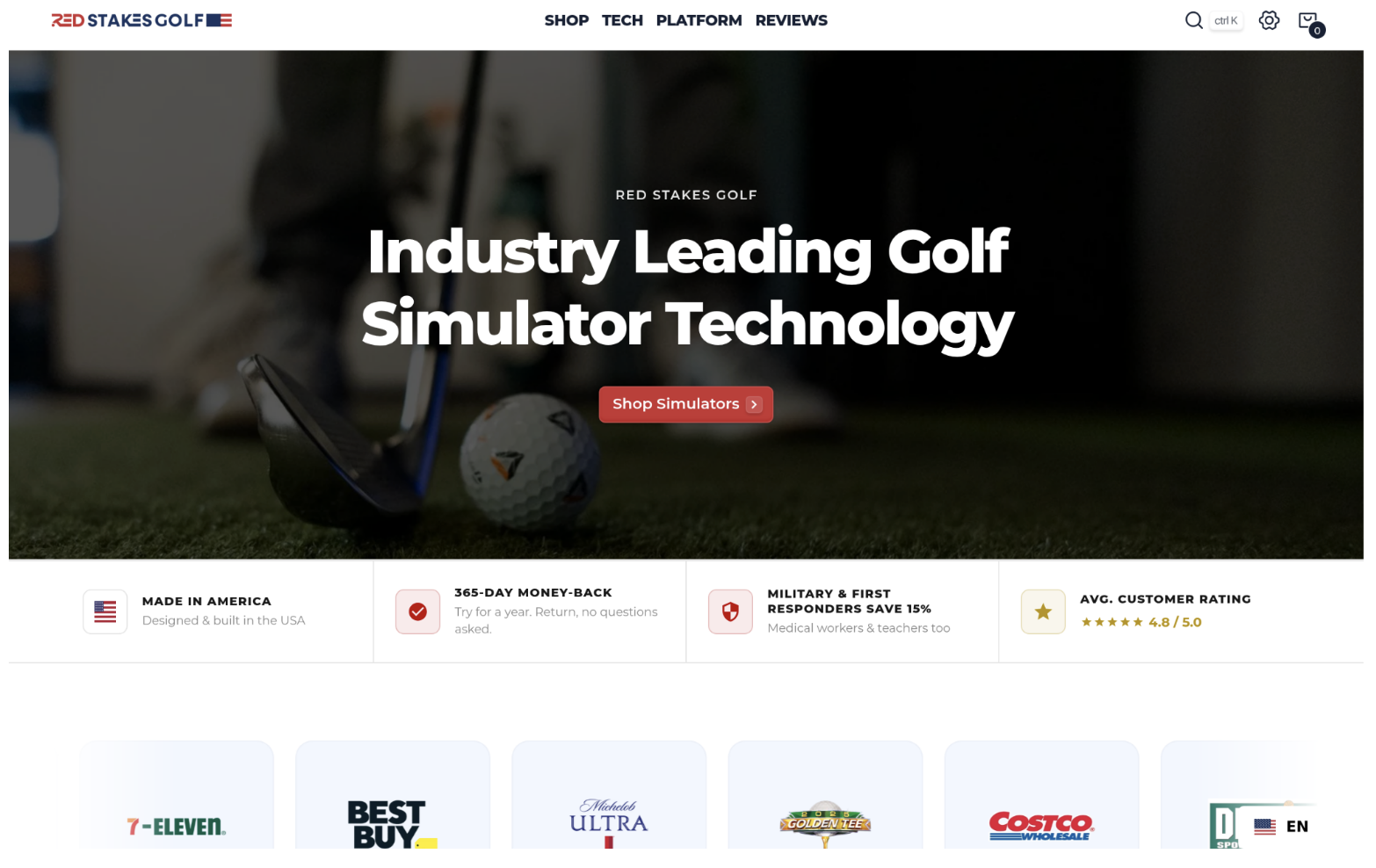
What Does Red Stakes Golf Offer?
Red Stakes Golf evolved from OptiShot Golf and brings over 100 years of combined industry experience to their Michigan-based operation. They offer three distinct hardware tiers, including the RSG Mobile, RSG One, and RSG Pro, along with the RSG Club digital platform for online tournaments and competitive play. Their proprietary camera tracking technology is American-made, which matters for users who prioritize domestic engineering standards and reliability. With more than 18,000 customers served, they've built a real track record across both casual home setups and more serious commercial installations.
Why Is Red Stakes Golf a Contender for Golf Simulators?
Finding a simulator that works equally well for a casual weekend golfer and a competitive player is a challenge most brands quietly sidestep. Red Stakes Golf tackles it directly with tiered hardware options built around the same tracking technology. Their digital competitive platform adds a layer of engagement that keeps users coming back well past the initial setup novelty.
From the User Reviews:
The brand's heritage in golf simulation, dating back to the OptiShot era, gives customers a sense of long-term stability that newer entrants can't replicate. Users appreciate the American manufacturing angle and the fact that the hardware tiers let them grow into a more advanced setup without switching ecosystems entirely.
4) LaunchPad Golf - Best for Year-Round Golf Entertainment and Corporate Events
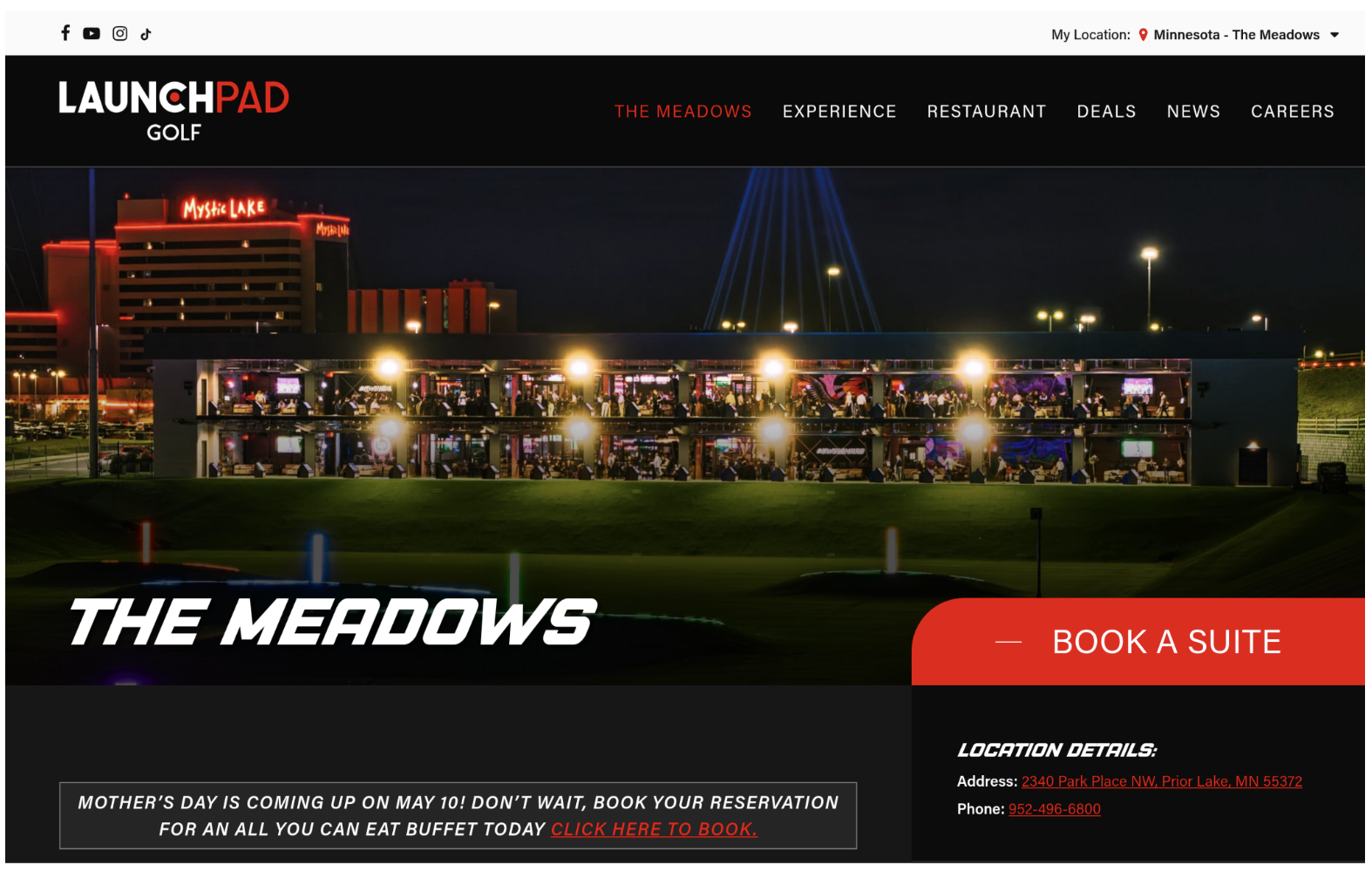
What Does LaunchPad Golf Offer?
LaunchPad Golf runs full-facility golf entertainment venues combining heated golf suites, driving ranges, dining, and bars with their award-winning Inrange radar ball tracking technology. Their gameplay modes are built for groups, making them a strong fit for corporate events and social gatherings where not everyone at the bay is a serious golfer. With established Canadian locations and active expansion into the United States through a partnership with the Shakopee Mdewakanton Sioux Community, they're scaling a model that balances serious practice with genuine entertainment value.
Why Is LaunchPad Golf a Contender for Golf Simulators?
Venues that need to serve both the scratch golfer and the first-timer in the same bay face a genuinely difficult design problem. LaunchPad Golf's Inrange radar technology handles that range without compromising tracking accuracy for either type of player. Their expansion into the US market signals real confidence in the model, and that kind of growth is worth paying attention to.
From the User Reviews:
The facility experience gets consistent praise for atmosphere, with guests pointing to the combination of quality ball tracking and social-friendly venue design. Corporate clients are especially positive about how well the gameplay modes work for mixed-skill groups. (Not cheap for private event bookings, but the feedback suggests it's worth it.)
5) Friendly Golfer - Best for Home Golf Simulator Research and Reviews
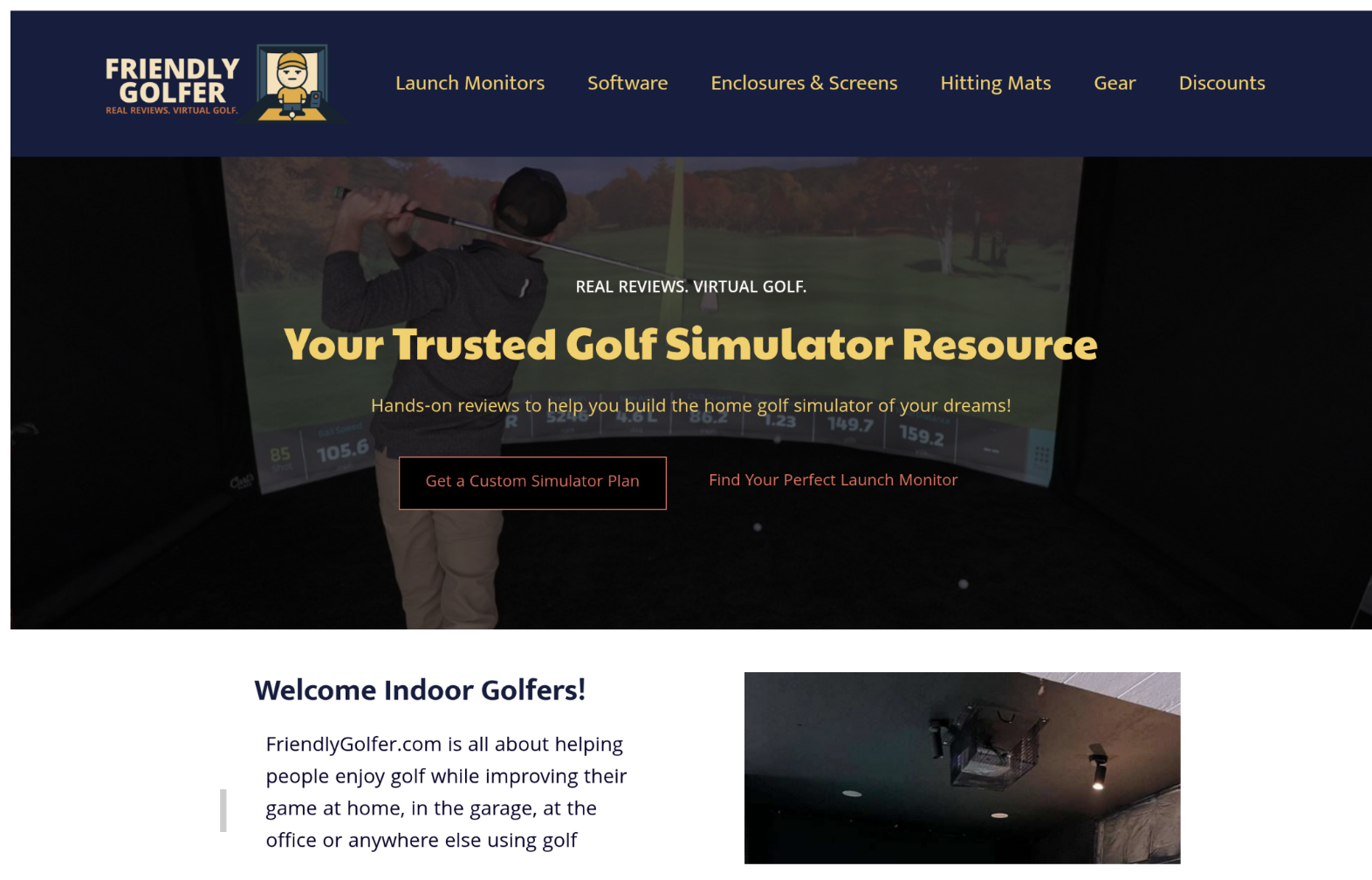
What Does Friendly Golfer Offer?
Friendly Golfer runs as a dedicated review and information resource focused entirely on home golf simulator technology. The site covers launch monitors, screens, enclosures, hitting mats, and simulation software, aiming to be the most comprehensive reference for anyone building a home simulator. Rather than selling products, they explain them, which is genuinely useful in a category where the wrong hardware choice can cost you thousands. Their niche focus gives the content a depth that broader golf publications rarely match.
Why Is Friendly Golfer a Contender for Golf Simulators?
Most buyers enter the home simulator market without a clear sense of what camera-based versus radar-based tracking actually means for their setup. That's exactly the kind of confusion Friendly Golfer's content is built to clear up. The exclusive focus on simulator education rather than sales means the guidance stays practical and uncluttered by commercial agendas.
From the User Reviews:
Readers tend to describe Friendly Golfer as a starting point they return to throughout the buying process. The appeal is straightforwardness: no excessive jargon, no product-pushing, just clear explanations of how each piece of equipment fits a specific use case. That kind of focused resource is rare in this segment.
The Process Behind This Ranking
Building a ranking of the best golf simulators required a structured research process grounded in verifiable data rather than surface-level impressions. Here's how each company was evaluated.
How Data Was Evaluated
The initial longlist was assembled by pulling from multiple source types: manufacturer websites, specialist retail directories, industry-specific review platforms, and published editorial roundups focused on golf simulation technology. The goal was to cast a wide net before narrowing down, so no strong contender would be missed because it operates in a specific segment (residential versus commercial, hardware versus content) rather than appearing across every category.
Each company's public-facing information was collected and logged, covering product lines, claimed features, target customer segments, geographic reach, and any documented partnerships or deployments.
Pre-Verification Phase
Before any deeper evaluation began, companies without a traceable track record in the golf simulation space were removed. This meant checking whether the business had been operating long enough to have real customer outcomes documented publicly. Companies with thin or unverifiable review histories were flagged and cut at this stage.
Review patterns were analyzed for consistency. A single cluster of reviews in a short window was weighted differently than a sustained pattern of feedback spread across multiple platforms and time periods.
The Verification Phase
Cross-referencing came next. Claims made on official websites were checked against what customers and third-party reviewers actually reported. Particular attention went to accuracy claims around ball flight, spin rate capture, and course library depth, since those are the metrics where simulator brands most often oversell.
Real-world results described in customer reviews were compared against the technical specs listed publicly. Where gaps appeared between claimed performance and reported experience, those were factored into the final assessment.
Tracking Authority Markers
Each company was assessed for signals that indicate standing within the golf simulation industry. Award recognition (such as Golf Digest Editors' Choice results), mentions in credible sports and golf publications, and endorsements from PGA professionals or tour players were all noted. These markers don't replace product evaluation, but they do confirm that a company's reputation has been tested beyond its own marketing.
Original research, proprietary tracking technology documentation, and any verified tournament or facility deployments were also logged here.
Golf Simulators Proof Points
The final check focused on golf and sports entertainment relevance. Each company needed dedicated service or product pages covering simulation-specific categories, verified reviews from golfers or facility operators (not just general consumers), and documented evidence of real installations or usage at scale. Companies that checked all of those boxes across multiple contexts made the final list.
How to Pick Your Best Match
Choosing among the best golf simulators comes down to matching the right system to your specific situation, whether that's a dedicated home bay, a commercial venue, or a research-first buying approach. Here are the factors worth examining before committing.
Industry/Domain Experience: Look for companies with documented history in golf simulation. Years in operation and number of installations tell you more than marketing copy.
Features and Services: Consider whether you need a full simulator package, standalone launch monitor hardware, or a venue-based experience. Not every company covers all three.
Pricing Structure: Costs range from mid-range retail packages to premium professional-grade systems (think enterprise pricing at the top end). Match the hardware tier to your actual usage frequency and skill level.
Results Measurement: Prioritize systems that track ball speed deviation from real-world numbers, spin rate precision, and launch angle accuracy. Those metrics determine whether the simulator actually helps your game.
Industry Knowledge and Compliance: For commercial installations, confirm the system meets R&A and USGA equipment conformance standards where applicable, and verify that the vendor has experience with space and ceiling height limitations relevant to your venue.
Closing Thoughts
Getting the right golf simulator takes more than picking the most expensive hardware on the market. Accuracy, space fit, course library depth, and support quality all shape whether the investment actually delivers over time. The five options covered here span residential setups, commercial venues, and specialized research resources, giving different buyer types a genuinely relevant starting point. As indoor golf simulation keeps growing in both technology and accessibility, the gap between the best systems and the rest will only get wider.


On August 25, just last week, the world came to a standstill when the news dropped that icon of music history Dolly Parton passed away at the age of 80. I was lucky enough to have visited Dollywood with my family in 2016 when I was about 11, and Parton has always had a strong significance in my life because of this.