
Our Favorite Progressive Candidates in 2026 - Evan Smith, Maryland House of Delegates District 28
Most elected members of the lower houses of both state and federal governments serve for two year terms. However, in Maryland, both Senators (upper) and Delegates (lower) serve 4-year terms concurrently. This fall will be the first election for the Maryland General Assembly since 2022.
Evan Smith (he/him) is a Gen Z democratic socialist candidate running from southern Maryland running for Delegate. He is the communications director of the Young Democrats of Southern Maryland. A former D2 track athlete, Evan is primarily focusing on public transit and the affordability crisis in his campaign. Should he be elected, he will be the youngest delegate and the only one born in the 21st Century.
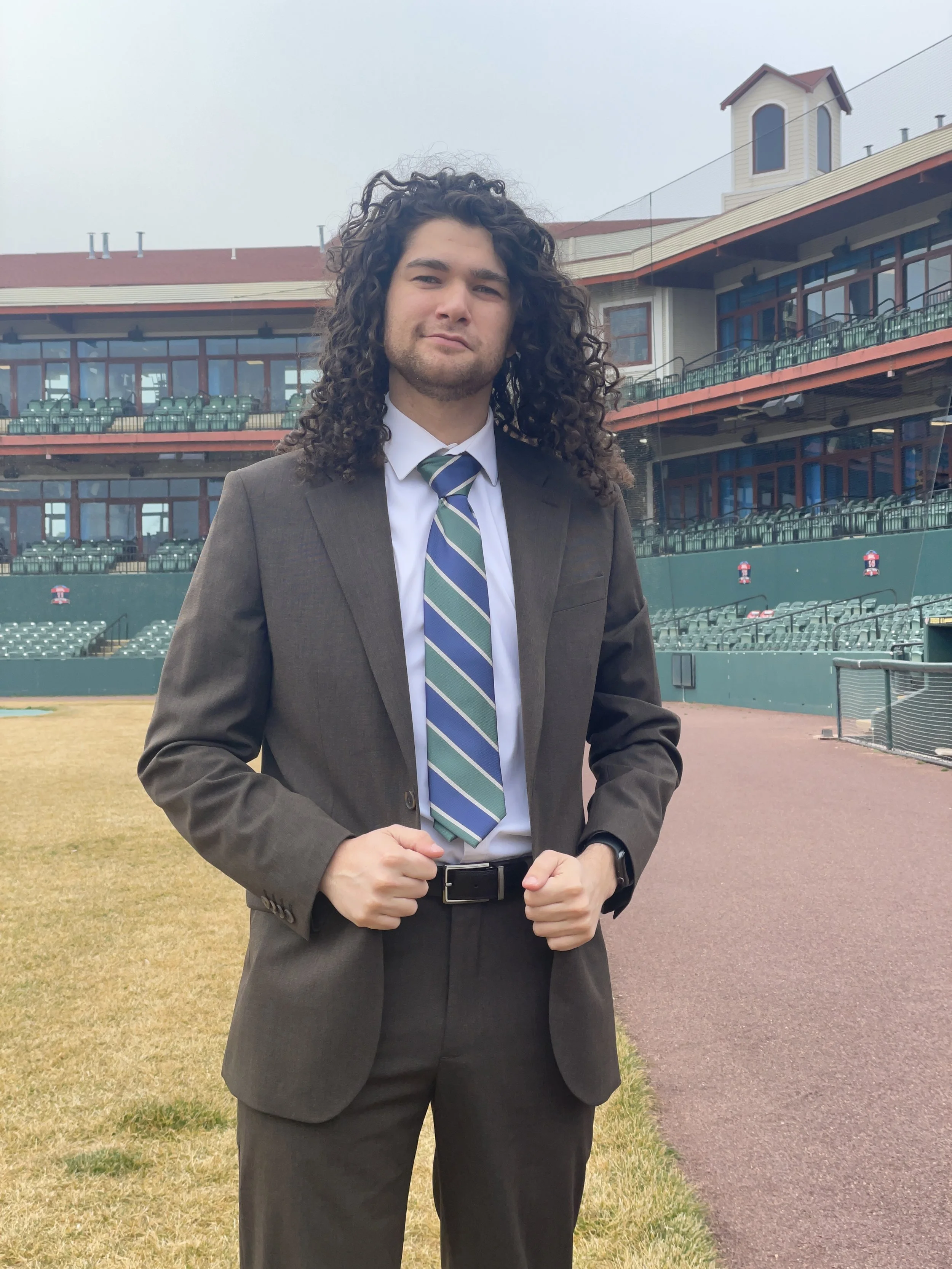
© Evan Smith
Where are you based?
Waldorf, Maryland
What position are you running for?
I'm running for Maryland State Delegate in District 28, which covers most of Charles County.
How would you briefly summarize your platform?
I identify as a democratic socialist, and I'm educated as a chemical engineer. I believe in bringing public transit to our area, keeping ICE out of the state, and doing more to address the affordability crisis we find ourselves in. As part of that last point, I think reforming our energy grid to run better with green generation and keeping out data centers will do a lot to keep utility bills down. I also think fixing the tax code to be more progressive (in the sense of additional brackets) and reclaiming public services like healthcare would do a lot to make us more fiscally responsible.
Ultimately, I'm running to bring change to Maryland politics, and to make sure our energy is directed in healthier directions in our future. I'm hoping to invite labor and youth into the political process that they've been so long excluded from.
What inspired you to run?
Many heroes of mine started getting involved in politics at a young age, and I felt it would be cowardly of me if I did not try. Huey Long got involved in politics and organizing in his 20s, and Fred Hampton did it as a teenager. I also felt and feel that if drastic action is not taken, Charles County could and would develop itself in a really short-sighted way, purely by viewing additional suburbia as additional tax revenue.
Additionally, there are currently only two candidates endorsed by DSA in the whole of the Maryland General Assembly. And while I like [DSA] Delegate [Gabriel] Acevero a lot, all on his own he cannot act as strongly as he might otherwise be able to. I want to join forces with him, and to bolster his efforts to enact progressive reform in the legislature. Otherwise, bills like HB1184, which would have divested nonprofits from Israel, will continue to die quietly in committee.
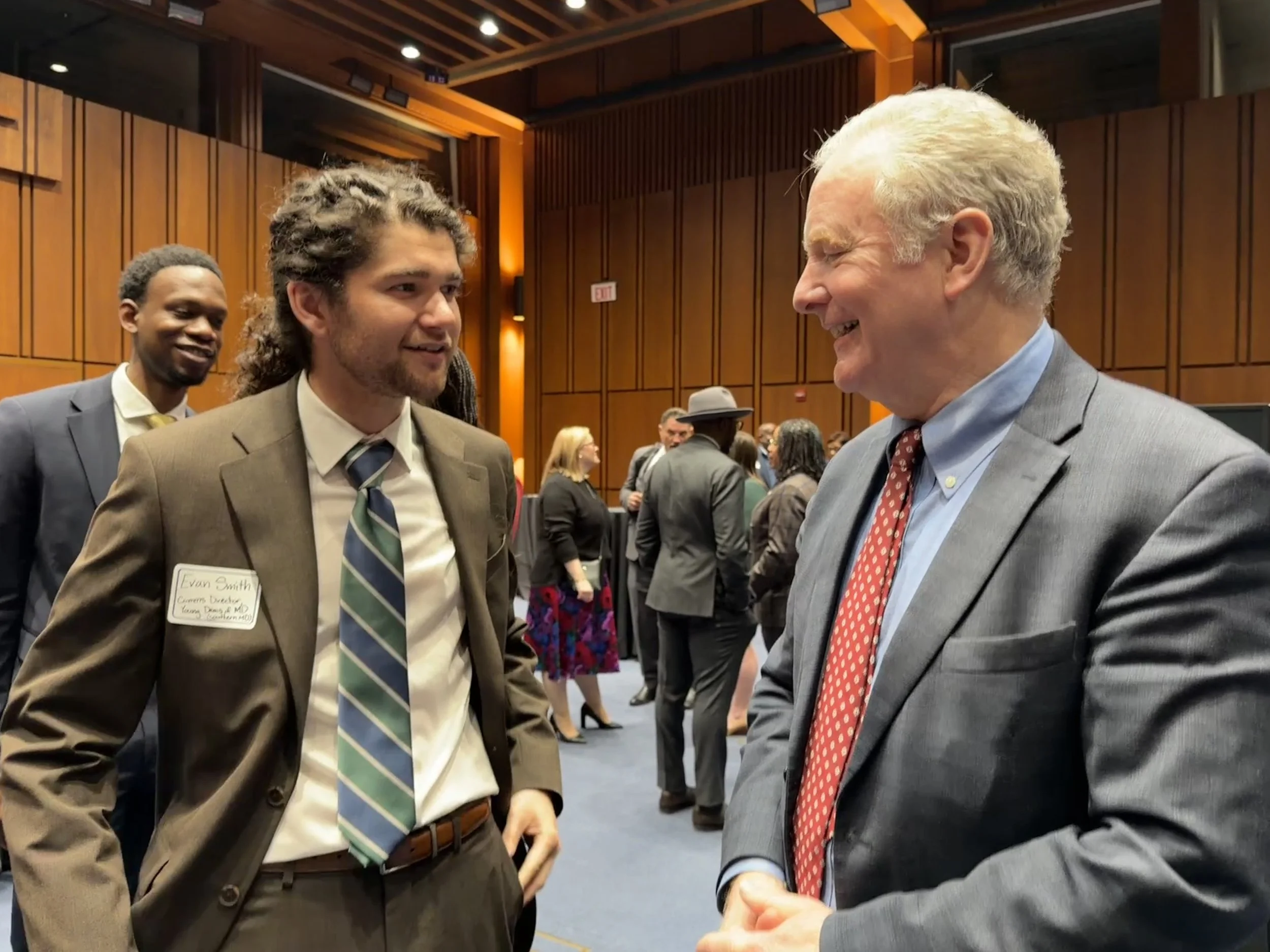
© Khin-Rupa Maung
What change are you hoping to bring to your district and country?
I feel that Charles County is genuinely under threat, both from over-development wreaking suburban hell across our county, and from developers looking to bring cheap, profitable construction to the area with little to no regard for the well-being of our community. I'm not some rural iconoclast, automatically opposed to any and all development that can take place. But when data centers are prioritized so heavily over public transit, knowing the former will worsen our existing problems and the latter will alleviate them, it becomes evident that there are clear problems in leadership that demand to be addressed.
I also want to help our schools. For all the investment we put into them, we get precious little return. I'm of the opinion that this is largely due to mismanagement, and a lack of willingness to learn from other countries' models for their systems. At a minimum, we should not have a majority of our children failing to read or do arithmetic at grade-appropriate levels. Like all long-term problems, it may not be immediately causing us issues, but it will absolutely do so down the line.
And lastly, I want to balance our state budget. A system run on debt cannot sustain itself, and Maryland is more than wealthy enough to be able to function appropriately. We should be setting a model for other states to follow, not trudging behind. Without a substantial restructuring of both how we acquire our revenue and what we spend it on, we will continue to overspend and under-deliver.
My hope is that, as a result of all this, as well as by my own direct action, I can bring DSA to greater prominence within the state, and thereby empower leftists long locked out of power.
What do you consider to be your major accomplishments so far?
Being that this is my first time running for office, I can't say that I myself enacted this or that law. I have, however, campaigned on behalf of HB1492, which made it through the House before being held up in the Senate. I have also rebuilt long-dormant relationships with labor in the district, and as a result of that have been endorsed by the AFL-CIO and most of its constituent unions. Even my campaign itself, despite being one of an outsider, has found great momentum and inspiration from regular people and voters who didn't expect anyone to care about their ideas and opinions. I think this is a great accomplishment already.
The goal right now is to build my accomplishments starting in office, and then to come back to you in two or four years and tell you about all that I was able to do in the meantime.
What do you feel are the most important issues right now, why, and how do you plan to tackle them?
Affordability is the biggest and most severe direct failure of policy. That much is clear. But the most important problem that I cannot alone solve is, in former President Carter's words, the "crisis of confidence" we find ourselves in now. People do not trust the government, and most damningly, they're right not to. Our leaders have failed to lead by example or principle, and the duopoly system of D vs. R is a suffocating space to try to carve out reform from.
The only way progressives and leftists can gain the necessary influence and power to materially change hearts and minds is by being everything that establishment Democrats are not. Instead of being elitist, we must be grassroots. Instead of overlooking rural, conservative areas, we must understand that there, more than anywhere, does the wound of classism bleed. And we cannot trust regular Democrats to yield to what the people demand until they are forced to.
America is extremely divided these days. How would you hope to bridge that divide with your constituents to better unite Americans?
I do not believe in conservatism. But I do think that the negative material reality of capitalism hurts all Americans, no matter what they believe. My hope is to serve all the citizens in my district well, regardless of how they think or feel about me, and I think the only way to convince them that I at least have that goal in my heart is to always be genuine with them. One of my most closely held beliefs in this race, and ultimately in politics, is that my only options are either to speak the truth or hold my tongue, and never to lie. People may not consciously perceive it or be aware of what their subconscious notices, but they will always lose faith in you when you become disingenuous.
So in short, I think that the only way to be a good bridge is to be honest, and to convince people on the other side that I am at least trying to help them, even if they disagree with my methods.
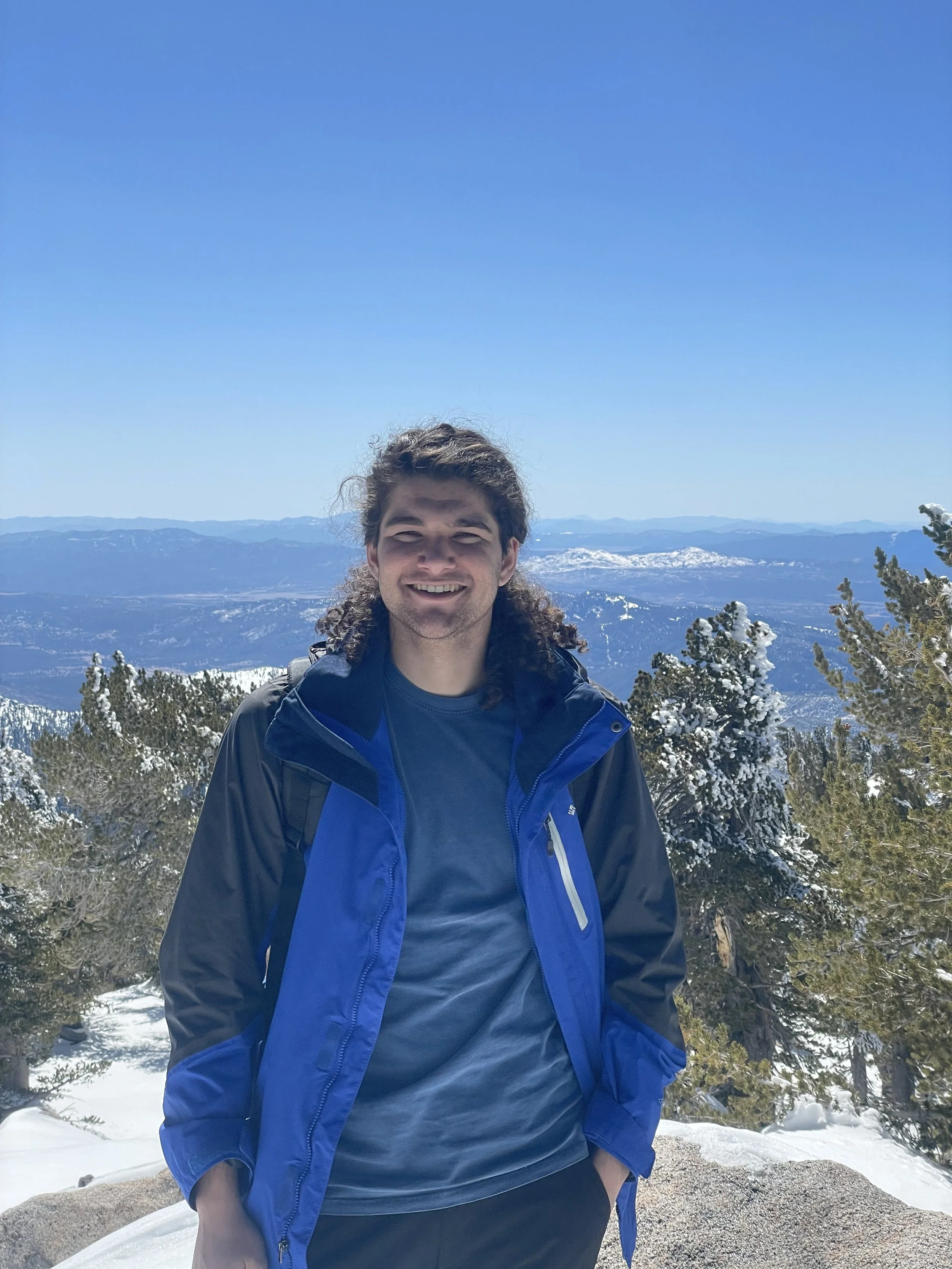
© Trisha Perea-Heid
How do you see your unique identity and background to be an asset to you in office?
As one of the youngest candidates running, and also bringing an engineering background to the legislature, I feel my expertise and perspective are necessary to actually have good governance. The median age in Maryland is about 39, and only about 4% of Maryland state lawmakers are under the age of 35. That means that nearly half of Marylanders are limited to a representation of 1 in 25, and the unique struggles they see at their age like trying and failing to break into the job market, not getting a house, not getting a degree... the severity of those problems simply isn't understood by many in older generations, and so is chronically underestimated. I also think that infrastructure needs to be built with a considerate eye. Many sweeping infrastructure projects were built and headed up by men with no prior background in urban planning, which leads to generations-long mistakes like those that Robert Moses made in the urban renewal of New York. My experience, by contrast, allows me to look farther into the future and understand what the long-term effects could be.
What is your motto in life?
If one is cautious about pursuing an unusual path, it may help you to remember that the cynics will be forgotten just as quickly as your failures will be.
Where can we find out more about you?
At my website! It's evansmithformaryland.com. I also have a Facebook and Twitter @Evan4MD. And if you can't get what you want to find out from any of those, feel free to shoot me an email. :)
To break the supermajority, one Democratic candidate who needs to win is Bride Rose Sweeney (she/her/hers), a current state representative representing West Cleveland and its western suburbs. First elected at age 25, this millennial has been in office for eight years and was the youngest Democratic member in the House during her first term. In 2022, she received an award from the Ohio Election Officials Association as a leading voice for democracy and voting rights. Bride is most passionate about funding schools fairly, eliminating political corruption, and investing in public transportation.