
How Sustainable Tote Bags Are Redefining Everyday Fashion
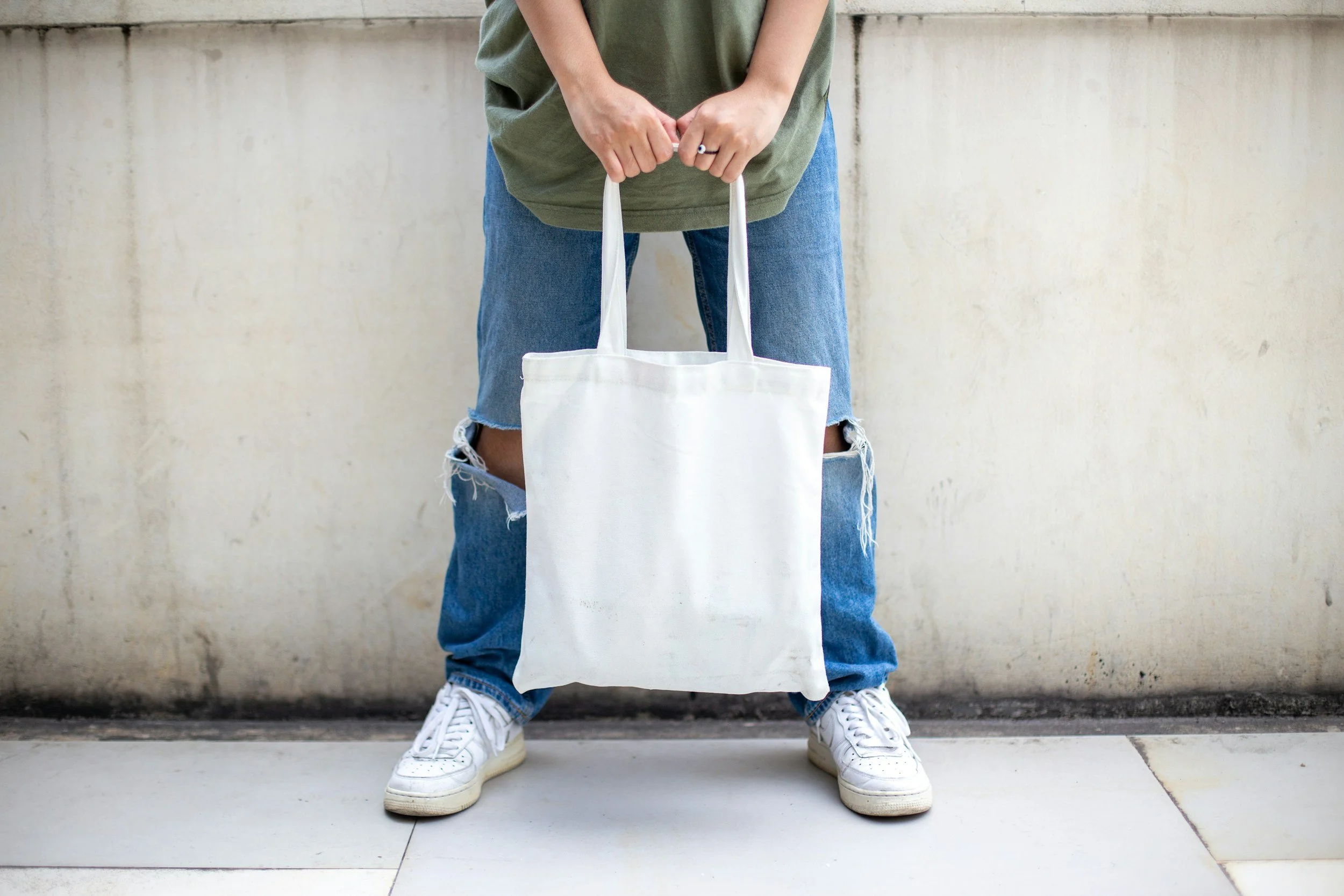
Sustainable tote bags redefine everyday fashion through reusable construction, considered material sourcing, and a long service life. Sustainable tote bags rely on fibers like organic cotton, hemp, recycled cotton, and recycled polyester, which lower dependence on virgin synthetics. Reinforced stitching, wide side gussets, and cotton webbing handles support loads of 20 to 30 pounds in a standard 15-inch shoulder tote. Repeated carrying replaces disposable plastic sacks at grocery chains, farmers' markets, and bookstores. Capacity turns a single bag into daily luggage for laptops, gym clothing, groceries, and books.
Sustainable tote bags now compete on appearance rather than utility alone, appearing in minimalist neutrals, screen-printed graphics, and oversized silhouettes. Labels like Baggu, Everlane, and Patagonia treat the tote as a wardrobe anchor beside denim, tailored trousers, and streetwear layers. Natural canvas in 10-ounce to 16-ounce weights holds structure, so the body keeps shape against a shoulder. Everyday fashion absorbed the format quickly, given that a flat front panel accepts embroidery, dye, and printed artwork without extra hardware. Buyers read durability, honest fiber content, and repeated wear as markers of quality.
Why Are Sustainable Tote Bags Becoming Popular in Everyday Fashion?
Sustainable tote bags are becoming popular in everyday fashion, since environmental awareness, reusability, and practical carrying capacity now shape shopping habits. Plastic bag charges across California, New Jersey, and the United Kingdom pushed shoppers toward durable alternatives at checkout. Grocery retailers like Trader Joe's and Whole Foods Market sell branded canvas versions beside the register, which normalized the format outside specialty stores. Versatility supports the shift, given that a 15-inch by 16-inch tote holds a 14-inch laptop, a water bottle, gym shoes, and a week of produce. Fashion appeal arrived through printed graphics, muted dye palettes, and structured 12-ounce canvas bodies that resist slumping. Independent studios, museums, and bookshops treat the front panel as a surface for typography and illustration. Cotton webbing handles at 24-inch to 28-inch drop lengths allow shoulder carry over coats and blazers, which suits commuting. Repair stays simple, because a torn seam accepts restitching at a local tailor. Reusable Tote Bags occupy the position where utility, low replacement frequency, and wardrobe styling overlap.
What Makes a Tote Bag Sustainable?
A tote bag becomes sustainable through the combined effect of material sourcing, manufacturing conditions, construction quality, product lifespan, and end-of-life disposal. Certified organic cotton, GRS-certified recycled polyester, and mechanically recycled cotton reduce demand on virgin fiber inputs. Water use during cultivation and dyeing carries weight, since conventional cotton farming draws heavily on irrigation in India, Pakistan, and Uzbekistan. Manufacturing matters through energy sources, wastewater treatment, and low-impact or OEKO-TEX certified dyes at the mill. Construction quality determines how long the bag stays in service, so double-stitched seams, bar-tacked handle joints, and 12-ounce or heavier canvas extend usable years. Reusability alone fails to create sustainability, because a poorly sewn tote discarded after 20 trips carries a higher footprint per use than a plastic sack. Break-even performance depends on total trips completed across the lifespan. Disposal closes the assessment, given that unblended natural fibers like hemp and untreated cotton biodegrade, while coated or laminated bodies resist separation at recycling facilities.
What Materials Are Used to Make Sustainable Tote Bags?
Sustainable tote bags use fibers selected for renewability, recycled content, and resistance to daily wear. Material choice governs weight, strength, and dye behavior across the bag's lifespan. The materials used in sustainable tote bag production are listed below.
Organic Cotton: Grown without synthetic pesticides under GOTS certification, organic cotton delivers soft handfeel at 6-ounce to 10-ounce weights. Fiber strength suits daily grocery and book loads. Natural biodegradability applies when the bag stays free of synthetic linings.
Recycled Cotton: Produced from post-industrial cutting scraps and reclaimed textiles, recycled cotton diverts waste from landfill. Shorter fiber staples create a slightly coarser surface. Blending at 20 percent to 30 percent recycled content maintains tensile strength.
Recycled Polyester: Made from post-consumer PET bottles under GRS standards, recycled polyester resists moisture, abrasion, and stretching. Lightweight bodies fold into pocket-sized pouches. Colorfastness under sunlight exceeds untreated cotton.
Hemp: Cultivated on low water and pesticide inputs, hemp yields fiber roughly twice the tensile strength of cotton. Coarse texture softens across wash cycles. Heavy 14-ounce hemp canvas carries tools and produce.
Jute: Harvested annually in Bangladesh and India, jute produces stiff, breathable panels suited to market baskets. Rapid biodegradation follows disposal. Moisture exposure weakens untreated fibers.
Are Canvas Tote Bags a Sustainable Choice?
Yes, canvas tote bags are a sustainable choice when construction quality and repeated use justify the initial fiber and water inputs. Cotton cultivation demands irrigation, so a bag retired after a handful of trips fails the comparison against thin polyethylene. Heavyweight 12-ounce to 16-ounce cotton, double-stitched seams, and reinforced handle attachments push service life past 500 trips. Organic or recycled fiber sourcing lowers the starting footprint further. Sustainability credentials of Canvas Tote Bags rest on documented material origin, mill practices, and the number of trips completed before retirement.
How Do Sustainable Tote Bags Reduce the Need for Single-Use Bags?
Sustainable tote bags reduce the need for single-use plastic and paper sacks by handling the same carrying job across hundreds of repeat trips. One 15-inch canvas tote holds the contents of 2 to 3 standard grocery bags, so a pair covers a full weekly shop. Load capacity of 20 to 30 pounds in reinforced cotton removes the tearing risk that forces double-bagging at the register. Durability sustains the substitution, since bar-tacked handles and box-stitched corners survive wet produce, glass jars, and hardcover books. Convenience drives the behavior loop, given that foldable bodies compress into a jacket pocket, a car door pocket, or a cycling pannier. Habit formation follows availability, so shoppers who store 3 to 4 totes near the door rarely accept a checkout bag. Washability supports continued service, because machine cleaning at 30 degrees Celsius removes spills without weakening seams. Wide gussets of 4 to 6 inches let flat-bottomed bags stand upright during packing, which speeds loading. Cumulative displacement across a decade reaches into the thousands of avoided disposable sacks per household.
How Many Times Should a Reusable Tote Bag Be Used?
A reusable tote bag needs anywhere from 50 to 20,000 uses to offset the impact of a single-use plastic sack, and no universal figure applies. Lightweight recycled polyester reaches break-even fastest, since manufacturing energy stays low relative to durability. Conventional cotton sits at the high end of published life cycle assessments, including the 2018 Danish Environmental Protection Agency study, given irrigation and land use during cultivation. Bag size shifts the math, because a large tote replaces 2 or 3 disposable bags per trip rather than one. Construction quality sets the ceiling, so a poorly sewn bag retired at 30 trips never reaches parity regardless of fiber. Frequency of reuse determines the pace, and daily commuters cross thresholds within a few years. Practical guidance points toward maximum trips per bag across the full lifespan, supported by washing, minor repair, and secondary use once retail duty ends.
How Are Sustainable Tote Bags Changing Everyday Style?
Sustainable tote bags are changing everyday style through color development, graphic printing, refined silhouettes, and considered branding. Muted palettes in sand, olive, ecru, and washed black replaced plain bleached white, which lets the bag sit alongside tailoring rather than clash. Structured 14-ounce canvas holds an upright rectangular shape, so the outline reads intentional beside a wool coat. Graphic treatment carries cultural weight, given that museum shops, record labels, and independent bookstores turned printed panels into identity markers. Silhouette variety expanded into cropped east-west shapes, tall north-south shoppers, and oversized weekend formats near 20 inches wide. Hardware upgrades introduced brass snap closures, interior zip pockets, and leather-alternative handle wraps in cork. Streetwear adopted the format quickly, pairing wide-leg denim, sneakers, and a printed tote as a complete look. Workwear absorbed the shift through laptop-compatible dimensions that suit office dress codes. Minimalist dressing benefits from the clean panel, since an unbranded ecru body adds volume without visual noise across seasons (March to November).
What Styles of Sustainable Tote Bags Are Popular?
Sustainable tote bags arrive in distinct style categories defined by silhouette, surface treatment, and intended use. Each category suits a different outfit context and carrying requirement. The styles of sustainable tote bags that are popular are listed below.
Minimalist Tote Bags: Built in undyed or single-tone fabric without visible branding, minimalist totes suit tailored and neutral wardrobes. Clean panels emphasize proportion over decoration. Ecru, black, and stone dominate the color range.
Canvas Tote Bags: Constructed from 10-ounce to 16-ounce cotton canvas, canvas totes deliver structure and everyday load capacity. Stiff bodies stand upright during packing. Screen printing adheres cleanly to the woven surface.
Graphic Tote Bags: Printed with typography, illustration, or archival artwork, graphic totes function as expressive accessories. Museum and bookstore editions drive collectibility. Water-based inks retain flexibility after washing.
Oversized Tote Bags: Measuring 20 inches or wider, oversized totes carry laptops, gym kits, and overnight items together. Weekend travel and beach trips suit the volume. Reinforced base panels handle uneven weight.
Leather Alternative Tote Bags: Made from cork, apple leather, or recycled PU, leather alternative totes deliver polished structure for office settings. Wipe-clean surfaces resist rain. Stitched edges mimic traditional finishing.
Utility Tote Bags: Fitted with exterior pockets, drawstring tops, and heavy webbing, utility totes serve markets, tools, and commuting. Hemp and heavyweight canvas dominate construction. Functional detailing defines the aesthetic.
How Can You Style a Sustainable Tote Bag for Everyday Wear?
To style a sustainable Tote Bag for everyday wear, follow the six steps listed below.
Anchor the outfit with a neutral tote color. Select ecru, sand, olive, or black canvas to sit quietly against printed clothing. Neutral bodies avoid competing with patterned shirts or graphic knitwear. One versatile shade covers most weekly outfits.
Pair casual denim with a mid-size canvas tote. Combine straight-leg or wide-leg jeans, a plain tee, and a 15-inch tote for weekend errands. Sneakers in white or gum sole complete the proportion. Shoulder carry keeps hands free.
Match workwear with a structured leather alternative. Choose cork or recycled PU bodies near 14 inches wide to hold a laptop and documents. Interior zip pockets organize cables and cards. Polished handles suit blazers and trousers.
Layer a graphic tote into streetwear looks. Add a printed panel tote beside oversized hoodies, cargo trousers, and technical outerwear. Bold typography reinforces the casual register. Long 28-inch handles clear bulky layers.
Scale the tote to layered winter outfits. Increase to an 18-inch or 20-inch body once coats and knitwear add bulk. Longer webbing straps sit comfortably over wool shoulders. Wider gussets accept gloves and scarves.
Rotate materials across seasons (May to September). Switch to lightweight hemp or unlined cotton during warm months for breathability. Heavier waxed canvas handles rain in colder periods. Seasonal rotation extends the life of each bag.
Balance comes from proportion, color weight, and texture worked against the finished outfit. A 15-inch canvas body suits slim denim and tailored trousers. An 18-inch to 20-inch tote holds its place beside wool coats and heavy knitwear. Neutral ecru, sand, and black recede behind patterned garments, so printed panels read best against plain tops. Coarse hemp contrasts cleanly with smooth suiting fabric. Handle drop of 24 to 28 inches keeps the bag near hip level, which protects the vertical line of the look. Restraint in scale and color leaves the tote supporting the outfit rather than leading it.
What Are the Benefits of Choosing a Sustainable Tote Bag?
The benefits of choosing a sustainable tote bag are reusability, construction durability, reduced dependence on disposable sacks, wardrobe versatility, and long-term cost per use. Reusability starts at the first trip, since one bag absorbs repeated grocery, gym, and commuting duty without replacement. Durability compounds the advantage, given that 14-ounce canvas, double-stitched seams, and bar-tacked handles survive years of loading near 25 pounds. Displacement of single-use bags follows consistent carrying habits rather than purchase alone, so environmental gains scale with completed trips. Versatility broadens usefulness, because one structured body handles a laptop, produce, textbooks, or beach items on different days. Long-term value appears in cost per use, where a bag priced in the low double digits and used 500 times costs fractions of a cent per trip. Fashion appeal adds a non-material benefit through printed panels, muted dye palettes, and silhouettes that suit current dressing. Repairability extends service further, since torn seams and frayed handles accept restitching. Secondary use as storage, laundry, or garden carriage delays disposal after retail duty ends.
Are Sustainable Tote Bags Durable Enough for Everyday Use?
Yes, sustainable tote bags are durable enough for everyday use when material weight and construction meet daily load demands. Canvas at 12-ounce or heavier, hemp, and recycled polyester resist abrasion across years of carrying. Double-stitched or box-stitched seams prevent splitting at stress points, while bar-tacked webbing handles hold weight near 25 to 30 pounds. A handle drop length of 24 to 28 inches distributes load across the shoulder rather than the seam. Maintenance sustains performance, since cold machine washing, air drying, and prompt seam repair prevent early retirement.
How Can You Choose a More Sustainable Tote Bag?
To choose a more sustainable Tote Bag, follow the six steps listed below.
Verify the fiber content and certification. Look for GOTS organic cotton, GRS recycled polyester, or documented hemp sourcing on the product label. Unspecified "eco" claims lack verification. Stated recycled percentages indicate transparency.
Check the fabric weight in ounces. Select 12-ounce to 16-ounce canvas for grocery and laptop duty. Lighter 6-ounce cotton suits light errands alone. Heavier fabric resists puncture from cans and glass.
Inspect the stitching and handle joints. Examine seams for double rows and handle attachment points for bar tacking or X-box stitching. Single-row seams fail under repeated load. Reinforced joints predict multi-year service.
Match the size to actual carrying needs. Measure the largest regular item, including a 14-inch laptop or a weekly produce load. Oversized bags encourage overloading past capacity. Correct sizing reduces strain on seams.
Review production disclosures. Read supplier statements covering dye systems, wastewater treatment, and factory location. OEKO-TEX certification signals restricted substance testing. Named facilities indicate accountability.
Estimate the expected lifespan honestly. Compare construction quality against planned weekly trips to project years of service. Repairable seams extend the estimate. Washable, unlined bodies stay serviceable longest.
Long-term service decides sustainability outcomes more than any printed claim on a swing tag. A certified organic tote retired after 40 trips carries a heavier footprint per use than an uncertified canvas bag kept for 8 years. Heavy fabric weight, reinforced seams, and repairable construction produce the trip counts that justify the original fiber and water inputs. Certifications like GOTS and GRS confirm sourcing conditions, though verification of durability stays with the buyer. Regular washing, prompt seam repair, and secondary use as storage extend service past retail duty. Sustained carrying across years delivers the measurable benefit.
Are Sustainable Tote Bags Better Than Conventional Tote Bags?
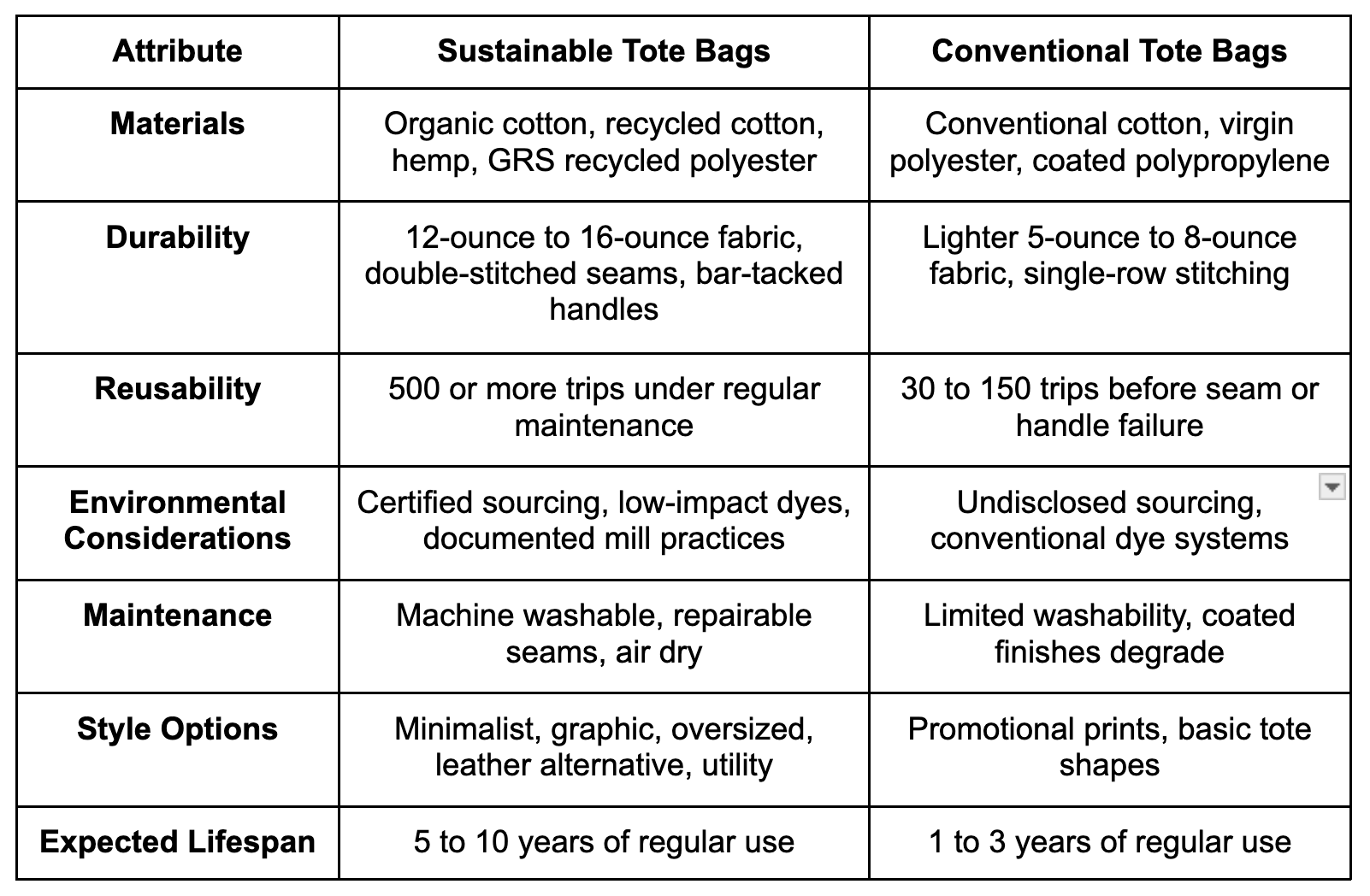
Sustainable tote bags are better than conventional tote bags on material sourcing, expected lifespan, and disposal outcomes, though the comparison depends on the specific product and buyer priorities.
The comparison of sustainable tote bags and conventional tote bags is shown in the table below.
How Will Sustainable Tote Bags Shape the Future of Everyday Fashion?
Sustainable tote bags shape the future of everyday fashion through sustained demand for reusable products, durable fiber development, responsible design practice, and broader styling versatility. Regulatory pressure supports the direction, since plastic bag restrictions across the European Union, Canada, and multiple United States jurisdictions keep reusable carriers in daily circulation. Material development continues through recycled cotton blending, hemp cultivation expansion, and mechanical recycling capacity at facilities in Spain and India. Design responsibility moves toward mono-material construction, which simplifies recycling once a bag retires. Transparency requirements under the EU Digital Product Passport framework point toward disclosed fiber origin at the point of sale. Fashion adoption looks durable rather than seasonal, maintaining tote lines across collections. Repair services, resale platforms, and take-back programs extend product life beyond the first owner. Growth in personalization through embroidery and small-batch printing keeps the format culturally relevant. Realistic expectations acknowledge that impact depends on actual reuse rather than purchase volume, so durability and repeated carrying remain the deciding factors.


Latin American fashion is not only beautiful; behind it lies a group of creatives who are transcending the industry through empathy, ancestral knowledge and artisanry. So, in honor of National Hispanic and Latino Heritage Month, I have put together a list of sustainable brands that are making a difference through their work.