
8 Simple Secrets To Stylish Halloween Decor

Image by Charles Parker from Pexels
Alt: Two children trick or treating in Halloween costumes
Stylish Halloween outfit ideas and Halloween home décor concepts share one quality that separates them from novelty purchases, they are built with the same palette discipline, material consideration, and investment logic applied to any other genuine aesthetic commitment.
Halloween has become one of the most creatively significant style moments of the year, serving as the single occasion when wardrobe, home environment, and personal expression converge simultaneously.
This Halloween fashion guide covers eight ideas across both categories, interweaving four outfit concepts and four decoration concepts rather than separating them into blocks, because the aesthetic logic governing a well-composed gothic outfit and a well-composed gothic front door is identical.
The distinction between the two versions of Halloween comes down to sourcing logic. The novelty version is bought for one night, worn once, and discarded before November ends.
The aesthetically intentional version requires consideration for material quality, palette coherence, and longevity beyond the specific occasion.
Each of the eight ideas below serves the second version, while the first outfit idea most rewards this investment because the pieces never stay in storage for eleven months.
1. The Victorian Gothic Outfit
Gothic Halloween style rewards quality investment heavily since its historical foundation is also the exact origin of contemporary dark fashion.
A genuinely constructed gothic dress built to the 1880s silhouette standard of a high-boned collar, fitted basque bodice, and trained skirt in heavy charcoal or midnight navy transitions directly into an autumn and winter wardrobe.
Participating in this 140-year tradition means adopting Victorian mourning dress conventions like black crêpe and deep fabric weights instead of throwing together a thin polyester costume.
The Pre-Raphaelite dark romantic tradition reinforces this visual language directly through historical portraiture.
Figures painted by artists like Burne-Jones established the flowing medieval-inspired dark dress, jewel tones, and long dark hair that still inform these aesthetics today.
Bringing this composition to life requires pairing a historically-inspired dark gown with a full cloak that functions equally well as a seasonal centerpiece or distinct cold-weather outerwear.
Finding reliable pieces depends on checking fabric weight, construction details, and period-accurate silhouettes rather than accepting simplified heat-bonded mass production.
Genuine hardware like clasps and trim make a visible difference upon close inspection, especially when paired with restrained, historically coherent accessories like dark metal jewelry.
For readers establishing this wardrobe foundation, specialized gothic Halloween clothing and costumes from Medieval Collectibles showcase how historical construction and wardrobe thinking intersect.
Key Insight: Investing in a genuine gothic dress with period-silhouette construction wool, velvet, or heavy cotton, not polyester earns year-round wear, not just one night. Quality hardware and linings differentiate lasting wardrobe pieces from disposable costumes.
2. The Handcrafted Gothic Wreath
Applying wardrobe investment logic to the home naturally starts at the entrance, establishing the first visual statement neighbors and guests encounter.
A handcrafted gothic wreath or door hanger separates a styled space from a generically decorated one by utilizing texture layering, dimensional composition, and specific color disciplines.
Layering thick velvet ribbon against dried botanicals or wire-edged mesh creates physical depth that flat, mass-produced seasonal plastics mechanically cannot output.
Effective designs build depth through a foreground focal detail like a statement flower, a midground structural frame, and a dense background base layer.
A successful dark romantic execution relies on deep jewel tones like burgundy, deep forest green, or midnight purple, specifically avoiding standard retail orange palettes.
Securing materials like seed pods, dried rose heads, and small brass accents provides the exact texture needed for a thoughtfully composed piece.
Handmade creations using genuine ribbon and durable fabric elements outline a conscious aesthetic choice while enduring multiple seasonal rotations effortlessly.
Acquiring this level of craft means seeking out independent specialists focused on robust materials and dark botanical features.
Incorporating handmade Halloween decorations from Michelle's aDOORable Creations highlights where seasonal coherence takes priority over novelty volume, bringing material seriousness straight to the front door.
Pro Tip: Layer your gothic wreath in three stages: foreground focal detail (ribbon, pendant), midground structural frame, and background dense base. Commit to jewel tones like burgundy and black to avoid the novelty palette.
3. The Dark Romantic Witch
Building a dark romantic witch aesthetic from wardrobe foundations requires pulling existing pieces rather than relying on a structured, pre-packaged unit.
A flowing dark skirt or wide-leg trousers establish the base, working alongside a billowing chiffon or silk blouse featuring sleeve volume for an atmospheric silhouette.
Securing a structured leather or brocade corset over the blouse anchors the overall shape, adding central visual weight directly at the waistline.
The outermost layer provides the clearest silhouette definition from across a crowded room.
A dramatic wrap or structured cape creates intentional movement, supported below by heeled boots showing pointed toes or buckle closures.
Finishing the profile with a wide-brim felt hat angled deliberately over layered dark onyx jewelry cements the historical vibe without tipping into obvious theatrical territory.
Silhouette drama must stem from layering accumulation rather than a single exaggerated focal point. Incorporating contrasting textures like velvet placed against stiff leather brings vital tension to the outfit, pushing the threshold of visual complexity.
4. The Gothic Table Setting
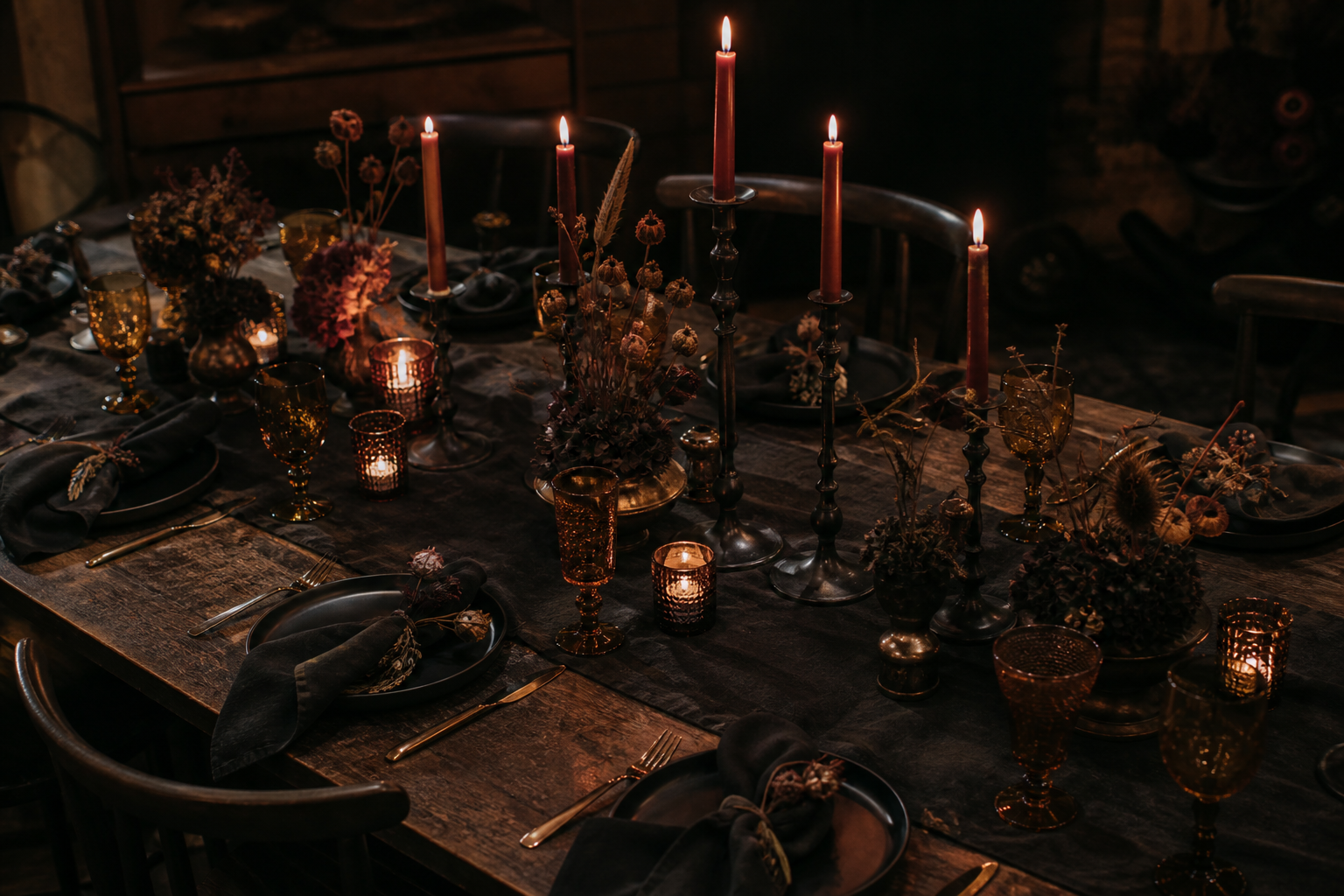
Alt: Elegant dark-themed table setting with lit candles and decor
Transitioning the outdoor aesthetic onto the gathering table maintains continuity and settles the broader mood for seated guests.
The table's baseline drops into place quickly by using a dark linen, velvet, or heavy cotton runner in deep crimson or charcoal instead of a printed plastic table cover. Solid fabric weight immediately signals the register of everything placed on top.
Visual rhythm across the surface relies heavily on gothic iron or tarnished brass taper candleholders placed at varying heights. While candlelight forms the strongest atmospheric tool in dark-palette interior settings, structural stability remains a pressing safety requirement.
Candles acting as the heat source account for an estimated 15,600 reported home structure fires per year, requiring heavy, well-balanced metal bases to lower tipping risks.
Keeping dense arrangements of black dahlias, dried red rose heads, and preserved eucalyptus safely away from the wicks maintains the visual drama while keeping the environment thoroughly secure.
Selecting mismatched dark or amber-toned glass for goblets or vintage-inspired cups demonstrates careful curation over random purchasing.
Dark ceramic plates layered with jewel-toned napkins and simple dark-metal cutlery bring the whole dining arrangement into strict alignment. Committing exclusively to a palette of black, deep crimson, gold, or pewter ensures the atmospheric composition stays intact through the final course.
Key Insight: Dark surfaces absorb ambient light, making candle flames appear warmer and more luminous by contrast. This is why a gothic table setting with dark linen, black plates, and mismatched amber glass creates intimacy, not bleakness.
5. The Medieval-Inspired Historical Outfit
Wearing historically informed clothing taps directly into the aesthetic origin point of the entire gothic tradition, granting the look instant authority.
Recognizable 13th through 15th-century elements like the close-fitted cotehardie with a flowing skirt or natural-waist leather belts provide structured historical references.
The deliberate use of dagged decorative cut-edges on sleeves or hems adds measurable dimension to the profile.
Building the actual layers requires placing a dark surcoat or tabard over a deep midnight blue or charcoal base tunic. Simple dark-metal jewelry cast in iron or bronze secures the authenticity better than anachronistic bright silver rhinestones.
Slipping a dagger or belt pouch onto the hip adds a level of period accuracy that reads as a heavily researched personal choice.
Quality medieval pieces mirror the Victorian wardrobe approach by providing ongoing functionality deep into the winter months. Authentic garments slide directly into regular rotation for historical reenactment events or Renaissance faires without missing a step.
Choosing items equipped with genuine metal hardware guarantees these additions hold their functional value in a permanent collection.
6. The Dark Window Display
The dark window display operates as atmospheric architecture, projecting a clear neighborhood aesthetic while shaping the indoor environment simultaneously.
A properly disciplined foreground features apothecary-style glass vessels, robust pillar candles, and small decorative wood elements sitting right against the pane. These items carry the finest detail and demand close visual attention from any visitor walking past the glass.
Deep botanical arrangements composed of black-sprayed branches, dried pampas grass, and preserved eucalyptus fill up the midground space to add structural volume.
The background backing relies heavily on deep charcoal cotton panels or dark-framed mirrors to absorb incoming daylight. Refusing to compete with harsh artificial light allows these dark interior surfaces to amplify any indoor amber glow organically.
Since the entire display sits indoors, delicate dried florals and untreated fabric pieces thrive avoiding harsh weatherproofing exposure.
Continuing the deep jewel-tone material logic established at the front entryway binds the outside presentation squarely to the inner rooms.
Utilizing protected windowsill areas lets refined botanical work serve double duty as street-facing artwork and an interior visual anchor.
Pro Tip: Maintain palette continuity from your door wreath to window displays using the same jewel-tone and material vocabulary. A well-layered exhibit with dark fabrics and dried botanicals can outperform a larger, mixed-palette display.
7. The Contemporary Dark Minimalist Outfit
Dark minimalism borrows heavily from fashion-editorial corners, constructing a subtle look that only reveals its seasonal intent upon closer inspection. Sharp tailored black trousers, a clean silk blouse, and an oversized dark charcoal coat formulate the foundational base.
This strict tailoring holds the structural discipline necessary to heighten the impact of one carefully selected accent.
That singular focal piece defines the creative challenge of the minimalist approach without drifting into an obvious costume. Introducing a structural cape coat in dramatic fabric, a heavy Elizabethan-style collar, or an architectural gothic wrist cuff shifts the register instantly.
Forcing restraint into a direct clash with one theatrical gesture pulls the final appearance squarely into a fashion-forward tier.
Any selected accent item must hold enough independent styling power to function outside of a strict October gathering. Pairing a prominent gothic collar with standard dinner attire works strictly through how confidently the wearer owns the combination.
8. The Outdoor Entrance Decoration
The outdoor entrance pushes the atmospheric composition outward to set the tone long before a guest touches the door handle. Iron or aged metal lanterns positioned on steps project warm amber light, dictating the visual mood of the main approach.
Matching the dark lantern palette directly to the front wreath stops visual breaks from cheapening the initial walkway perspective.
Surrounding the exterior boundaries with potted deep-burgundy heuchera or black mondo grass extends the textured botanical theme across the steps. Deliberate installation minimizes the clear tripping hazards commonly associated with untidy walkway layouts.
Each year, hospital emergency rooms treat about 12,500 people for injuries related to holiday lights and seasonal exterior decorations, highlighting the need for clean, securely fastened pathway lighting.
Guiding visitors via solar warm amber ground fixtures keeps the area clearly visible without tangling loose electrical cords across the paving.
Weatherproofing determines how well an installation survives exposure across an entire month of temperature shifts. Implementing UV-resistant wired ribbon, sealed wood bases, and powder-coated metal elements guarantees the outdoor pieces last three to five years before degrading.
Arriving at a property featuring durable dark botanicals, amber lanterns, and coordinated accents confirms the environment was purposefully curated rather than hastily assembled.
The Bottom Line
Introducing historically-inspired gothic garments ensures heavy wool cloaks and medieval surcoats remain actively utilized in personal wardrobes through the subsequent winter months.
Similarly, hanging handcrafted front door styling made from textured velvet ribbons and dried botanical arrangements anchors the home aesthetic while actively bypassing fragile, single-season plastics.
Eliminating neon orange novelty products in favor of midnight navy, charcoal, and burgundy generates a sharp visual continuity from the front driveway straight to the dining table.
Combining heavy iron taper candleholders with thick dried eucalyptus transforms daily living spaces into fully realized event venues.
Directing focus toward authentic fabrics and quality hardware construction leaves both your personal closet and the household entry equipped for years of continuous use.


On August 25, just last week, the world came to a standstill when the news dropped that icon of music history Dolly Parton passed away at the age of 80. I was lucky enough to have visited Dollywood with my family in 2016 when I was about 11, and Parton has always had a strong significance in my life because of this.