
7 Simple Home Fixes For Better Mental Health
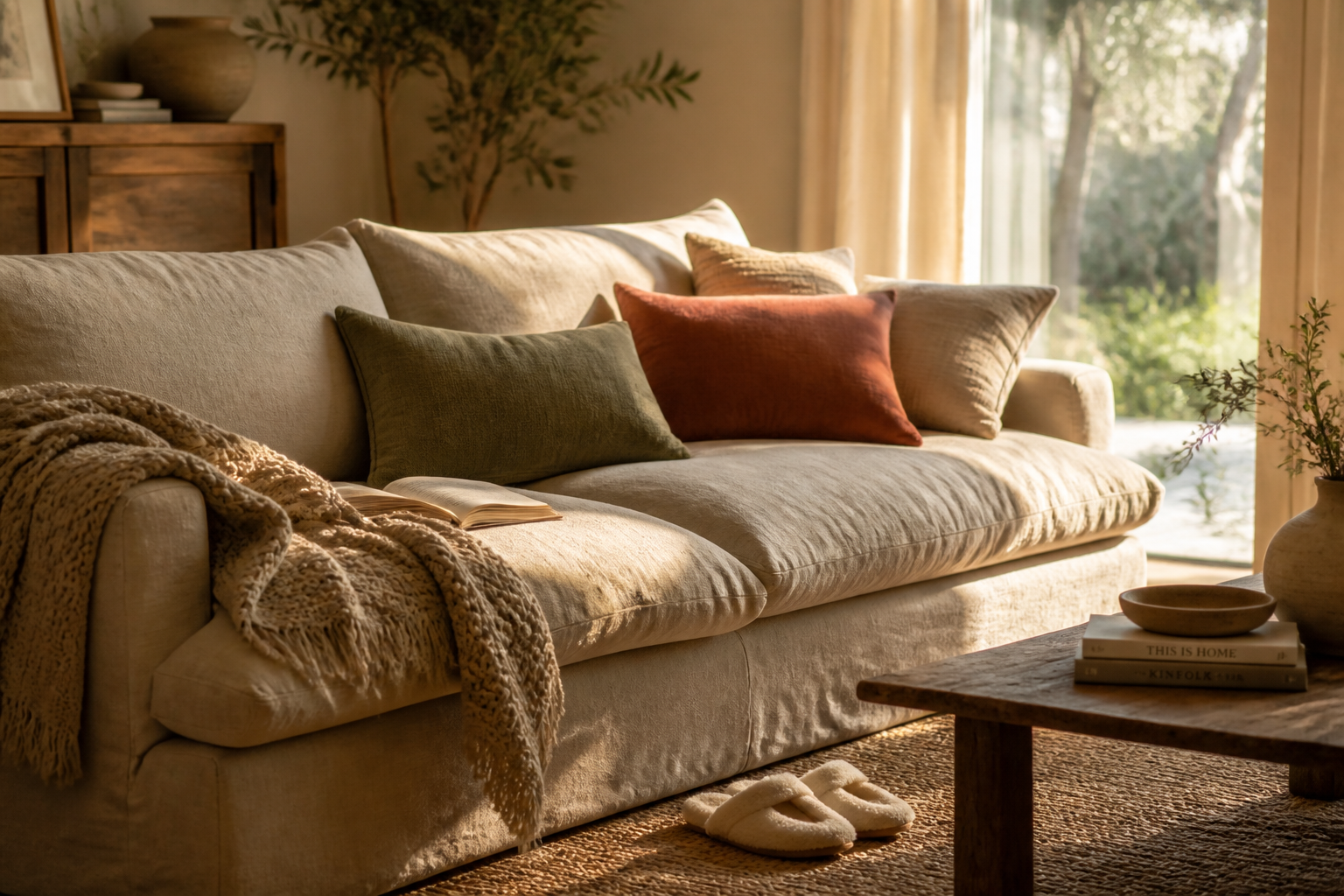
Alt: Cozy living room with sunlit beige couch and pillows
Decades of research in environmental psychology confirm that the spaces we inhabit are an active input into mood, stress regulation, and cognitive capacity rather than a neutral backdrop.
A measurable link between residential environment quality and psychological wellbeing across multiple demographic groups, reinforcing what the field has shown for years.
The built environment shapes mental states as reliably as the deliberate practices we bring to them.
Most mental health guidance focuses on what we do, prioritizing exercise, sleep, therapy, and journaling. This article makes the case that where we do it matters just as much.
Your Home Is Already Affecting Your Mental Health
The home remains the most consistent and controllable mental health variable available for most people. It is present during every other effort and either amplifies those efforts or quietly undermines them.
The seven fixes below are functional adjustments with measurable psychological effects, covering seating design, hand-based practice, natural light, cognitive load, living greenery, spatial differentiation, and acoustic environment.
Start with the place where many residents spend significant time relaxing. What the primary sofa does to your nervous system turns out to matter significantly.
Key Insights: The home is not a neutral backdrop. Every element within it the light, the visual load, the sounds, the places to sit actively shapes your mood, stress, and cognitive capacity. Start with one fix, and move your home from neutral to supportive.
1. Choose Furniture That Invites Rest
There is a neurological difference between seating that accommodates rest and seating that actively invites it.
Environmental psychology research on place attachment shows that the physical and tactile qualities of a piece of furniture send a distinct signal to the brain, directly affecting how fully the nervous system releases in that space.
A rigid chair placed in a living room does not trigger the same biological safety cues as soft, deep upholstery.
In family homes especially, ambient furniture anxiety creates a prominent barrier that blocks this biological signal. This low-grade vigilance about spills, pet mess, and clutter accumulation prevents an individual from ever settling into a room.
A resident who perches on the edge of a cushion specifically because the covers require dry cleaning is experiencing this exact psychological mechanism.
Seating designed for high traffic removes these anxieties instantly and allows the body to downregulate naturally. For a space that handles real life without requiring constant vigilance, the sustainable loveseat from Home Reserve reflects this functional design philosophy.
Covers that unzip and machine wash clean, combined with built-in storage units beneath the cushions, keep the surrounding floor clear of visual stressors.
Research by psychologists Michael Steger and Todd Kashdan links living in alignment with personal values to measurable increases in psychological flourishing. This directly applies to household purchasing decisions and physical possessions.
Verifiable sustainability credentials reduce the underlying cognitive dissonance that accumulates when a person owns items that feel ethically questionable.
2. Build a Making Practice Into Your Routine
The evidence connecting repetitive hand-based craft to mental health outcomes goes well beyond anecdotal community accounts. Researcher Betsan Corkhill's work through Stitchlinks and subsequent clinical studies from University College London link knitting and crochet directly to reduced cortisol levels.
These specific craft activities lower resting heart rates and sustain present-moment attention using the exact physiological markers targeted by standard mindfulness practice.
This specific mechanism explains why crafting works even for individuals who struggle heavily with standard meditation. Repetitive hand movements occupy enough attentional bandwidth to crowd out cyclical rumination without generating the type of cognitive strain that leads to fatigue.
The flow framework describes this mental zone as a space where a physical challenge matches a specific skill closely enough to produce absorbed focus.
The barrier that typically stops modern adults from accessing these benefits involves the initial entry point. Crochet in particular features a steep early learning curve, so someone following a free video tutorial often quits within the first thirty minutes. Initial mistakes produce intense frustration long before the crafter experiences any tangible calm.
For residents who want the psychological benefits without months of frustrated trial and error beforehand, a beginner crochet kit from The Woobles removes the usual barriers entirely.
The pre-started piece handles the hardest first step, which easily derails novices before they reach a single completed row. Their custom yarn keeps individual stitches highly visible, taking away the constant guesswork that causes early structural mistakes.
The completed item matters significantly beyond its physical aesthetics and decorative use. Positive psychologist Jane McGonigal points out that the sudden emotional spike of completing an effortful task compounds the psychological benefit.
Once a beginner clears the initial entry barrier, the physical practice becomes self-sustaining and provides a solid operational foundation for trying more complex techniques later.
Pro Tip: For a making practice that calms the mind, start with a kit that includes a pre-started piece and easy-to-see stitches. This removes the steep early learning curve, letting you reach the calming flow state faster and giving you a finished object to cement the habit.
3. Let In More Natural Light
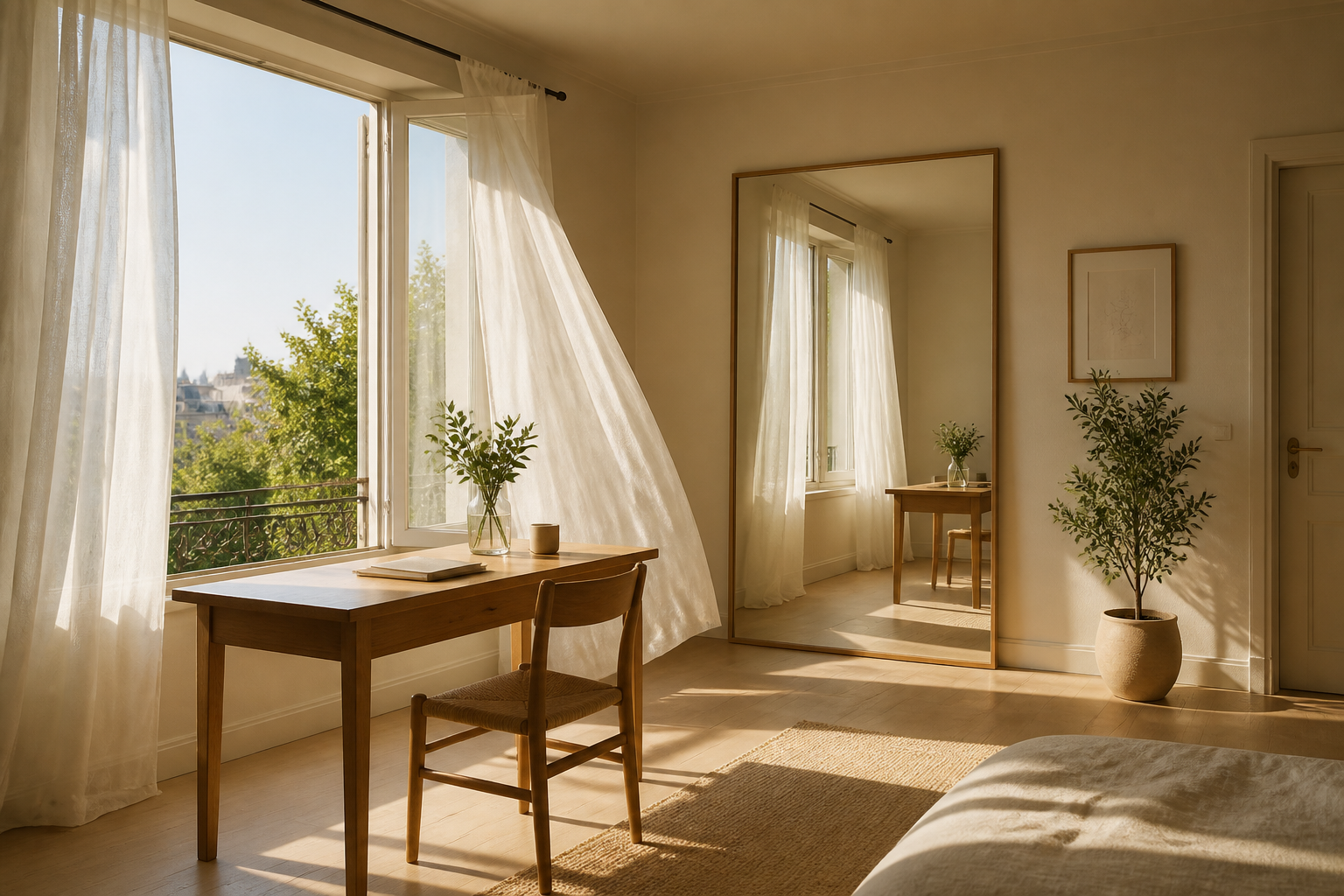
Alt: Bright room with wooden furniture and large mirror
Natural light regulates several core biological levers of mood and daily stress response. Circadian rhythm, serotonin production, and regular cortisol patterning all rely heavily on morning daylight exposure to function normally.
Chronobiology literature consistently shows that insufficient morning sunlight disrupts the cortisol awakening response, which actively governs physical alertness and emotional stability across the afternoon.
The most practical residential fix requires a simple furniture positioning adjustment rather than a major architectural purchase. Try moving your primary desk chair, morning reading spot, or kitchen breakfast seat directly toward the nearest window instead of facing a blank wall.
Pull back heavy drapes during daylight hours, position desks perpendicular to the glass to reduce screen glare, and place a large mirror on the opposite wall to bounce sunlight deeper into the room.
4. Reduce Clutter to Lower Cognitive Load
Decluttering operates as a critical cognitive load reduction strategy rather than a mere aesthetic design choice.
Visual clutter creates competing background stimuli that the brain must continuously process and suppress, elevating systemic stress levels even when the individual ignores the mess.
Neuroscience researchers previously demonstrated that multiple visible stimuli fight for neural representation in the visual cortex, directly increasing mental fatigue.
The UCLA Center on Everyday Lives and Families provided a highly concrete data point on this ambient environmental phenomenon.
Mothers' cortisol levels rose measurably when they described their own homes as cluttered, and those same chemical levels dropped when they viewed the home as organized. This specific physiological stress response triggered passively through the physical environment itself.
Target your organizing efforts at the highest impact zones first to see immediate psychological returns.
The front entry area, the standard home office desk, and the bedroom nightstand represent three specific areas where clutter accumulates quickly and does the most neurological damage.
Clearing just these three crucial surfaces creates a deliberate visual resting point where tired eyes can land without effort.
Warning/Important: Visual clutter isn’t just messy it competes for your brain’s processing power, raising stress hormones even when you’re not consciously aware. If your home feels exhausting, decluttering high-impact zones like the desk and bedside table can directly lower cortisol.
5. Introduce Plants at a Realistic Scale
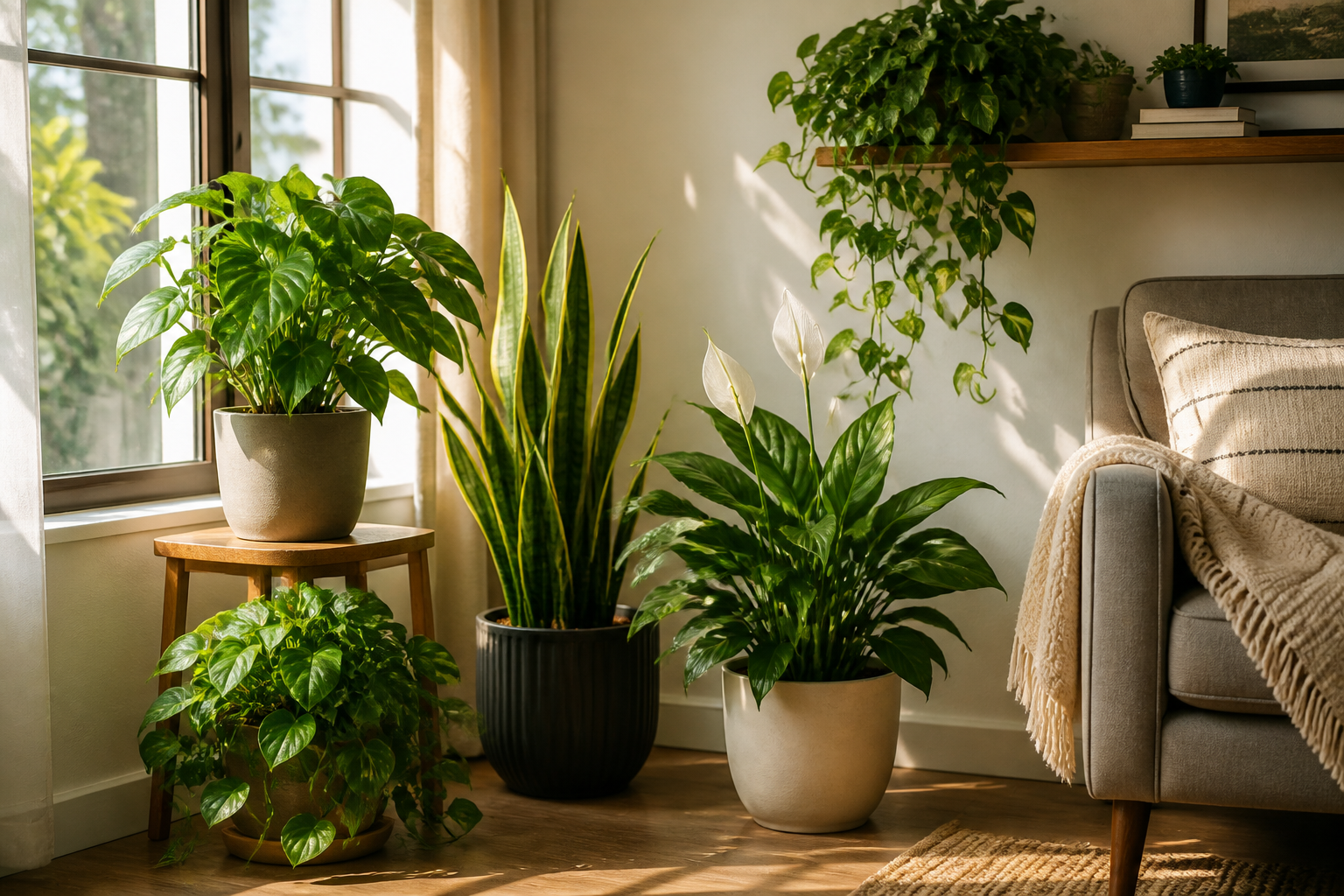
Alt: Charming plants near sunlit window in cozy living room
Plants operate on two distinct mental health channels simultaneously by impacting both air purification and visual appeal.
On the atmospheric side, an extensive NASA study demonstrated that the concentration of VOCs could be reduced when common houseplants were introduced into closed environments.
A realistic collection of five to ten mid-sized leafy plants inside a standard living space will produce a modest but chemically measurable effect on indoor air quality.
The visual environment channel typically receives far more robust scientific support at realistic residential scales.
Biophilic design research consistently finds that the presence of living greenery reduces self-reported stress, lowers physical tension markers, and increases subjective baseline feelings of calm.
Three to five potted plants grouped near the primary working space begin to meaningfully center the nervous system.
Practicality matters just as much as sheer volume when maintaining an indoor therapeutic garden in a busy household. Hardy indoor options like pothos vines, tall snake plants, and broad peace lilies tolerate lower light conditions and irregular watering schedules effectively.
These specific botanical varieties make excellent entry points for working residents looking for natural benefits without adding complex maintenance tasks to existing schedules.
6. Create a Dedicated Decompression Space
The primary mattress becomes severely cognitively overloaded when it serves as the only designated rest zone in a household. The Sleep Foundation identifies this specific behavioral habit as a direct contributor to clinical insomnia and drastically impaired overnight recovery.
If a mattress consistently hosts anxious phone scrolling, remote work tasks, television viewing, and real sleep simultaneously, the brain stops associating the furniture with meaningful rest.
Cognitive psychology research on place conditioning shows that the human brain learns to link specific physical locations with distinct emotional states.
A dedicated non-bedroom decompression space becomes increasingly effective as a relaxing signal over time through highly consistent use. A well-positioned armchair carrying a favorite heavy blanket or an empty window bench showcasing a consistent visual anchor easily serves this exact conditioning function.
Ensuring the chosen space maintains a single primary job represents the only strict rule for this spatial method.
The isolated use of the location creates the necessary neurological conditioning, directly requiring the occupant to avoid endless media scrolling, remote working, or heavy eating in that particular spot.
A relaxing spatial anchor can stay physically tiny as long as it handles the exact same quiet action every day.
7. Take Your Acoustic Environment Seriously
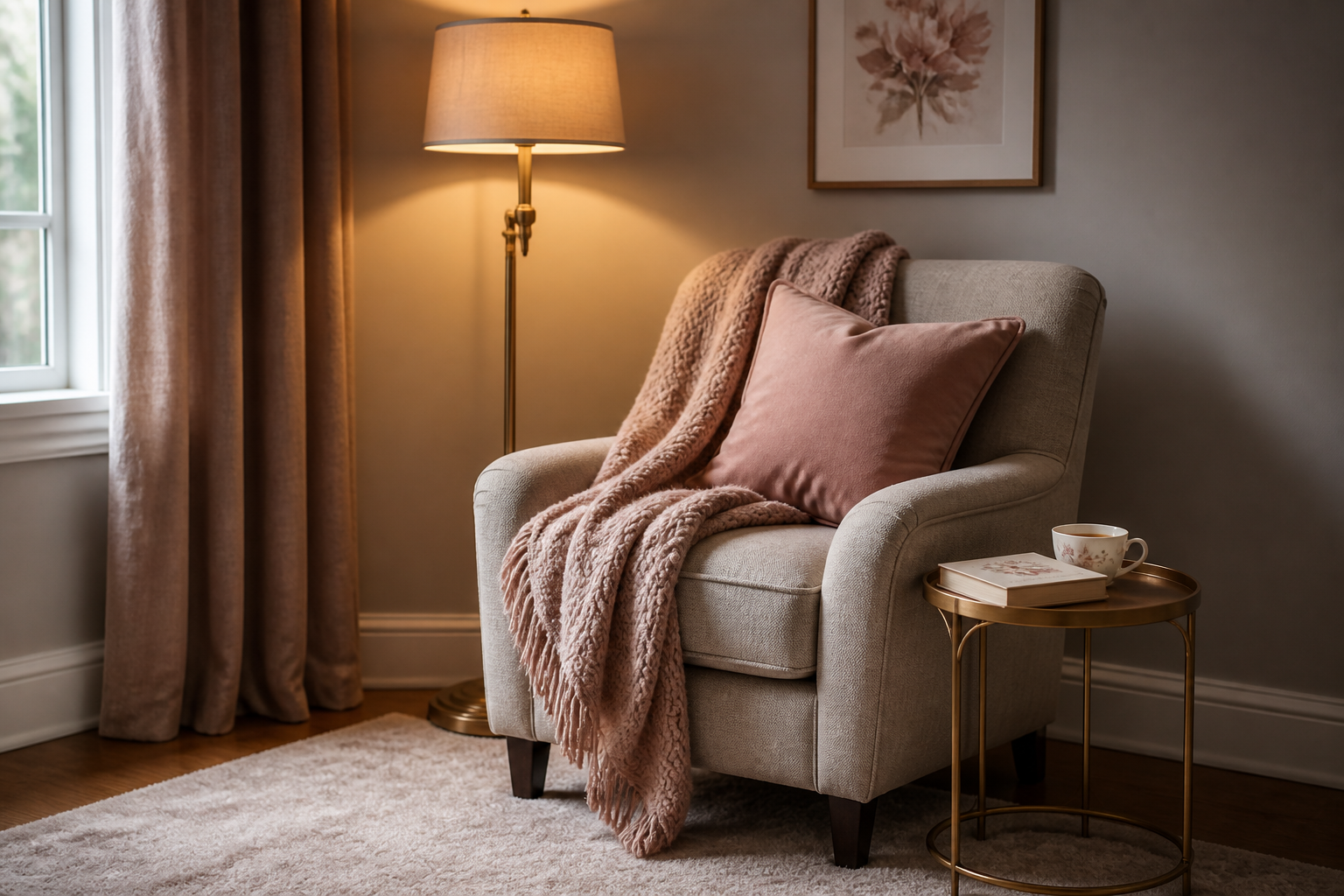
Alt: Cozy armchair with pink blanket and pillow in warm-lit room
Environmental noise operates on the human body as a chronic physiological stressor rather than a temporary auditory annoyance.
A major analysis revealed that more than 100 million people in Europe are exposed to harmful levels of environmental noise pollution.
Individuals typically stop consciously registering ambient household sounds after a period of biological habituation, but the nervous system continues responding rigidly below conscious awareness.
This constant external acoustic pressure causes severe public health harm over decades of continuous daily exposure. Urban transport noise currently acts as the second most significant environmental cause of ill health in Western Europe behind fine particulate air pollution.
Adding heavy functional textiles like thick area rugs, dense window curtains, and upholstered seating reduces sharp room echo in ways that modern hard-floored rooms cannot match.
Digital notification architecture represents another crucial acoustic decision that residents directly control without a renovation budget.
Scheduling smartphone alerts to two designated daily windows removes the most frequent source of involuntary auditory attention capture inside modern living rooms.
Designating one short window each afternoon as a quiet period prevents background television audio from running continuously through the evening.
Key Insight: Your nervous system never fully habituates to unpredictable noise, sustaining low-level stress responses below conscious awareness. It’s the unpredictability, not just the volume, that keeps you on edge. Soft furnishings and white noise can transform a room’s acoustic environment without renovation.
The Bottom Line
The physical rooms you occupy actively shape your daily cognitive capacity and basal stress load. Moving a residence from passively neutral to actively supportive requires deliberate, incremental structural adjustments focused directly on functionality.
Designing a supportive environment might involve bringing in a sustainable modular loveseat that handles real life gracefully, or establishing a beginner-friendly crochet practice that leaves you with concrete evidence of newly recovered mental focus.
None of these high-leverage environmental changes demand massive permanent renovations or a significant household budget.
Adjustments like clearing a cluttered bedroom desk, repositioning a work chair for optimal morning sunlight access, and masking urban traffic noise with thick textiles scale easily to any apartment size.


On August 25, just last week, the world came to a standstill when the news dropped that icon of music history Dolly Parton passed away at the age of 80. I was lucky enough to have visited Dollywood with my family in 2016 when I was about 11, and Parton has always had a strong significance in my life because of this.