Artificial Intelligence and The Longing for Human Art
Artificial intelligence is making life more difficult by the day. I know this sounds impossible because it was designed to do the exact opposite of that. It was meant to improve our lives, but the aspects of life AI seems most set on improving are the very aspects that were perfectly fine on their own. Art, education and conversation are the three elements of the human experience that I see the most people online trying to use AI to simplify or quicken.
People ask AI to draw portraits of themselves instead of attempting to hold their own pencil. They plug their essay prompts into ChatGPT and wait for their homework to be completed for them in seconds. Worst of all, they treat AI robots like their closest companions. Nobody has the patience to learn and study naturally or to form closer friendships over time, so they retreat into the comfort and convenience of mimicry instead of the necessary effort of real connection.
Pinterest used to be my favorite social media website, but now, I can hardly stand to look at my feed as every single photo I see is now completely fabricated by AI. Some of my beloved style icons like Zendaya and Elle Fanning now stare back at me, not wearing the chic, classic red carpet looks I recognize and love, but ugly, mismatched fast fashion trends generated by a code that doesn’t know the first thing about the art of fashion.
Even worse, sometimes I see entirely AI generated women wearing outfits that were never real, making me feel sick to my stomach at the thought of some real woman out there who has no idea that an AI is stealing inspiration from her face. As someone currently dedicating her college studies and eventually the rest of her life to a writing career, it breaks my heart daily to see people so uncomfortable and afraid of hard work and dedication that they would rather surrender creative control entirely and allow an AI to write, draw, speak whatever, on their behalf.
Removing yourself from “your” creative pursuits entirely and willingly rejecting your autonomy in that way is the scariest thing I can imagine. Fortunately, not all hope has to be lost entirely because even though I see more and more AI slop content online every day, this constant exposure to it is also making people much better at identifying it and removing it from their sight.
Some people are going to continue to use it to convenience their lives at the detriment of their own intellectual expansion, sure, but there will always be people out there who waste their lives looking for shortcuts when they could be enjoying their journey. For the rest of us, there is a noticeable yearning for human designed artwork, human written pieces and direct human interaction.
Prada’s most recent holiday ad campaign employed famous Disney illustrator John Pomeroy to sketch snowy animals and scenery to interact with their models as a direct response to the AI generated cartoons people have grown to resent. Massive hit film “The Devil Wears Prada 2” hired human artists to replicate the glossy, uncanny imagery AI is known to generate for their “AI” graphics in the film. Laika Studios, a film company that specializes in stop motion animation through human created figurines, just released their latest film ‘Wildwood” on October 23 and it already has a 99% critics score and a 97% audience score on Rotten Tomatoes.
People still want to encourage the creativity of other people, and they definitely are growing tired of the same old images in the same old aesthetic that the AI around us is only capable of creating. Believe me, I know it can be terrifying to think of a future where the vast majority of the world is using ChatGPT as a creative consult, a doctor, a therapist of even a friend, but, for now, the need and almost desperation to consume media with soul is still a foundational part of being alive. Creators still have a voice and companies are starting to catch up to the rest of the world and realize that AI artwork and media is more of a current trend than a long term plan to garner more customers.
The best advice I can offer to anyone else who feels, like me, threatened by this imposition of technology on a very human craft, is to remember that emotion and life experience are two things robots will never be able to replicate. I have faith that the rest of the world will come back around to wanting hand-made work, all trends are cyclical after all, so continue to hone your craft, act on your inspiration and listen to your heart. Your audience is out there waiting to respond favorably to anything you put your mind to, don’t give up on yourself and don’t give up on other people.
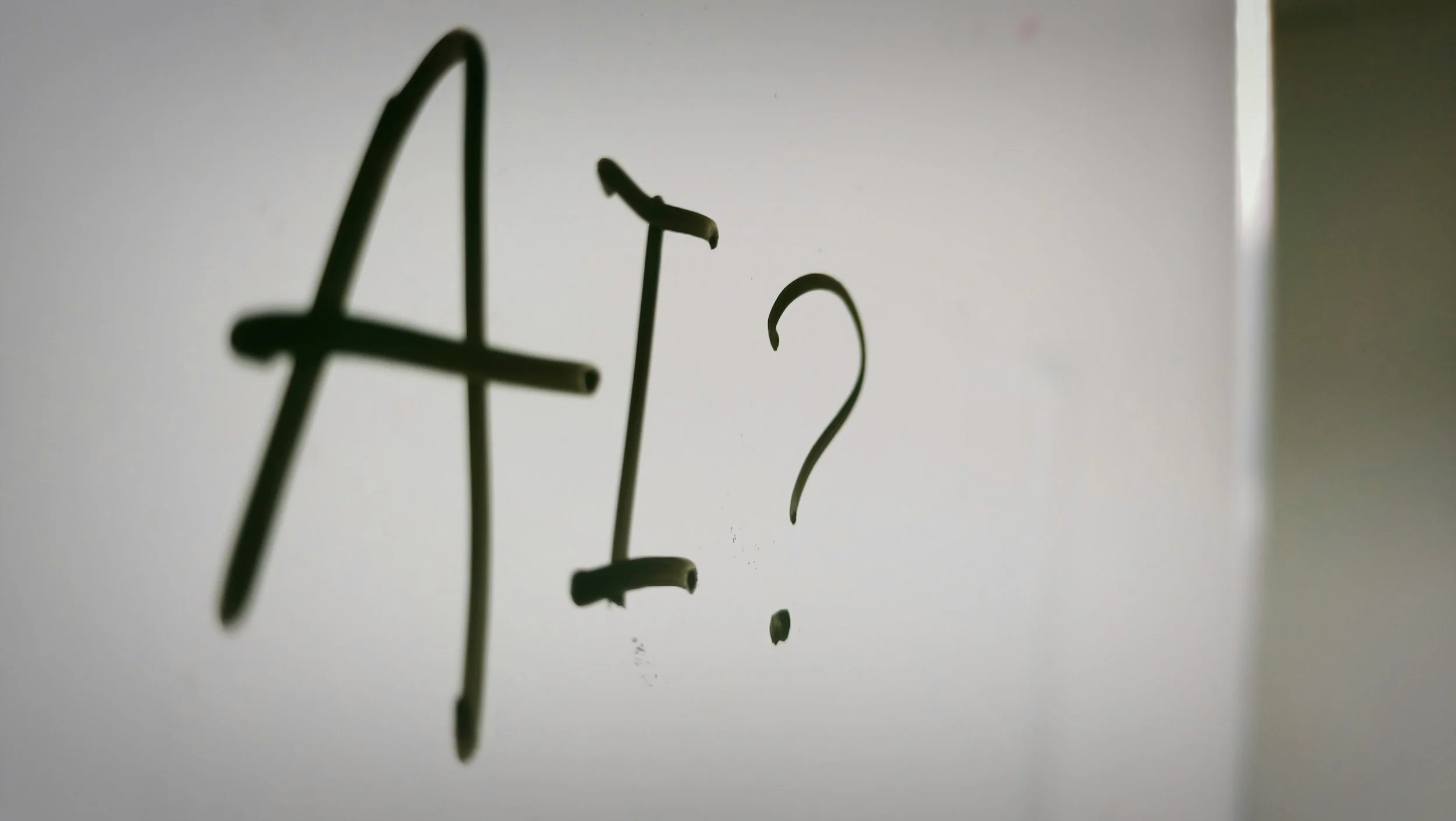
Remember, AI images and videos of humans will typically have distorted facial expressions and their mouths will not line up with the words they are speaking. The texture often looks soft and shiny like a Pixar cartoon but with slowed motion and a wrong amount of body parts like hands and fingers. AI ads and posters will feature an abundance of textual elements to the point where it is overwhelming and unnecessary, and the fonts and backgrounds will be very round and the sentences will often be very short and choppy. AI writing additionally sees a lot of m-dashes, so don’t be fooled by those either.


AI is an umbrella term for a group of technologies that processes information and can generate responses by mimicking human thinking. AI has been around since the 1950s, but the technology's capabilities were limited. Recent technological advancements relating to AI’s computing power and data have quickly made AI explode in popularity and use.