Caro Luna on Embracing Multiculturalism Through Musical Storytelling
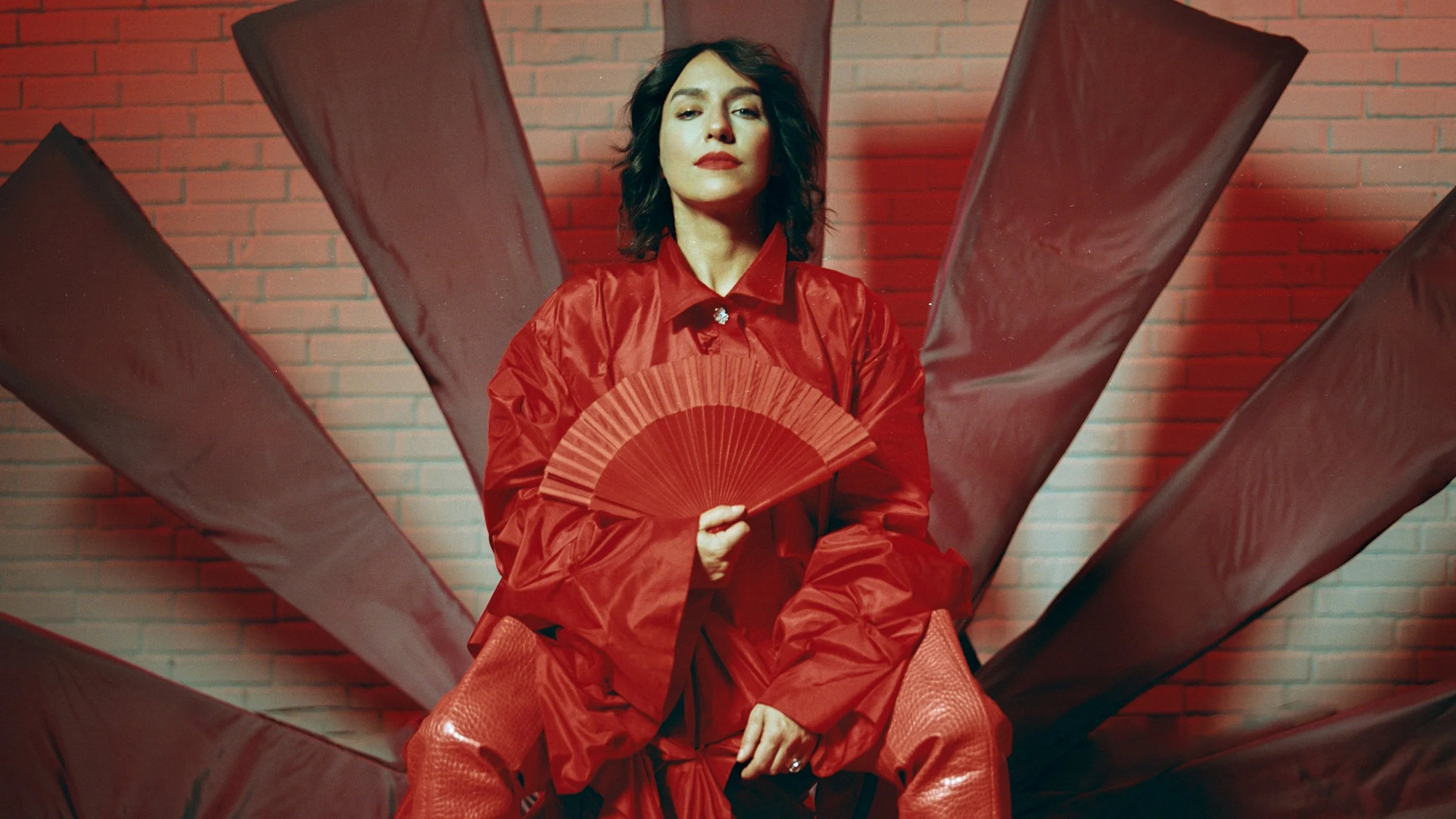
Photography Credit: Jesper Blomgren
Caro Luna is impassioned by her roots in Uruguay and Sweden to tell stories of optimism and comfort in a sometimes dark time. Her music influences span every artist from The Cure to Chavela Vargas when she is crafting her own melodies, and works closely with the practice of music therapy to heal people and bring them closer together.
Where are you from?
I was born in Stockholm, Sweden, but my roots are in Uruguay, where both my parents are from. I spent a lot of my childhood traveling between different parts of Latin America, particularly Uruguay and Mexico, and later lived in Cuba for a period while studying music in Havana.
I think of myself as someone shaped by several places rather than belonging to just one. Sweden is where I was born and where I live today, but Latin America has always been a very important part of my identity. In many ways, I carry all these places with me, and they have become part of who I am, both as a person and as an artist.
How has your hometown influenced yourself and your art?
Stockholm has given me one perspective on life, while my Latin American roots have given me another. Growing up between these different cultural worlds has made me curious about people, stories and the ways we express ourselves.
I think the contrast between the Nordic environment, with its seasons, silences and sometimes more reserved way of communicating, and the emotional openness and musical richness I associate with Latin America has influenced me quite profoundly.
Stockholm is also where I have developed much of my artistic life. The combination of these different influences has allowed me to create something that doesn’t necessarily belong to one particular place or genre. I don’t feel that I have to choose between my identities. They can coexist, and I think that is reflected in my music.
What does the idea of home mean to you?
For a long time, I think I struggled a little with the idea of having to belong somewhere. When you’re connected to several cultures, you can sometimes feel a little bit different everywhere. In Sweden, I can feel very Latin American, and when I go to Uruguay, I suddenly become much more Swedish than I perhaps realize.
Over time, I’ve come to see that as something enriching rather than something that makes me feel divided. I’ve realized that home doesn’t necessarily have to be a geographical place. It’s something you carry within yourself, made up of memories, people, sounds, experiences and the things that make you feel connected.
Music has become a kind of home for me. Through it, I can bring together all the different parts of myself without having to explain or separate them. And of course, being close to the ocean, surrounded by my family and the people I love, is another version of home.
What inspired you to get into music?
I have a very special memory of my grandmother, who used to come and visit us in Stockholm every summer. I was about seven years old at the time. We had a piano at home, and one day she simply sat down and started playing. She hadn’t played regularly for quite some time, but she began improvising, moving between boleros, tangos and classical music.
I remember sitting beside her, actually feeling the vibrations of the music through the piano. I was completely fascinated. I asked her to teach me, and that was really the beginning of everything.
I started taking piano lessons a couple of years later, and music gradually became an important part of my life. I eventually went to Havana to study music, and I’ve been involved in different musical projects ever since.
But becoming Caro Luna as a solo artist came much later. After going through some difficult personal experiences, including losing my mother, I found myself struggling to write music. Eventually, I wrote a song for her called A Mi Madre. That song became the starting point of this project and, in many ways, helped me find my way back to music. It felt like rediscovering something I had almost lost.
How would you describe your sound/genre of music?
I find it quite difficult to put my music into one particular genre, and perhaps that’s because I’ve never really approached music with the intention of fitting into one.
My foundation is very much rooted in Latin American traditions: rancheras, boleros, milongas and Brazilian singer-songwriter music. But I’ve also been influenced by folk, rock, jazz and alternative music from different decades and cultures.
I would describe my music as intimate, soulful and emotionally driven, with a strong focus on melody and storytelling. I love acoustic instruments and organic sounds, and I often try to preserve a certain rawness and human presence in my recordings.
At the same time, I’m curious about exploring new musical landscapes. My recent collaboration with Ariel T, for example, has opened the door to more electronic and lo-fi-inspired textures. I don’t want to limit myself. For me, the emotion of a song should always come before its genre.
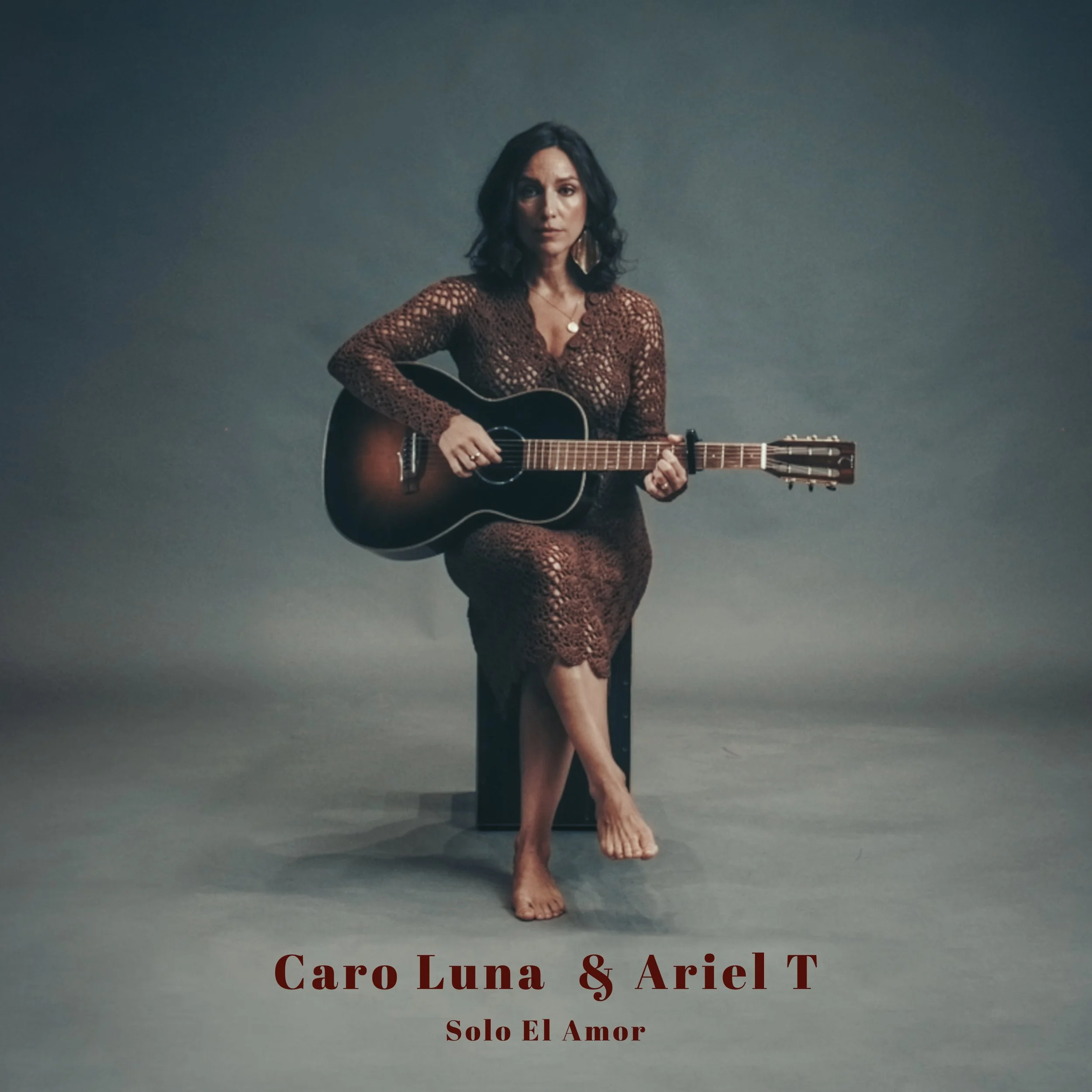
Image by Prisma Music Group
Who are some of your biggest inspirations for your sound and storytelling?
My musical influences are quite diverse. Growing up, I was surrounded by Latin American music, particularly Mexican rancheras, boleros, Uruguayan milongas and Brazilian songwriting. Artists such as Chavela Vargas, José Alfredo Jiménez and the great Mexican singers have been important to me.
I’m also deeply inspired by artists like Violeta Parra, Natalia Lafourcade, Lhasa de Sela, Lila Downs and Silvana Estrada. I admire the way they can communicate so much emotion through their voices and their storytelling while maintaining such a strong artistic identity.
Outside Latin American music, I’ve always listened to a lot of Leonard Cohen, Bob Dylan, Nick Drake, Janis Joplin, The Doors and of course The Beatles. Nina Simone, Billie Holiday, Ella Fitzgerald, Monica Zetterlund and Edith Piaf have also influenced the way I listen to and interpret music. And I grew up with a lot of British pop music, including The Smiths, The Cure and Portishead.
I think all these different worlds have found their way into my songwriting, sometimes consciously, sometimes without me even realizing it.
You just put out “Prefiero Cantar”, can you tell us about this song?
Prefiero Cantar is a very personal song about communication, vulnerability and the things we sometimes struggle to express through ordinary conversation.
It came together quite naturally through my collaboration with Ariel T. He sent me a beautiful, delicate lo-fi production with soft harmonies and a subtle bossa-inspired feeling, and I immediately connected with it. The melody came very quickly, and then the lyrics started taking shape around something I’ve experienced many times: there are feelings and thoughts that I find difficult to put into words when I’m talking to someone, but somehow they become much clearer when I sing.
For me, singing is one of the most honest ways of revealing who I am. It’s almost an invitation to someone: if you really want to know me, listen to me sing.
We recorded the song at Ariel’s home in the Stockholm archipelago on a beautiful spring day. I think that peaceful atmosphere somehow became part of the recording. It’s a gentle and intimate song, but its message is quite profound to me. It’s about finding a language of your own and allowing yourself to be understood in a different way.
We love your song “Solo El Amor”. Tell us about the making of this record and why it inspired you?
Solo El Amor was born from a strong feeling I had after watching Bad Bunny’s Super Bowl halftime performance. I was particularly moved by its message of hope, unity and the importance of choosing love in a world that often seems increasingly divided.
I wanted to write something that reflected that feeling. The central idea became that love isn’t a weakness, but perhaps one of the strongest things we have. The chorus says, “Solo el amor puede curar, puede aliviar el dolor” – only love can heal, only love can ease the pain.
Musically, this was also an exciting step for me. Until then, I had mostly worked with acoustic instruments, guitars and organic percussion. With Ariel T, I started exploring a different sound, incorporating lo-fi-inspired rhythms, layered strings and more expansive production.
I loved that we could experiment with something new without losing the intimacy and emotional honesty that are so important to me. The collaboration felt very natural from the beginning, and it opened up a new creative direction that I’m excited to continue exploring.
This song has such a positive and hopeful message. Why is that important for viewers to hear now more than ever?
I think we are living in a time when it’s very easy to become overwhelmed by everything happening around us. There is so much division, fear, conflict and hatred, and we’re constantly exposed to it through the news and social media.
I’m not suggesting that love is a magical solution to all the world’s problems, or that we should ignore injustice or difficult realities. But I do believe we need to be reminded that we have a choice in how we respond to one another.
We can choose empathy instead of indifference, curiosity instead of prejudice, and love instead of allowing hatred to grow even further. Sometimes that begins with something very small: the way we treat another person, the way we listen, or the way we show up for someone who needs us.
I wanted Solo El Amor to be a reminder of that. Not in a naïve way, but as a conscious choice. Especially when things feel dark, I think we need art that reminds us of our shared humanity and gives us a reason not to lose hope.
You were inspired to write this song by Bad Bunny’s halftime show. In what ways did his performance move you?
What stayed with me was the message of unity, love and hope. I found it incredibly powerful to see an artist use such a massive platform to communicate something that goes beyond entertainment or music.
Bad Bunny’s performance made me reflect on the importance of cultural identity, representation and the way music can bring people together. I think there was something very moving about the idea of celebrating where you come from while creating a message that can reach people far beyond your own culture or language.
What particularly resonated with me was the idea that, in a world where there is so much division, we don’t have to respond with more division. We can choose something else.
That feeling stayed with me after watching the performance, and I wanted to translate it into a song. I suppose Solo El Amor was my own way of continuing that conversation through music.
Tell us about the creative direction of the music video for “Solo El Amor.”
The music video is very personal to me because it features my daughter (who happens to also be a dancer!) dancing throughout the song. What you see is her simply moving freely to the music. There was no choreography or carefully planned performance. It was entirely improvised, and I wanted to preserve that spontaneity.
For me, the video is about the relationship between a mother and her daughter, but also about freedom, trust and the beauty of being completely present in a moment.
We live in a time when so much of what we see is filtered, edited and carefully constructed. Even our images of ourselves are increasingly shaped by digital expectations and artificial perfection. I wanted to do something that went in the opposite direction.
There is no need to pretend or perform something that isn’t there. I wanted to capture something real between us, something that couldn’t really be recreated or directed. Her dancing became a beautiful expression of the song’s message: love, freedom and genuine human connection.
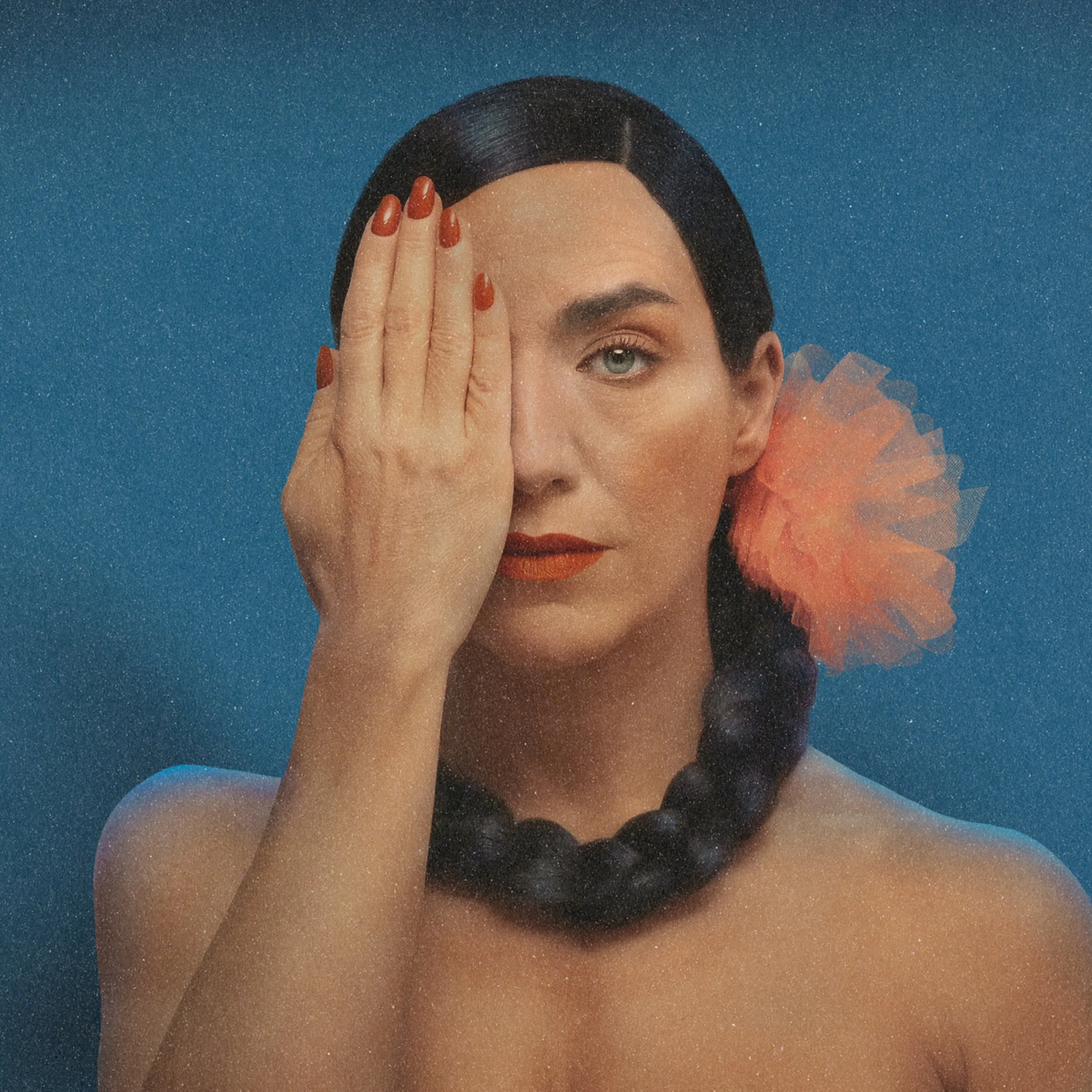
Photography Credit: Jesper Blomgren
Tell us about your work with music therapy. Why does this practice mean so much to you?
Music therapy has become one of the most meaningful parts of my life. I work with people who have difficulties communicating verbally, and we use music, sound, rhythm and presence to create connections that don’t necessarily require words.
I think my understanding of the power of music became much deeper through my own family experience. My mother developed Alzheimer’s disease at a relatively young age. I remember taking her to a concert in Montevideo, where a band she had loved when she was young was performing a reunion show.
She was quite far along in her illness, but when she heard those familiar songs, something extraordinary happened. For a few moments, it was as if she had travelled back in time. She started talking in complete sentences and seemed to reconnect with a part of herself that we hadn’t seen for a long time.
I’ll never forget that experience. It showed me that music can reach places that ordinary communication sometimes cannot.
After my mother passed away, I became increasingly interested in understanding this connection, and I started studying music therapy. Today, my work allows me to experience the power of music in a very different way from performing on stage. It reminds me every day that music is so much more than entertainment. It’s a way of meeting another human being.
When do you feel proudest of yourself in music therapy? When do you feel proudest of the people you work with?
I think the moments that mean the most to me are the ones when a genuine connection happens. When someone responds to a sound, a rhythm or a melody in a way that creates a moment of communication, even if there are no words involved.
Sometimes it’s something very subtle. A change in expression, a movement, a sound or simply the feeling that we’re sharing something together. These moments remind me that communication doesn’t always have to look the way we expect it to.
I’m particularly moved by the fact that music allows us to meet each other without needing to explain ourselves or meet certain expectations. I don’t think of my role as someone who comes in to make things happen for another person. It’s much more about creating a space where something can happen between us.
And I think that’s when I feel proudest: when the music becomes something we share, rather than something I’m doing for someone else.
How can music heal people and bring them together?
I believe music can reach us on levels that are sometimes difficult to access through language. A melody can bring back a memory, a rhythm can make us move, and a familiar song can suddenly make us feel connected to someone or somewhere we thought we had lost.
I’ve experienced this both personally and through my work in music therapy. Music can create a sense of recognition and belonging, even when other forms of communication are difficult or no longer available.
I also think there is something very special about the collective experience of music. When people sing together, dance together or listen to the same song, something happens that goes beyond individual differences. We share a moment, an emotion, a rhythm.
For me, healing doesn’t necessarily mean fixing something or making pain disappear. Sometimes it’s about finding a way to live with what has happened, to express it and to feel less alone in it.
Music can give us that space. It can help us remember, grieve, celebrate and connect. And perhaps most importantly, it reminds us that we’re not as separate from one another as we sometimes think.
It has been a crazy last few years, and we expect at least three more. How do you stay positive in general about the unknown and motivated as an artist?
I don’t think I’m always positive, to be honest. I have my moments of doubt and uncertainty, like everyone else. But I’ve learned that I don’t necessarily need to know exactly where I’m going in order to keep moving.
For me, creativity has become a way of processing life. Many of my songs come from things I’ve experienced, memories, encounters with other people or observations of the world around me. Writing music helps me understand things that I might not have fully understood when they happened.
I also try to stay connected to the things that make me feel grounded. My family, friendships, nature, movement and spending time by the ocean are important parts of my life. I love wild swimming, saunas and cold water and finding quiet places where I can disconnect from the constant noise around us.
As an artist, I think curiosity is what keeps me going. I want to continue discovering new sounds, working with different musicians and allowing myself to change. I don’t want to repeat myself just because something has worked before.
And perhaps I’ve also learned that we don’t have to wait for everything to be perfect before we create something meaningful. Sometimes the uncertainty itself is where something new begins.
What is your motto in life?
I’m not sure I have one particular motto, but if I had to put into words something that I try to live by, it would probably be to remain open to life, to people and to change.
I believe in staying curious, being kind and not allowing fear to make our world smaller. We never really know what is waiting around the corner, and perhaps that’s part of what makes life so interesting.
I also believe that we should try to create something meaningful out of the experiences we go through, even the difficult ones. Not everything happens for a reason, but we can sometimes find a way to transform what we’ve experienced into something that connects us with others.
And if there’s one thing music has taught me, it’s that we are much stronger when we connect with each other than when we build walls between us.
To learn more about Caro Luna, please check out the links below:
Website: caroluna.com
Instagram: @carolunamusic
Spotify: @caroluna


Dan Pallotta is going back to where it all began! Pallotta has dabbled in a variety of fields, such as creating charity events and running for politics, but his music career is making a comeback and we are all ready! With new albums and singles, such as "John F. Kennedy," already released and new plans for music in the future, Pallotta is about to dominate the music world! Continue reading to learn more about his return to music, his single, "John F. Kennedy," his philanthropic events, and exciting new music on the way! You don't want to miss it!