
Alexandros Hanou, CEO of Crate 61 Organics, on Craft, Sustainability and Building Something Real
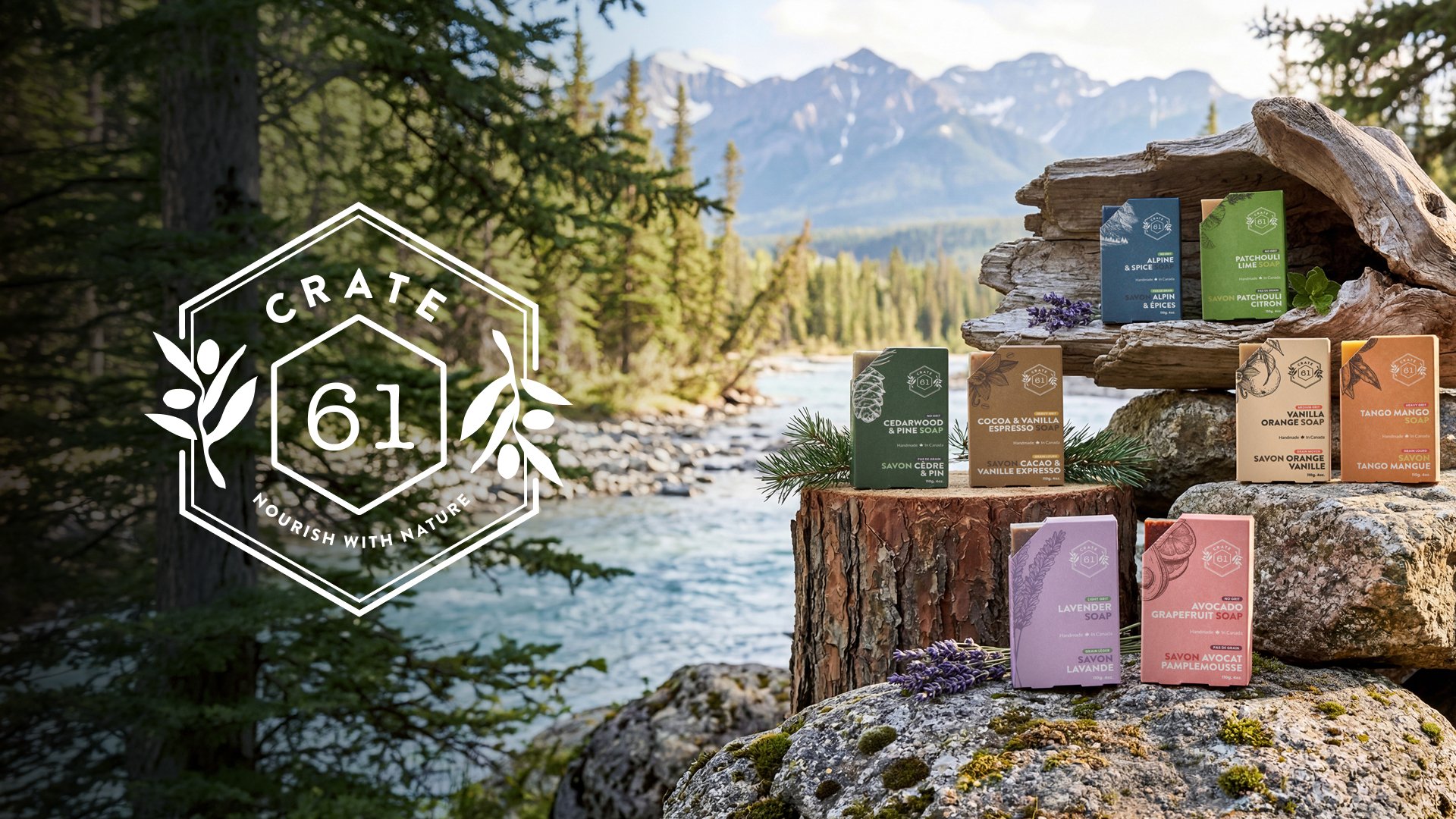
CEO of Crate 61 Organics Alexandros Hanou knows that sustainable skincare is not only a possibility we can aim for, but a standard we must strive for. He shared his insights into top-notch, sustainable ingredients, production and shipping methods and even marketing tactics. Crate 61 Organics provides customers with satisfying soaps and other products without any bells and whistles regarding scent, plastic usage in their packaging and other stereotypes that plague the skincare industry.
Where are you from?
I was born and raised in Thessaloniki, Greece. I moved to the U.S., and later to Toronto, Canada, after completing my university degree.
What is the origin behind the name of your brand?
There are two parts to it. “Crate” comes from old trading vessels — the way goods used to cross oceans in plain wooden crates, pre-industrial era. No flashy packaging, no gimmicks, just something built well enough to survive the trip. That's the standard I wanted for the soap and for the company itself.
“61” is more personal. When I was developing the formula in my kitchen in Toronto, batch 61 was the one that finally clicked — the lather, the feel on skin, how nourishing it was. That's still the base formulation we use today, made with sustainable, plant-based ingredients.
Crate 61 has been quietly building for over a decade. Where is the brand headed next?
For a long time, we didn't really have language for what we were doing. We just kept making the same choices — avoiding petrochemical ingredients, avoiding plastic whenever possible, sticking with cold process soap production instead of faster and cheaper methods. It was never a mission statement. It was just instinct.
I've now lived most of my adult life in Canada, and it's hard to spend that long here without the land leaving a mark on how you think. This is a country with the longest coastline in the world, nearly 202,000 kilometers, and a national park system of more than three dozen parks and reserves protecting everything from mountain wilderness to boreal forest to Arctic tundra. You come to feel that some things are worth protecting simply because they're rare and irreplaceable.
At some point I sat back and asked what all those small choices actually added up to, and it looked a lot like something very Canadian — the same instinct that puts a park ranger on a trail, not to control the land, but to look after it. That's the voice I decided to build the brand around going forward. Not a mascot, not a costume, but a genuine role. Everything we build going forward must answer one question: does this help us protect what should stay natural. If yes, it belongs. If not, we don't chase it.
What inspired you to get into sustainable self-care products? Why is this pursuit important to you?
I've always felt a real connection to nature — that's just been true for as long as I can remember. So when I started this, it mattered to me that the value we create for customers shouldn't come at nature's expense. It should actually give something back.
That's really where bar soap comes in. Liquid soap is one of the most wasteful products in this category - the plastic bottles, the water you're shipping around, the carbon footprint of it all. A well-made bar is the antidote to that: same clean, same experience, without the waste built in.
It's a small role in the bigger picture. But it's a meaningful one, and it's enough to drive everything we do.
The beauty and healthcare industry is often criticized for being wasteful and environmentally damaging. What are some of the biggest problems the industry creates, and how can we work to do better?
There are a few patterns worth naming. A lot of product ships in single-use plastic that mostly isn't recycled in practice, even when it's technically recyclable. Liquid formats carry a lot of water by weight, so you're paying a real carbon cost just to move water around. And routines have gotten longer than they need to be — more steps, more packaging, more manufacturing, regardless of whether any single product is “clean” or “natural.”
We don't think it's our place to lecture the industry about it. What we can control is our own corner of it: bar formats instead of liquid wherever we can, so we're not shipping water. Ingredients we can actually source and verify. Cold process soap production instead of the faster shortcuts and routines simple enough that they don't ask people to buy more than they need.
That's really the whole approach — not campaigning against what everyone else is doing, just quietly doing our part properly and letting people decide if it matters to them.
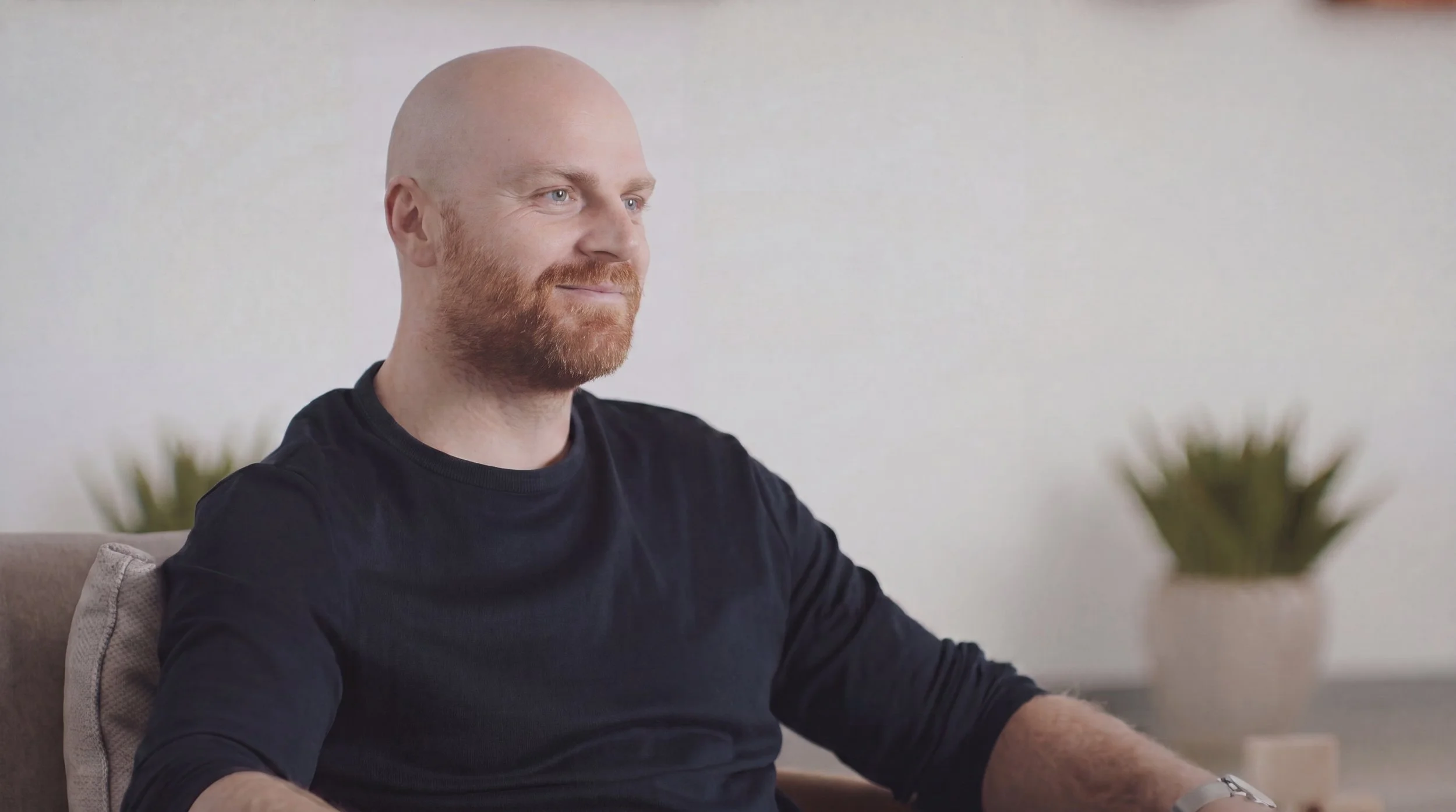
Alexandros Hanou
You mentioned that there are benefits to waterless or “solid” skincare products. What are some of those benefits, and why do you think more people should use waterless skincare?
First, water is often the biggest ingredient in a liquid product by weight, so you're paying to ship and store something that's basically doing nothing for your skin — in fact, it can dry out your skin. Take the water out, and everything left in the formula is actually active. That usually means a more concentrated, more effective product in a much smaller footprint.
Second, water is also what most liquid products need preservatives for. Anything with water content is a breeding ground for bacteria and mold, so you need preservative systems to keep it safe over time. A solid product doesn't have that same problem, so you can often get away with a simpler, cleaner ingredient list.
And third, obviously, there's the packaging and shipping side — no need for a bottle, a pump, all that plastic. A bar just needs something like paper or minimal packaging. Smaller footprint, less waste, lower carbon cost to move it around.
It's really the same story every time: doing more with less. Less water, less packaging, less unnecessary stuff — but the product itself ends up working better, not worse.
How do you advise your customers to avoid being manipulated by greenwashing from other companies? What makes your brand more trustworthy and open than your competitors?
My advice isn't about being suspicious of other brands. It's simpler than that — look past the front of the package and check the ingredient list. If it's vague, “fragrance,” “natural extracts,” that tells you something. A brand that's proud of what's inside makes it easy to find and understand.
Words like “clean,” “natural,” “eco-friendly” or “with shea butter” don't carry any legal weight on their own, so they don't tell you much either way. The more useful question is just what a brand is willing to show you, not what it calls itself.
As for us — we don't ask people to take our word for it. Our formulas and safety files are documented and go through the same regulatory processes required to sell in Europe and the UK, some of the strictest cosmetic standards in the world.
What are some of your best-selling products? Why do you think they are the most popular?
Two of our best sellers are Eucamint and Cedarwood Pine. Both are scented entirely with essential oils — no synthetic fragrance — which is actually harder to pull off than it sounds. Essential oils behave really differently in a cold process formulation than they do in, say, a candle or a lotion. The alkalinity of the soap can distort or completely wash out a scent that smells great on its own. So getting Eucamint and Cedarwood Pine to hold up through that process took a lot of iteration.
I think that's part of why people keep coming back to them — the scent is real, not just perfume-y and surface-level. It smells like what it says it is: eucalyptus and mint, cedar and pine. People can feel that difference, even if they can't always articulate why.
What are some common misconceptions people have about certain skincare ingredients or products, and how do you correct them in your work?
A big one is that “natural” automatically means gentle or safe. It doesn't. Plenty of essential oils and plant extracts are actually more potent and more likely to irritate skin than a well-formulated synthetic ingredient. “Natural” just describes where something came from, not how it behaves on skin. We work with essential oils a lot, so we're careful to actually understand their behavior and dosage, not just their origin story.
The other one is that more product means more results. People assume a ten-step routine is more effective than a three-step one. Usually it's just doing more — more potential for irritation, more stripping, more layering things that fight each other. Skin doesn't need to be convinced, it needs to be supported to do what it is designed to do.
And specifically with soap, there's a misconception that bar soap is inherently drying compared to liquid cleanser. That's true of old-fashioned, poorly formulated bar soap, or detergent bars that are currently on conventional shelves but not of a well-made cold process bar soap. We superfat our soaps, which basically means we discount the lye so it doesn't fully saponify all the oils in the formula. That leaves a portion of ultra-nourishing oils behind, fully intact, available to actually nourish the skin as you wash. Something which is entirely impossible to achieve with liquid soap or cheap conventional extruded bars.
Social media makes it easier than ever for companies to sprout out of the blue. What makes you stand out from the crowd, and how do you avoid comparisons to other brands?
Social media makes it easy to launch a brand overnight. What's much harder to fake is actual manufacturing capability. That's a fundamental difference between us and most brands that one might consider to be our “competitors.” We've invested in our own vertically integrated facility because we realized that no other company would be able to manufacture our soap with the same quality, at scale, and at a cost that allows us to make these soap bars accessible to as many people as possible.
That matters because our story and our values aren't separate things — they're the same thing. If you want to actually create value in this industry, not just talk about it, you need to control production. So we built a scaled cold process facility ourselves, one that lets us stay flexible and nimble as a company, and lets us sell directly to customers at a much higher value.
So when people ask what sets us apart — it's not just a better story. It's that we actually built the thing the story is about. Anyone can write a good founder narrative. Not many people can point to an actual factory and say, that's ours, that's where the values in the story actually live.
What is the basic, must-do skincare routine that you would recommend?
Barring any skin condition, my answer is to do as little as possible. The best thing you can do for your skin has almost nothing to do with topical product — it's diet, exercise, sleep, getting outside into actual nature. That matters more than anything in a bottle.
People are always baffled to hear me say that as the CEO of a personal care company, but it's the truth. Whatever we do to our skin topically is just there to support what a healthy lifestyle already provides.
Beyond that, I'd strip your routine down to the basics. Cleanse and moisturize occasionally — not obsessively. Skin is actually really good at regulating itself. If you let it do its job and produce sebum naturally, instead of stripping it and layering on ten products to compensate, you get healthier skin long-term. It's not about doing more. It's about doing less and doing it well.
Why do you think skincare routines are popping up more than makeup routines nowadays?
I think it comes down to a shift in what people are actually optimizing for. Makeup is about covering or changing something in the moment. Skincare is the long game — it's an investment in what your skin actually looks like underneath, without anything on it. And there's been a real cultural shift toward wanting that: looking good with less, not more.
Social media probably accelerated it, too. Skincare content works well on video — routines, textures, results over time — in a way that's satisfying to watch and easy to be consistent about. It's also just more universal. Skincare isn't gendered or occasion-specific the way makeup can be. Everyone has skin, and cleansing is about as basic a routine as it gets. I think that universality is part of what's driven the explosive growth we've seen in men's natural personal care specifically — it's an easy, low-barrier entry point into caring for yourself.
I also think it comes down to people being tired of performing. Skincare feels like less of a performance and more like actual care — for yourself, day to day. That's a shift I think is going to keep going, not reverse. Our products are built around getting that fundamental routine right, and doing it really well. That's a small, deceptively simple thing to nail — which is why I think we still have a long runway of growth ahead of us.
Skincare routines are wildly popular on social media. How do you harness the power of technology to promote your brand?
I think the biggest shift in marketing has been the opportunity for a brand to connect directly with its customers — without needing a massive budget, a celebrity endorsement, or some overblown campaign. Today, a genuine message about a product that actually offers real value can pick up momentum almost effortlessly. It just requires the brand to be consistently honest and transparent with its customers.
For us, that's meant leaning into short-form video — actual behind-the-scenes footage, the cold process happening in real time, the batches, the real production side of things. Not polished ads, just showing the work.
Anyone can put “handcrafted” on a label. It's a different thing to actually let people watch it happen. That's the kind of transparency technology makes possible now — and I think that's ultimately what earns trust, more than any campaign could.
It has been a crazy last few years, and we expect at least three more. How do you stay positive?
I try not to spend too much energy on things I can't control. There's always going to be noise — economic, political, whatever it is — and if you let that dictate your mood day to day, you'll never build anything. So I focus on what's actually in front of me: my family, the business, the people we work with.
Getting outside helps a lot too - being near water, in nature, away from a screen. It resets things in a way scrolling never does. And honestly, building something real with your hands, whether that's a bar of soap or a business, is its own kind of grounding. It's hard to stay anxious about the world when you're actually making something.
So I wouldn't say I'm positive because things are easy right now. I'm positive because I've got things I actually care about to put my energy into — and that's always been true, regardless of what's happening around us.
What is your motto in life?
I don't know if I'd call it a motto so much as a filter I run everything through: do less, but do it properly. Whether that's a soap formula, a business decision, or how I spend my time, I'd rather do one thing exceedingly well than five things halfway.
I think a lot of problems, in business and in life, come from trying to add more when the real answer is usually to strip something back to what actually matters and just do that properly.
To learn more about Crate 61, please check out the links below:
Website: crate61.com
Instagram: @crate61organics
Image credit: Func Media
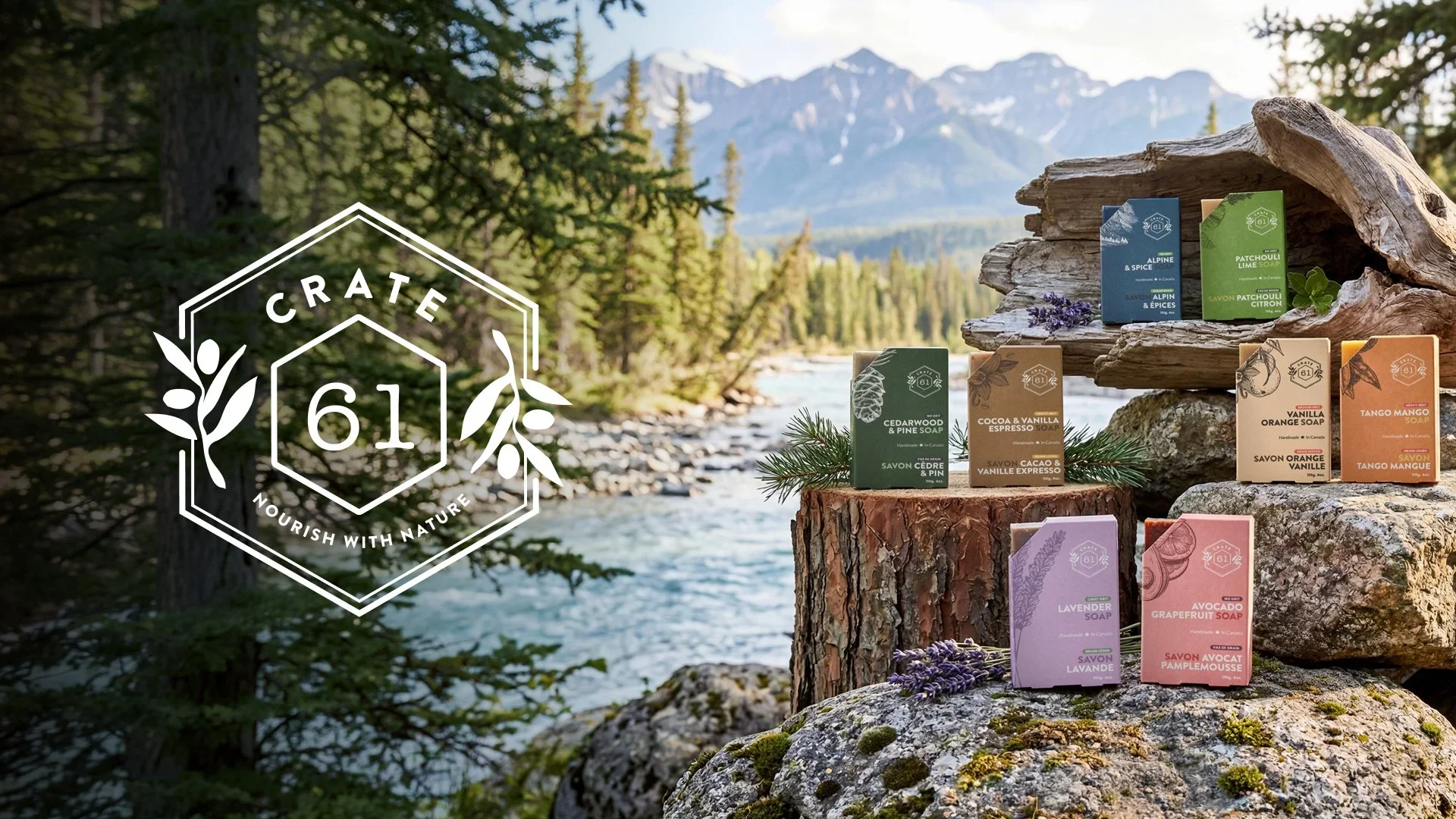

Everybody has a skincare routine nowadays. Everyone’s desks and vanities are littered with product upon product of serums and creams meant to make us age in reverse or glow like the sun. In the constant noise and hurricane of social media promotion and online pop up ads, however, how can you trust what will actually be the healthiest choice for your skin and what is just a bucket of glitter. Here are some examples of brands that carry vegan, cruelty free and overall sustainable sunscreen options to add into your skincare routine.