"Musical Theater for Adventurous Kids, Families and Educators" with Doctor Noize
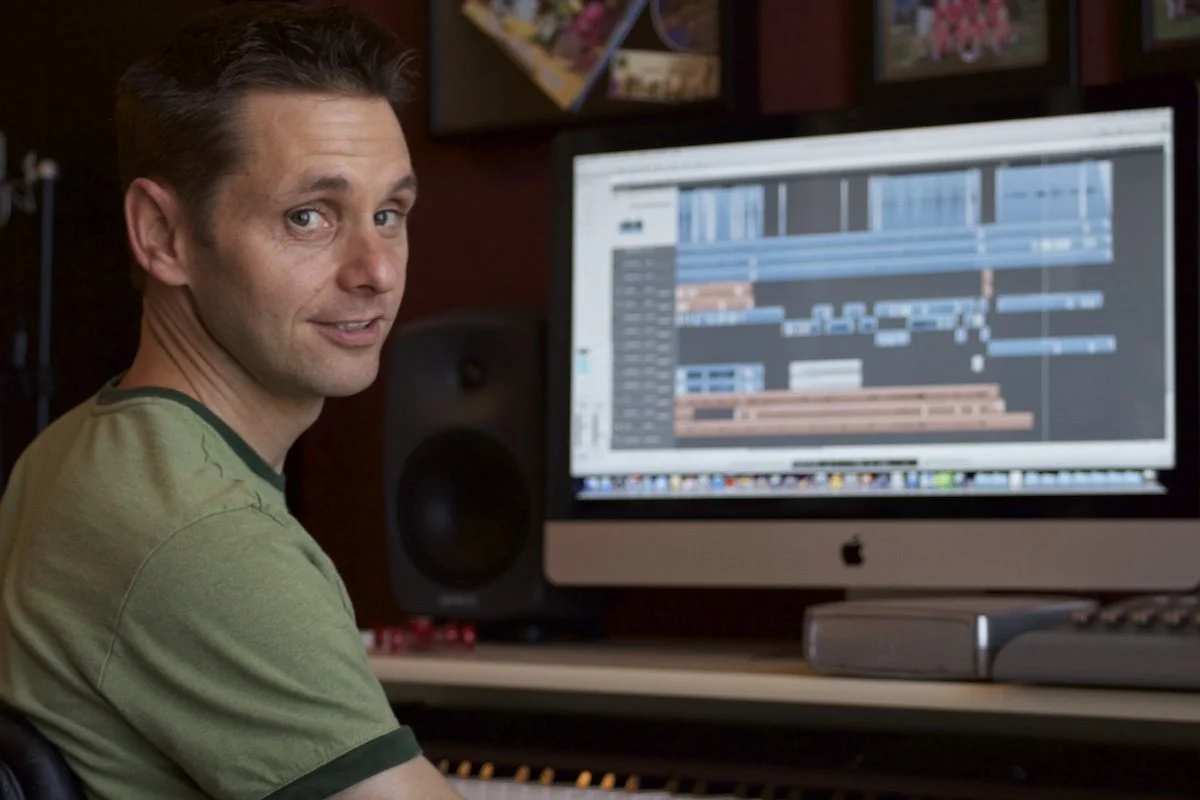
Doctor Noize, aka Corey Cullinan, is a writer and musician for all ages who specializes in creative storytelling through sound and engaging with having the most fun possible. He is passionate about education and the importance of putting the technology down in favor of taking care of yourself through exercise, exploration of your passions and developing healthy relationships with yourself and those around you.
Where are you from?
My mother.
How has your hometown influenced yourself and your art?
My hometown is Los Altos, CA, in the heart of Silicon Valley. I absolutely love Los Altos, and it is probably more pivotal than most people’s hometowns in shaping who I am and what I do. I return often, and have close friendships there with both people my age and people from my parents’ generation. My father was Mayor of Los Altos in my early teens. My brother was already a nationally known computer programmer in his mid-teens, featured as a young entrepreneur in an extended segment on The Today Show and interviewed by Jane Pauley.
Then my brother, ironically and sadly, was diagnosed with a malignant brain tumor. Over the next few years, my brother gradually lost function and died of cancer, and my father — who was the greatest father in the world, very attached to his kids and a surrogate father to many more as one of the town’s favorite youth sports coaches — became very depressed about that. My dad died by suicide less than a year after my brother passed away, leaving just me and my mom. It was a very challenging time for our family, and I’m realizing more as I get older that it has informed every decision I’ve made since.
Anything you get in life is a gift; any time you spend that is counter to your purpose and values is wasted time; I strive to have the courage to always be introspective and make sure I am living my values and the life I want to lead. I’d like to be a positive influence like my father and brother were, and handle challenging times with the grace with which my brother handled his illness. That is a lot of what the Doctor Noize albums and books are about. And our first daughter’s middle name is Grace. Our second daughter’s name is Max. Do things you believe to the max… but do them with grace so you can handle both the successes and failures of said things.
What inspired you to get into music, particularly kids music?
I am immature, so kids music seemed to fit.
Serious answers to both parts of your question: The Shakesperian tragedy that befell my family in my teens lead me to get into music. It was a different time in the 80s — everyone meant well, but nobody thought to get me to a therapist after my brother and father died in a single year. Teenage boys don’t really talk to other teenage boys about such things in depth, even though I had amazing friends in Los Altos — many of whom are still my best lifelong friends — and we did talk a bit. But the way I really processed the joy and the trauma of my teens was through writing songs. It saved my soul.
That’s why I don’t just make music now, I also teach — mostly now at Stanford University in the summers, but also at Workshops around the country. (I’m a former full time college Recording Arts Director, and former High School Arts Department Head before that.)
I teach still, even though I don’t have to anymore, because I know there are young musicians out there like me who use music to survive. I get that and connect with it, and want to be a part of it. It makes me feel more relevant and useful and purposeful as I get older. A song I wrote and recorded called Can’t Wait To Feel It All Again says in its Chorus:
‘Cause I have sensed the greatest thrills of life
I have touched the deepest sorrow
And I can’t wait… wait to feel it all again tomorrow
Ah, youthful resilience and exuberance… I hope I’d still write those lyrics now. It’s why I still want to be connected to the young. That’s a young thought. I’d like to still have them. Which leads me to your second question…
I started doing kids music when my daughters were young — 1 and 3 — and we went to see a wonderful guy named Andy Z perform a show for kids in my hometown of Los Altos. I didn’t know such a genre existed. My kids loved him and the show. I spoke with him after about what he did. He was generous and lovely and amazing telling me all about it. We’re still close friends. So I made the first Doctor Noize album, weeks later my song Banana was #1 on Sirius XM Kids Radio, and I have been doing Doctor Noize ever since.
How would you describe your sound/genre of music?
Musical theater for adventurous kids, families and educators who love to learn and laugh. To listen and sing along. To be inspired and inspire. To listen to a Doctor Noize album is to go on a wild journey with a diverse group of eccentric and well-intentioned curious characters. The Phineas McBoof series of albums follows Phineas and The International Band of Misunderstood Geniuses, which includes everything from the world’s only eight-armed octopus drummer to a rapping songbird.
The Grammaropolis series of albums explores the world of words and language through the eyes of characters like the Noun, Slang and Sheriff Semicolon. The Collaborations series is a set of albums I did as Doctor Noize with collaborators on specific subjects. There’s a lot for kids, families and educators to explore in this world, and I try to do it in my music as Doctor Noize.
Who are some of your biggest inspirations for your sound and storytelling?
Pixar. They have wonderful stories, characters and adventures in their movies. Watch the new Doctor Noize video, The Monster Dance, or the Banana video, or any of the twenty or so Grammaropolis and Punctuate This! album videos. Or listen to the albums like Phineas McBoof Crashes the Symphony or The Return of Phineas McBoof. You’ll hear that creative stories and characters are everything to me; they and my love of life, friends and family fuel the songs.
The other primary influence is the Beatles. My lead character, the great rock star monkey Phineas McBoof, is named after Paul McCartney. The band’s music is adventurous and extremely genre-exploratory like the Beatles; and Phineas’ Band’s story follows the story arc of the Beatles’ story. I drew up the story arc for the whole sequence of albums before I recorded the first note, and I have followed it. The last two albums will finish the Band’s story, and all of it will be reminiscent of the Beatles’ story. It’s a fun little Easter egg nod of respect to my favorite band of all time.
Children’s music is a very popular and necessary art form nowadays. How do children respond to and engage with music differently than adults do?
Children are the most adventurous audience in the world. Adults are not. I love both audiences. But that’s the difference. If I play a country song about a robot and it’s good, then an orchestral piece and it’s good, then a pop dance tune and it’s good, then a jazz ballad and it’s good, and then a rap song and it’s good… a kids’ audience loves it and wants to come up onstage with you and party to it all.
With an adult audience, some of them love it, and some of them say: “WTF is going on?” But honestly that’s fun and funny too — trying to win them over anyway. It’s all part of the ride in my crazy music shows, both the kids’ shows and the adult shows I do as Cory Cullinan.
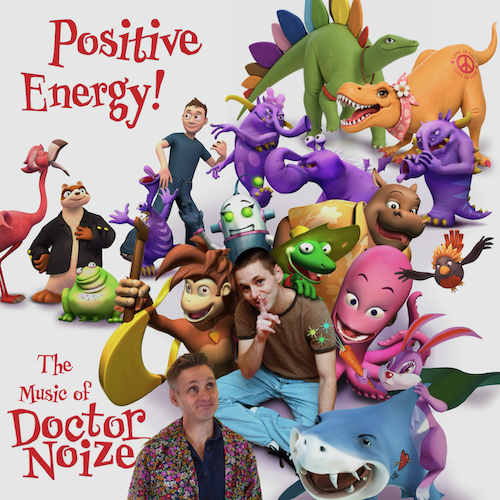
Your new album “Positive Energy! (The Music of Doctor Noize)” dropped September 10. What inspired the creation of this album? What do you hope your fans get from it?
What inspired the creation of the album is that I’m not a young lad anymore, my kids are fully grown (21 and 24 years old), and I am returning to more adult music, teaching, writing, and speaking now. Still doing kids’ music, multimedia and shows as Doctor Noize, but not with the same release rate as before, because I want to do many more adult projects again that I feel equally passionate about. So it’s a great time for me to look back — and forward — and curate something that represents that as Doctor Noize.
“Curate” is the word, because I just didn’t make this as a greatest hits album. It certainly has some hits — chart hits, songs from stage musicals and shows at major theme parks, songs from hit apps, Apple Essential Recordings, blah blah blah — but I also made sure to choose two songs from each album that really represent the story, character and learning purpose of each album.
So of course I hope this album serves as a “gateway drug” to all the other Doctor Noize albums — it’s really the only one that’s a collection of songs instead of a story told by songs — but I also made sure to create the song list so that if this is the only Doctor Noize album you ever listen to…
You’ll still learn about all the instruments of the orchestra, all the types of words, the importance of environmental awareness, the reason I make this music in the first place — see Diversity or Here’s To You (My Last Song) — and, of course, the important revelation of why chickens cross the road.
Or not.
I hope my fans get a huge smile and dose of creative inspiration to lead them to greater curiosity — musically and philosophically — from it. And I’m delighted that I’ve received extensive responses from both fans and critics that they get just that out of it. So I should probably retire now before I screw all that up. But I won’t.
What are some stand out moments from this album that you find most memorable? Do you have a favorite song on the EP?
The sequence of This One Moment / Cast Your Spell / Phineas McBoof Crashes the Symphony is the most unique, and possibly my favorite, sequence on the albums. These are absolutely the three “least likely to be 3-minute radio hits” tracks on the album. But they say so much about how I feel about life and music, and they’re recorded with one of the world’s great orchestras, the City Of Prague Philharmonic.
I also love the song I sing with my adult kids called Make Us Into We introducing the final two Doctor Noize characters (on the last two forthcoming Doctor Noize albums) — my daughters Sidney and Riley play the last two surviving dinosaurs, P-Rex and Lauruh The Stegosauruh, who have been inexplicably roaming the Earth for 65 million years together. I love stuff like that.
But really I love all my song children equally, and just feel fortunate that I’ve had a career that has afforded me the opportunity to explore and maker them.
“The Monster Dance” song is super cute. What inspired this song?
Thank you! The Monster Dance introduces the four monster characters in Doctor Noize’s band — Ooh, Gah, Boo and Gus. They’re a monster horn section — the worlds’ greatest horn section — but nobody will listen to them because they’re monsters and audiences take one look at them and run away scared.
But this does not deter the Ooh Gah Boo Gus’ love of music and belief in people, so they do the thing that brings them joy and they are great at anyway, hoping eventually some people will come along for the ride. And Phineas McBoof does. He sees them, understands their greatness and philosophical / artistic / soulful purity, and invites them to join his Band. Then the world accepts them.
That is basically the story of every Doctor Noize character — they’re all eccentric misfits who persevere and find a way to fit in, with Phineas as their ringleader.
I get to become the ringleader in the video for The Monster Dance. It's a new leap in production artistry for Doctor Noize videos, combining the 3D animation style of my Banana video with the live action of my recent videos. We’re now a full video production house at Reach Studios (my production house in Colorado).
My favorite children’s film growing up was Mary Poppins, and my favorite part of that film was the groundbreaking segment when they all hop into Bert’s paintings. I play a similar character to Dick Van Dyke (and Lin-Manuel Miranda in the sequel) as a homage to those wonderful artists in The Monster Dance video, which will release on my birthday, (October 30th).
You are the Chairman of the Board of the Pikes Peak State College Recording Arts Program and the Children’s Music Network. Can you tell us a little bit about the work you do with these organizations and why it is important?
Well, I’m the Chairman of the Board of the Pikes Peak State College Recording Arts Program because of an amazing woman and educator named Shazia Ali. Shazia was our daughters’ childhood piano teacher when the girls were young. Years later, after she became a college music professor, she started enrolling in the Stanford Recording Arts Workshop I have the honor of teaching for two intensive weeks every summer at Stanford University. Like every great teacher, she was also an amazing student.
Fast forward a few years… Shazia is the Music Department Chair at Pikes Peak State College, she has created a new Recording Arts program based in many ways on our Stanford Recording Arts program, she asked me to be the Chairman of the Board of that program, and I asked her to be my Co-Teacher at Stanford. The program at Pikes Peak is only about a year old, and we already have over 65 — maybe it’s 75? — Majors in Recording Arts. A wonderful development for Pikes Peak and a lovely development for our Stanford program — it’s one of many success stories we have that shows our program at Stanford really makes a difference, and I’m deeply proud of that.
I am not the Chairman of the Children’s Music Network, and certainly don’t want things I don’t do to be attributed to me. But I did serve on the Children’s Music Network Board for two years, just like the Recording Academy. I’m actually not even a member of CMN as of this writing. I’m very fortunate to have steered and stumbled myself into a position in life where I get to choose how I spend my time very purposefully. I take my time very seriously.
And yes, socially beneficial and excellent leadership in education, arts and culture is very important to me. I study it. Try to implement it. Leadership is so important; I’ve spoken on this subject for years, written about it in the Doctor Noize stories, and now feel it’s time for me to focus back on adults again — we American adults are broken more than the kids are. Leadership has become increasingly difficult, because we see very poor and unintrospective leadership at the very top in this country, and we subconsciously decide it’s fine if we let ourselves slip and be just a little bit better than that. It’s not fine.
It’s stunning to me just how much leadership 101 ethics have fallen — and not just where it’s most obvious, or on one side of the political spectrum. Everyone thinks they’re right so they should be able to take short cuts. To me, one of the most important things for us all to work on in a country and culture today with so many issues at a critical juncture is the dearth of disciplined leadership focused on “extreme curiosity” toward introspection and self-improvement.
We strive to do that at my company Doctor Noize Inc., at Stanford, and at Pikes Peak. It takes a lot of effort and we don’t always get it right, but we sure try. In my time remaining, I’m being very disciplined about aligning myself with people and organizations who represent this as a core value of their existence. And I plan to speak, write and sing about this more and more to adults, not just kids. So if you don’t wanna hear about that, you should definitely tune me out...
In addition to kids’ education, you are also very passionate about the environment and are on the Board of the Stanford Alumni in Sustainability Climate Action Forum. Why is this organization important to you?
Thank you for this question! The Stanford Alumni in Sustainability Climate Action Forum is the one Board I’m on whose name I can never fully remember. I find that hilarious, so thank you for reminding me. I adore this Board and its purpose. It’s important to me because (1) climate change and sustainability are one of the greatest challenges we face moving forward; and (2) it’s also one of the challenges we are simultaneously solely causing and almost completely ignoring as a species.
Our unwillingness to act responsibility regarding the climate — despite having all the facts at hand — is indicative of our biggest flaw as humans: We are great at doing individual, even complex things, but completely unadapt at recognizing and addressing systemic flaws. We are not good at working together. And we need to get good at it, or we will destroy our planet — and send cultures and economies into great peril and chaos.
I know that’s not a typical children’s musician thing to say, but it’s true, so I’m saying it. We host events for people to attend to that build awareness of climate and sustainability issue. I am often the moderator of said events with our far-more-illustrious-in-the-climate-field-than-I-am guests. I’m one of the only men on the Stanford Climate Board. Sometimes I’m the only man. It’s a great chance for me to learn and grow in a number of ways.
I also represent climate action in my musical work. As Doctor Noize, one of the albums in my Collaborations Series is Funk The Earth, a sort of “supergroup” (that’s too strong a term — pause to laugh at my clueless cockiness) of me, multi-Grammy-winner Ricky Kej, multi-Grammy-winner Lonnie Park, and rapper Konshens The MC. We actually opened up a United Nations General Assembly Meeting on climate once with a song. Other Doctor Noize albums, like Phineas McBoof Crashes the Symphony and Homemade, also address climate sustainability.
And I know you’re mostly asking me questions as Doctor Noize, but as Cory Cullinan (my music for adults), I released the avant-garde multimedia piece Footprint that is up to interpretation but certainly addresses climate and sustainability issues. And there are more tracks and songs coming addressing the issue.
It’s been said that children nowadays have been disadvantaged by technology. How do we combat the influence of devices on their development?
They have been disadvantaged by technology. Full stop.
I’m glad I grew up in the eighties when I didn’t have a phone in my hand or the internet to see if I was as cool as all the other kids. I’m deeply disappointed in my native Silicon Valley for saddling kids — and adults — with technology that makes us more depressed and shallow rather than more connected and educated. I could talk forever about this, and do sometimes.
We combat it in three ways:
(1) Modeling not being disadvantaged by and addicted to technology ourselves. I have Cory Cullinan single and video coming out next year that is all about this. I can’t say more right now, but it will be both hilarious and nasty. Again, I’m not just doing sweet stuff for kids anymore. This world deserves more criticism than that… says the children’s musician who just released an album called Positive Energy! Introspection is an almost lost art on us today. It’s not cool anymore, and that’s tragic. And it’s because we’re always consuming information and feeling we need to publicize and post back, instead of really sit, talk, and think… including, and especially, with people we disagree with.
(2) Giving kids — and adults — inspiring opportunities to live in the real world — of deep intellect, creativity, curiosity, diversity and connection — rather than get lost in a fake digital world of shallowness, dopamine hits and overly-comfortable tribalism.
(3) We need to fight back — and hard — against companies and political leaders who don’t believe we need to regulate digital technology — from social media to AI — for the common good. It is not hard to determine what is positive and what is negative for these technologies to do in society. We only need the courage to observe ourselves, look at studies of how it impacts us, and decide we’re okay with some of us having less “likes” and less money so the rest of us don’t become slaves to algorithms.
How does your music assist in the education and influence of today’s kids? What do you want them to take away from your work?
I think I mostly answered this question above, but I try to make every album have core learning goals — grammar, the symphony, etc. — and then the Doctor Noize characters have a blast challenging themselves around those goals. Grammaropolis was commissioned as a musical for schools, and its music is also featured in a popular app that’s taught grammar to millions of students. Big Picture, what I want them to take away from my work is the joy of learning, being curious, and being inclusive to learn more things together.
My shows are very interactive, so the audience literally gets right inside the creative process, on and offstage. I often write and record a looping song on the spot with my audience. A song that didn’t exist before that moment and only they have ever heard. A song they’re a part of making.
What advice do you have for parents today who are struggling to fight against the growing intrusion of technology into parenting?
Don’t let your kids spend a lot of time on a mobile device, or a computer, on things unrelated to work or creativity. Or don’t even get them a mobile device. Inspire them to live life beyond the screen. That’s my advice. They’re not bad in moderation. They’re pretty terrible for us when used hours per day, like most kids use them. Not just kids. Us too.
What is your motto in life?
Have no motto in life.
I’m kind of obsessed these days with contesting and contrasting the “keep it simple” motto that rules the world now. Here’s a controversial answer to your question: Mottos are simplistic and dangerous. Just like most things that can be truly understood in a 10-second TikTok unintentionally teach you to be shallow and simplistic. All of the world’s most interesting subjects and questions — artistic, philosophical, scientific, relationship — take way more study and focus than that. So instead of a motto, I’ll give you a paragraph. What a pain in the ass I am. Here it is:
Prioritize character. Guide every decision with purpose. This will lead you to make some decisions that are beneficial to you, and some that are less beneficial to you and more beneficial to the world. It is what used to be considered virtue. We are increasingly convinced that what’s best for us is what’s best for the world. Ultimately that’s not what’s best, even for you. Make decisions so you can sleep at night feeling you’ve done the right thing and made your kids proud of your character.
Sometimes make decisions that are right but make you so uncomfortable it’s hard to sleep that night because you know the backlash is coming. My kids are proud of my character, and they know the decisions I’ve made that have hurt, not helped, my career. And there’s nothing I’m more proud of than the fact that my kids are proud of my character… and that they prioritize character in return. I will support them doing and saying things they think are right. Period.

It has been a crazy last few years, and we expect at least three more. How do you stay positive in general about the unknown and motivated as an artist?
I believe you’re speaking about the political and cultural situation. I know a lot of artists, particular children’s musicians, try to stay out of all that. I don’t. I referenced this above regarding leadership. So I’ll be very direct and say some things many children’s musicians would be coached not to say by their PR agents. (Not my PR agent — she’s awesome and fully encourages me to be an artist speaking my mind.) What is happening politically and culturally in this country is appalling, and should be protested in every democratic way possible. Republican gubernatorial candidate Ramaswamy in Ohio just released an ad where he sought out his opponent’s mother, and filmed her attacking her daughter’s character.
This is bad enough right there. But Amy Acton’s mother has not seen her daughter for decades because Amy and her brother were taken away from her. Why? Because the star witness of this Republican Governor candidate's ad supported her husband raping and sexually abusing her children, one of whom is now Ramaswamy’s opponent. The President of the United States, and the Vice President of the United States, backed this ad and attacked those criticizing it — including the rape victim. They think this is acceptable behavior. That is morally unacceptable leadership. Period. It must be voted out.
I do realize your question was “how do you stay positive?” and I just said something that is really negative. The answer is that you don’t ignore that, enable that, and allow yourself to become part of the problem. You don’t pretend everything is all sunny on Sesame St. when it’s not, whether you’re a children’s musician or just a human being. We all need to be real and honest human beings first and people protecting our commercial viability second. That’s what a deeply thoughtful human and artist does. You may not be able to fix the problem, yourself, today. But you sure as hell can stand up and speak your mind — and sing your song — against it.
One of the reasons I’m heading back to more adult music and less kids’ music is that I want to say those things out loud, in music, in writing, in interviews, and children's music is not the best venue for it for obvious reasons. This is unusual to hear from a children’s musician, but I just feel like only singing about happy and inspiring things right now is not a reflection of what I’m actually seeing and feeling in this country. If you’re a person who cares about others, including women, minorities, and the poor, it’s pretty disingenuous to walk around just happy and content right now.
Particularly if you look like me. In my opinion, you gotta do something to push back against the rich and powerful who are taking power and respect away from so many others right now, in order for you to earn that happiness. Those of us who have been successful, financially and otherwise, have an obligation to engage now. Especially those of us with an audience and a platform.
When a lot of artists were removing “woke words” from their websites to get gigs in the last few years, I understood why because it was their livelihood. But I took a different approach and released a Doctor Noize song called Diversity. My daughter Sidney noted that the song's contents are aligned with almost everything she saw on Sesame St. growing up. But times are scary different, and less inclusive, now. Some commercial outlets and insiders didn't play or support Diversity — even though it featured recent Grammy winners. But it received amazing reviews from those who did, and Diversity has a ton of views on YouTube. The audience is there. Represent your values and you’ll find your audience.
Things are not great out there right now, and that’s why you have to do these things anyway. Don’t wait for others to tell you when empathy and inclusion and tolerance are okay again. Do it when it is not a guaranteed home run. That’s when it’s needed most. I have absolutely lost gigs, and opportunities, and networking connections in the industry, and plays on radio, because I have spent my whole career speaking my mind on both social issues and issues of imperfection in the music industry. I am fine losing these opportunities. I think artists need to speak our minds. Everything is so corporatized now, including art. It encourages even indie artists to try not to say anything taking too much of a stand on anything.
I don’t do that. I’m sort of that old-school idiot artist who says and does what he thinks. I strongly believe it’s a great way to attract the people who will resonate with you and your music, and weed out the people who won’t resonate with you and your music. I think both of these are fine. Many artists, in this era of “how many likes and followers do you have?”, have been trained by the system to play it safe.
Don’t play it safe.
On that note… Go see Digger. It’s being talked about as a movie with a mainstream budget that bombed big time. I think that — and the quality and character of its very complex messaging and storytelling for a complex time — makes it the bravest and best thing I’ve seen in a while. Take swings. Make great art. I’ll bet Digger finds its audience in history. Because it says a lot and takes a lot of stands. Uncomfortable ones too — not just about the rich and powerful. But about us. It asks us to get introspective. I appreciate that.
So how do I stay positive today? I positively try to do the right thing, even when it makes life hard. I get used to being uncomfortable and making others uncomfortable at times… but still try to be empathetic, including to those I disagree with. It’s what artists should be willing to do — even in these corporatized times.
To learn more about Doctor Noize, please check out the links below:
“The Monster Dance” Video: here
Website: doctornoize.com
Website: corycullinan.com
YouTube: @doctornoize
Facebook: @doctornoize @corycullinan
Instagram: @doctor.noize @corycullinan
LinkedIn: @corycullinan


Sometimes we pay more attention to what others are saying about us than actually who we are, and we end up getting lost in their noise. However, some people eventually can connect with their true self like Toronto-based musician Holly Clausius, thanks to music. Her social change single ‘Big Plans’ placed second in the Cross Canada Artist For Social Change competition in February 2021. This song focuses on marginalized youth and individuals who have been outcasted in society. She dedicated the song to those who felt isolated and pressured not to be their authentic self. Also, she wanted to take the idea of a tour indoors, with opening acts from people's kitchens, bathrooms, and bedrooms, making it a virtual apartment-wide tour to raise funds for Black Lives Matter Toronto. We talked to Holly Clausius about her latest album, BLM, the queer music industry, and more. Check out our interview below to find out more about Holly Clausius.