"It's the Answer to Everything: More Love:" JFo Discusses Processing Grief Through Creative Expression
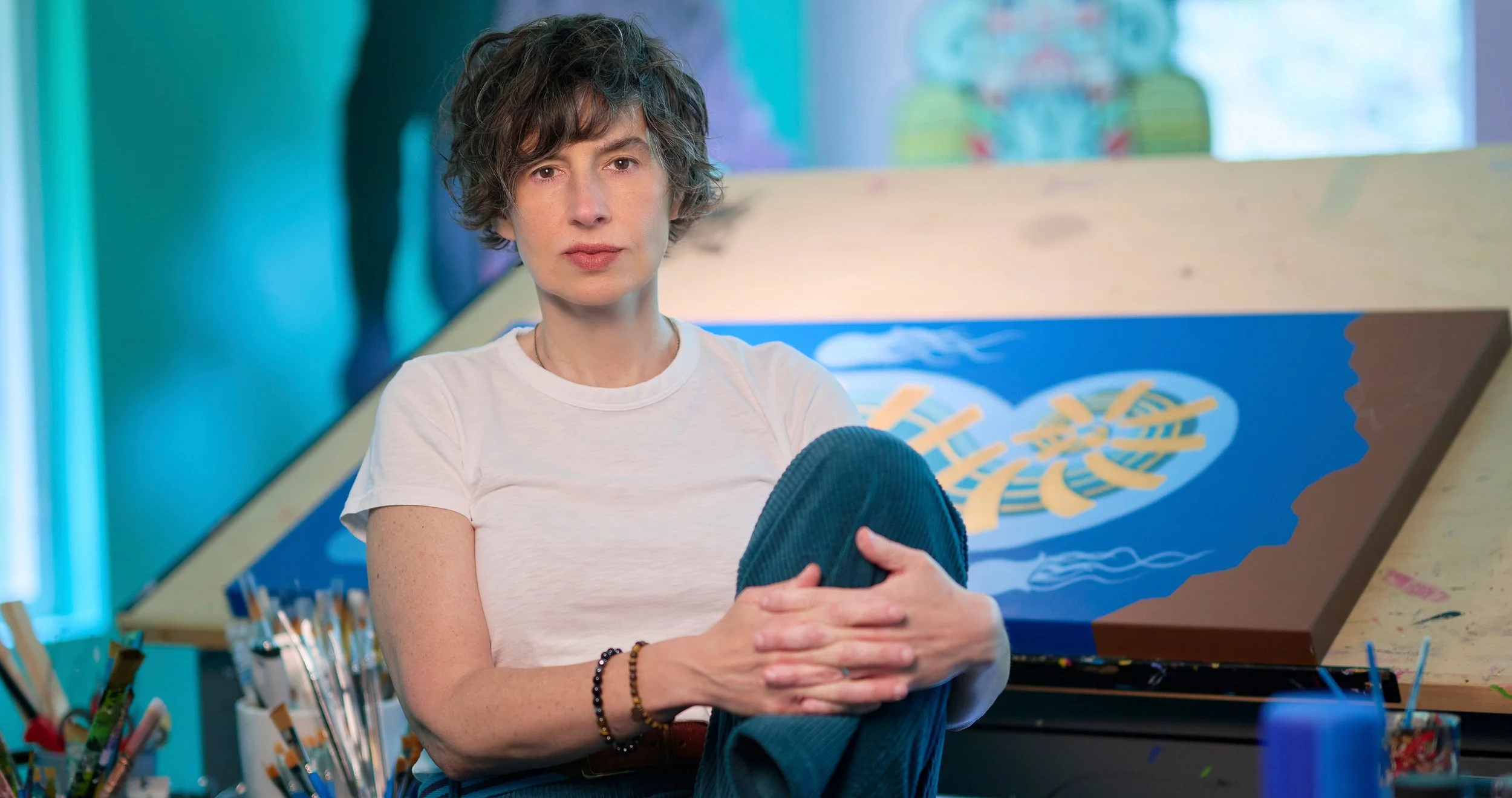
Photo Credit: Josiah Lewis Images
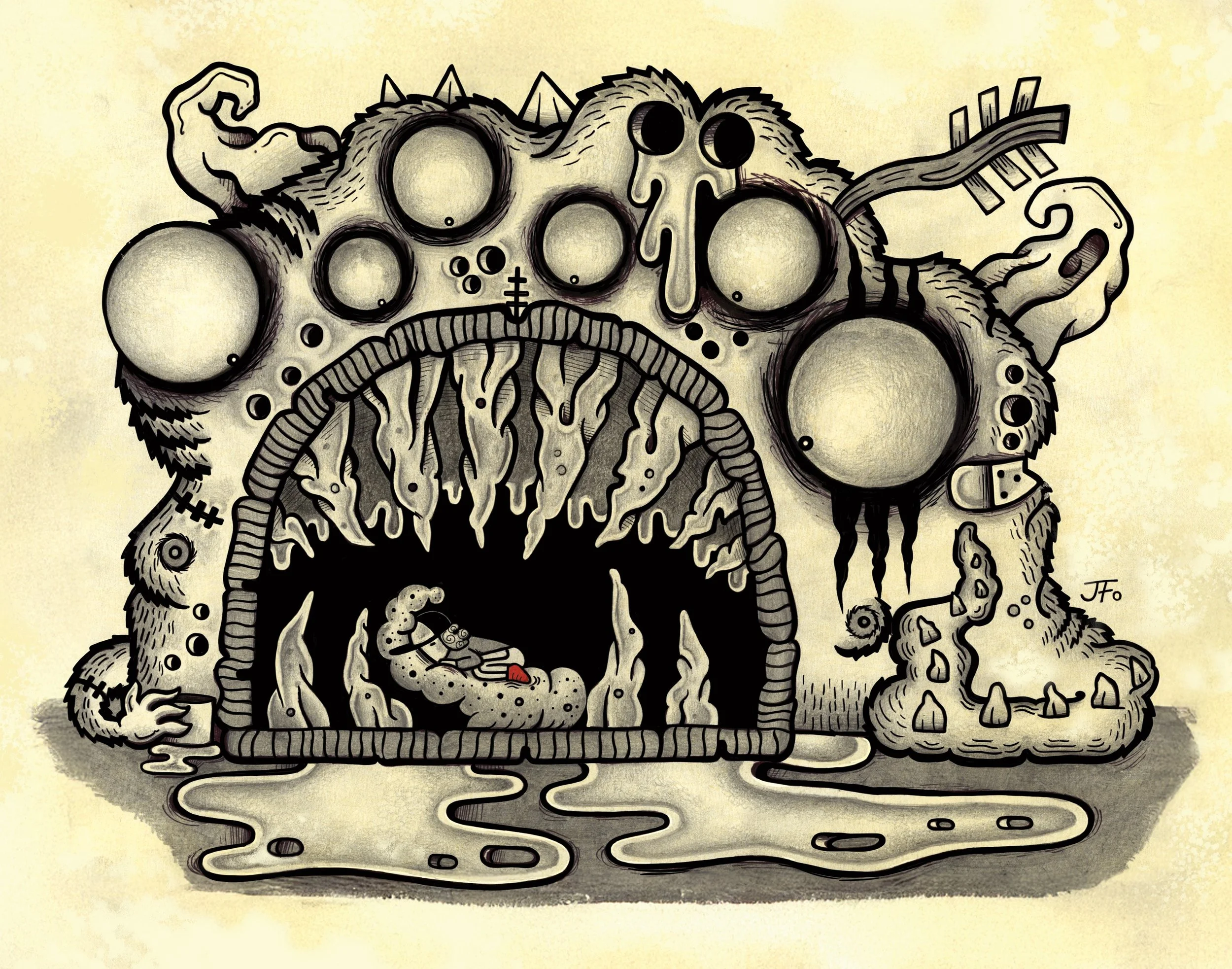
After losing her mother, JFo experienced a grief like never before, and turned to her passion for illustrating and learning to move through her emotions and process all of this newfound pain. Her new book, “Grief Monster: An Illustrated Diary of Grief,” details the metaphorical monster that represents all of her deepest emotions and how she has learned to exist with them over the years. JFo is also a certified Grief Educator who wants to remind others in similar positions to give themselves the peace and grace to heal at their own pace.
Where are you from?
I was born and raised in a small, but proud town, in Pennsylvania called Dunmore.
How has your hometown influenced yourself and your art?
My hometown has its own way of doing things, but the people who live there have always been supportive of my art. Whether that meant inviting me to paint murals on their business windows as a high schooler or always commenting on my paintings on social media, they've always been there to cheer me on.
What inspired you to get into writing and illustrating?
Being born was my biggest inspiration to start illustrating. I remember my mother having to force me to stop drawing so that I could eat or sleep or pay attention in church. As long as I can remember, drawing was all I wanted to do. When my mother died in 2023, that was no exception—illustrating my grief was the closest I felt to "ok" for two years. My wife encouraged me to put dialogue to the drawings, and then to publish the work. That's how our publishing company, J & J Publishing House was born.
Who are some of your biggest inspirations for your art and storytelling?
In general, my biggest inspiration for illustrating has had quite an arc over the course of my life. It started out as an outlet for everything I was feeling. Then I was discouraged from drawing such "dark things," so I repressed what I really wanted to draw in favor of cute and funny doodles that my audiences preferred. When my mother died, I hit a wall and I knew I needed to return to what my younger self knew: the power of expressing my emotions artistically.
In regards to my book, “Grief Monster: An Illustrated Diary of Grief,” Joanne Cacciatore was a major catalyst for the diary entries. She wrote a book called “Bearing the Unbearable” and in that book she encourages you to imagine what your grief monster looks like and to invite them for tea. Reading that is what inspired my initial entry, and then it was an unstoppable flow after that.
The art world is very heavily populated. How do you set yourself apart from the crowd when you are creating?
To be honest, I don't really pay attention to the "art world". I’m not interested in competing against anyone or even creating anything for anyone other than myself. I create as a matter of catharsis, expression and authentic representation of my journey, and I share my creations the way I've made them. Whether they resonate with an audience or not isn't the point for me anymore, and they do now more than ever because of that—because they carry my truth, and people vibe with that.
“Grief Monster: An Illustrated Diary of Grief” is such a poignant and accurate commentary. What inspired you to create this illustrated diary of early stage grief?
When my mother died, I was completely blindsided by grief. I had never experienced such a deep loss in my entire life. Words failed me. Confiding in loved ones failed me. I felt utterly alone and lost. Grief.com was recommended to me, and that was the first time I really felt seen in my grief. And then I read the book, “Bearing the Unbearable” by Joanne Cacciatore.
In her book she asks you to imagine what your grief monster looks like—to watch how it changes, and invites you to eventually be able to sit and have tea with it. I drew my first monster after reading her book, never knowing I was making my own book. I continued to make entries for months, all to express myself. It wasn't until my wife saw my drawings that we talked about publishing.
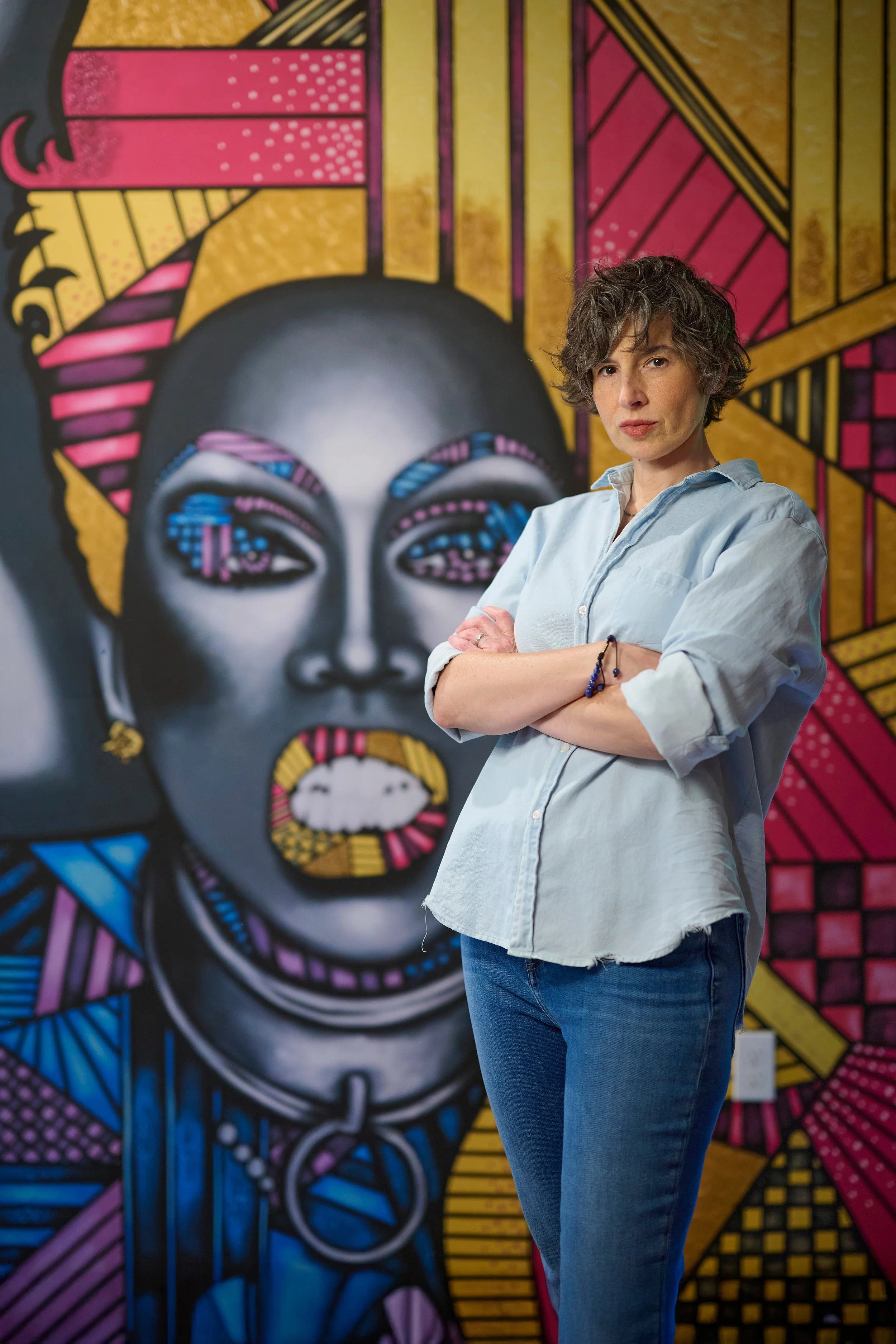
Photo Credit: Josiah Lewis Images
Can you tell us a little bit about your Grief Monster?
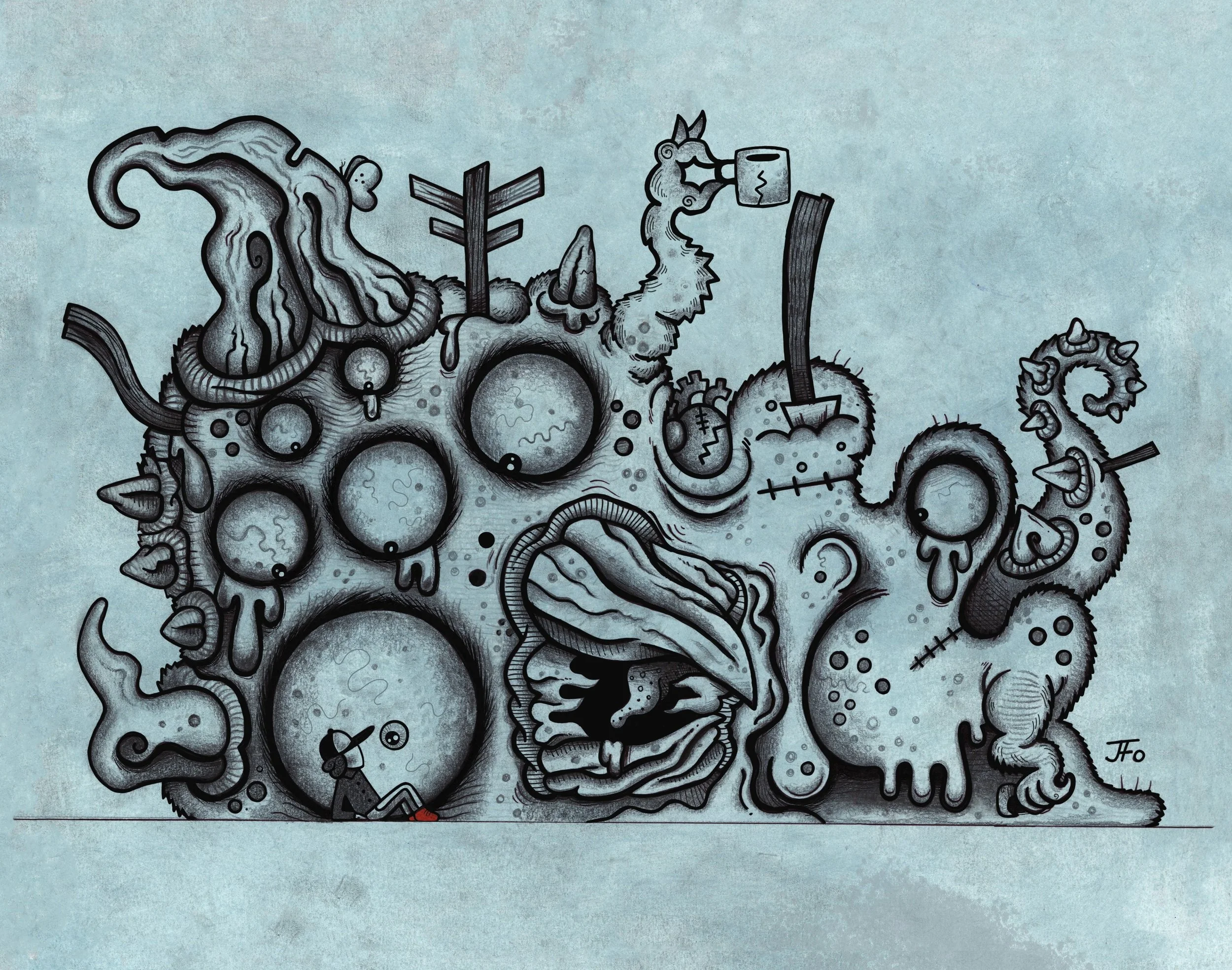
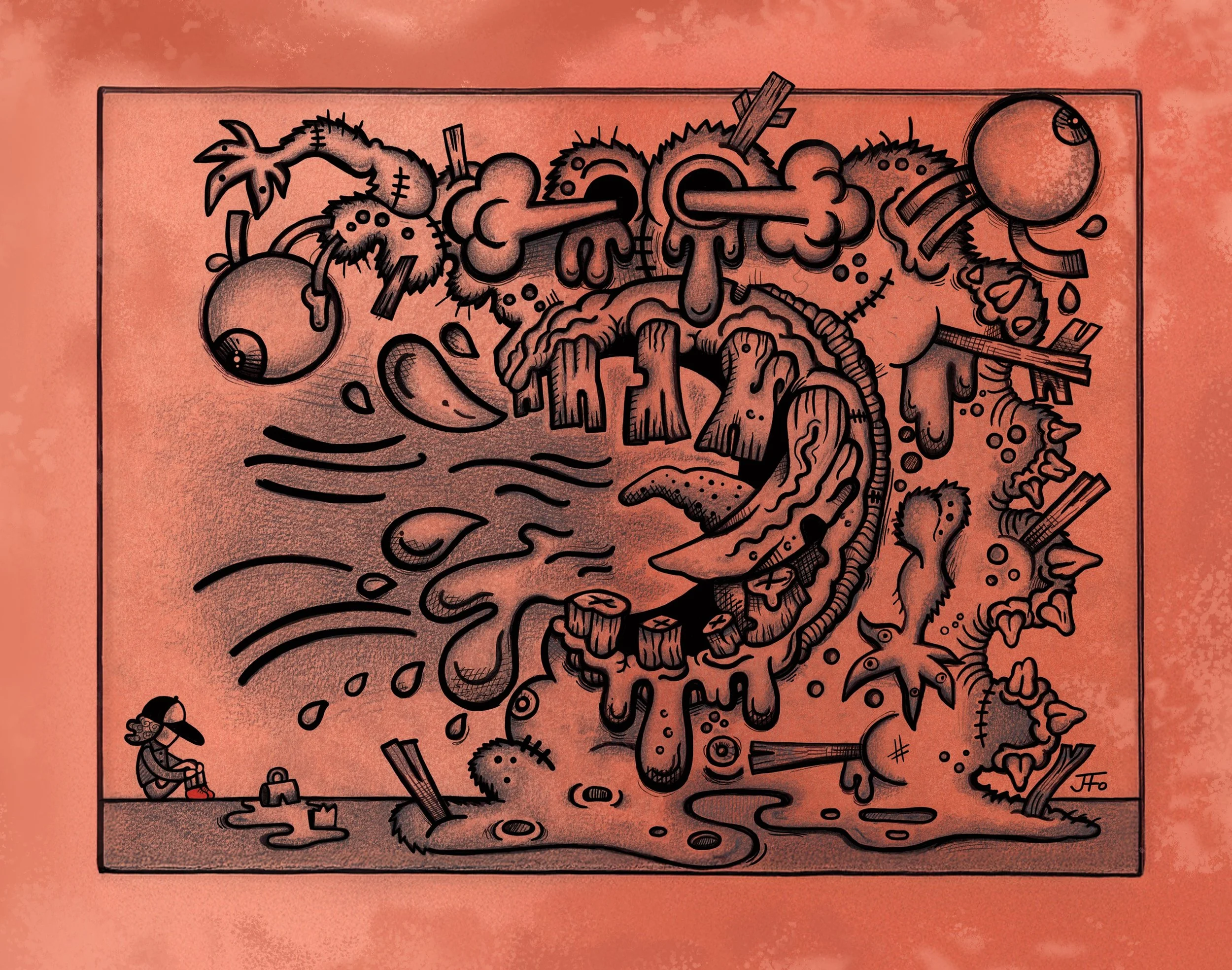
My Grief Monster starts off super scary and gross, out of control—like he could kill me or drive me insane. He is different in every sketch, because every entry is authentic to the moment that inspired it—and grief is ever-changing. Sometimes he's big and sometimes he's smaller. He’s always messy because he represents my early stage grief—which was the first two years after losing my mother—so even when I was "put together," my grief was still a mess. That's what grief is—and what my Grief Monster is—one big mess that I learned to spend quality time with in order to heal.
What were some of the most challenging parts of bringing these powerful emotions to paper? Were there difficult days and how did you overcome them?
The most challenging parts of bringing the emotions to paper was going back and redrawing them over and over again—which was part of the process of making the book. Even looking at them over and over for the year it took to make the book was challenging—they are diary entries after all, diary entries of the most painful two years of my life. At first I would cry and cry—until I looked at them and redrew them so many times ... it was like it lost its power—which was a very interesting phenomenon, and speaks to the power of artistic expression.
I’m very sorry for your loss. Tell us about your relationship with your mother. What was she like and what made your relationship so special?
Thank you. My relationship with my mother was kind of funny because we were complete opposites who learned to laugh at each other’s differences instead of trying to change each other. Our love was so big that nothing either of us ever did could tarnish our bond.
She was soft and kind and generous and nurturing. She saw the bright side in everything and taught me how to see everyone as beautiful. We had our ups and downs, as most relationships do, but we loved each other truly—and our love continues, just in a different way now.
What is your number one piece of advice to those dealing with intense grief?
My number one piece of advice would be to take very, very good care of yourself and go slow. Take things from one moment to the next, like make your goal for the day to take a shower or get air outside. Don't judge yourself and take it as it comes—all of its ups and downs and waves.
Do you have any advice for those trying to help others through their grief?
The best advice I can offer is: just be there for your person. Don’t talk—they can’t hear what you’re saying. Just be there. Don’t ask—just do the thing. Whatever it is you want to do to help: just do it. Bring the food, do the laundry, just sit by them, hold their hand, hold space for what they're feeling and going through. Don't try to fix or pacify or make them feel better. They're not broken, they're grieving.
What are some of your responsibilities and tasks as a certified Grief Educator? What does that title mean to you?
Becoming a Grief Educator taught me how to be a better human—a person who has more compassion for the pain of others than she did before, a person who can nurture and tend to her own heart and in turn, have an expanded capacity for caring for others. I never intended to educate with my certification, but rather just to learn, and use that learning to expand my heart and my capacity for love.
How can art heal people and bring them together?
There’s something magical that happens when you create art for yourself and then show someone. It’s an energy—a sharing of that energy. Whatever the art is representative of in the artist, there it is. And it always finds the ones who need to see it, and they will resonate with what you've created. The art will bring up the feelings and the conversations that they’ve been wanting or yearning to have. With my illustrated diaries, the art and the sharing of it is healing for both the artist and the witness.
Why is advocating for mental health more important than ever nowadays?
I think as a whole we are at a breaking point and a crossroads as a species. I don’t know many people who are not self-medicating to "get through it," nor do I know anyone who is actually really "killing it." It may look like they are on social media, but behind the scenes we are all suffering, thinking we need to be a version of ourselves that is acceptable and exemplary.
We need to get real, now or never. And turning inward to love ourself—truly and purely and unconditionally—is our first step. It's the answer to everything: more love. And the more love we give to ourselves, the more whole and healthy we'll become—mentally, emotionally, physically, spiritually, relationally and so on.
It has been a crazy last few years, and we expect at least three more. How do you stay positive in general about the unknown and motivated as an artist?
I am unable to watch news or politics—my nervous system isn’t built for the insanity. I do my part by being kind to people and choosing love over fear or ignorance every single day—it is a daily and moment-to-moment practice that I am devoted to. I make mistakes, but I will never stop practicing. All I can control is my response and my inner world, so that is my work and my focus.
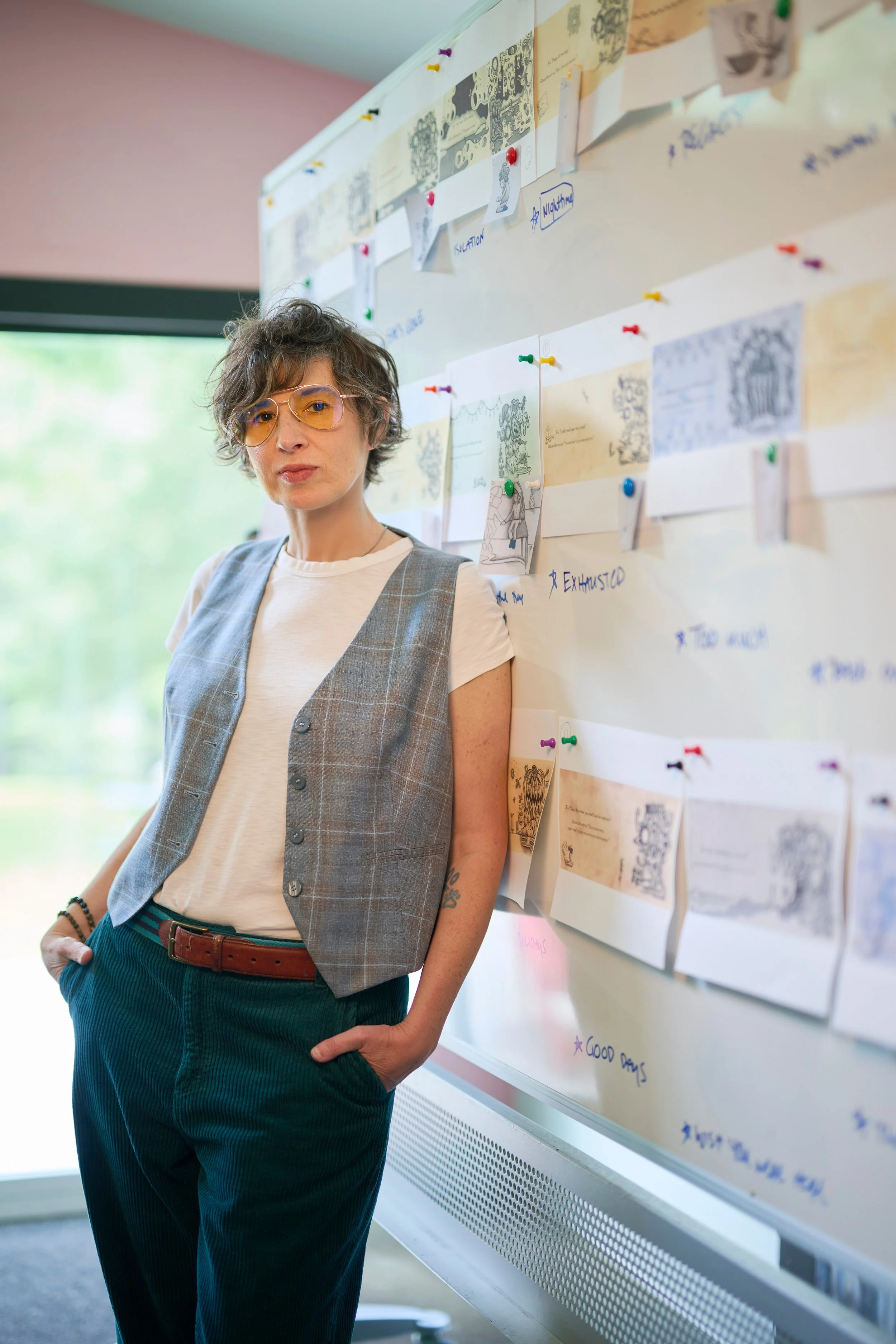
Photo Credit: Josiah Lewis Images
What can we expect next from you short term in your career?
Two and a half years after my mother’s passing, I discovered that I am AuDHD (Autistic and ADHD). Learning something like that at age 52 not only changed my life, it turned my world and my whole identity upside down. In actuality, the weight of the diagnosis pushed me into what is called Autistic Burnout. Through my navigation of this new landscape over the past year, I’ve been illustrating my journey, and plan on making my next two books from those drawings: "An Illustrated Diary of Late Diagnosis & Autistic Burnout," and "My AuDHD Brain."
What is your motto in life?
Follow your highest excitement from moment to moment with no insistence on the outcome.
To learn more about JFo, please check out the links below:
jfogeneration.com
jjpublishinghouse.com
Instagram: jfogeneration and j.and.j.publishinghouse


Clara Woods is an artist, motivational speaker, influencer, and host of The Inclusion Matters Podcast. Despite suffering from a prenatal stroke that left her unable to read, write, or speak, she has been able to use her passion for art and large social media presence to educate, inspire, and uplift. To learn more about Clara Woods and her art, read on.