Hilary Giovale - We Can Be Better
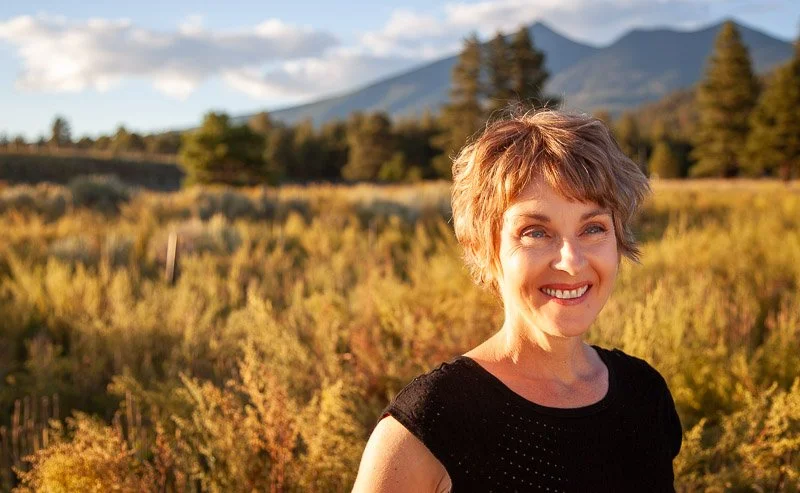
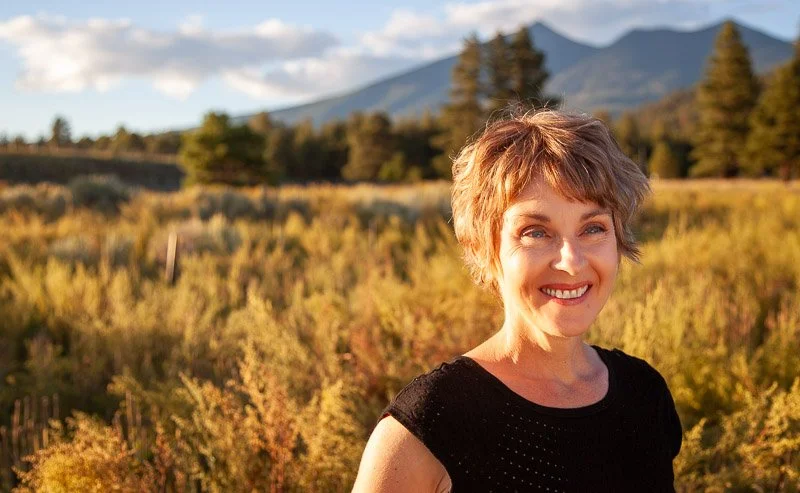
After learning her family history Hilary Giovale made an important decision to do better than her relatives. As a sensitive soul she understands the damage white settlers did to the natives and the blacks that were enslaved along the way. She wants to help others understand this history as well through her book, Becoming a Good Relative. Please read on to learn more about Hilary Giovale and her journey.
Where are you based?
I live at the foot of a sacred mountain of kinship on the ancestral homelands of Diné, Hopi, Havasupai, Hualapai, Apache, Yavapai, and Paiute Peoples, as well as several Pueblos. This place is colonially known as Flagstaff, Arizona.
What inspired your love of writing?
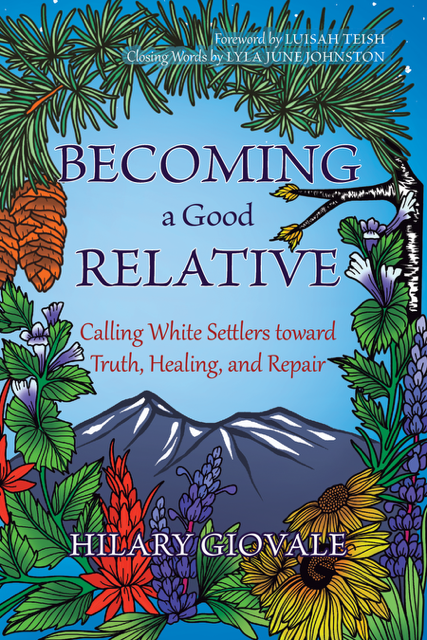
I’ve always been an avid reader, but for most of my life I didn’t consider myself a writer. Starting in 2015, when I was forty years old, a series of curious events nudged me in that direction. While walking in the forest one day, I received mysterious instructions to write a book. I was afraid to even try, but generous people and surprising synchronicities helped me begin. The process of writing the book took about nine years, and a second edition was recently released.
Congratulations on the second edition of your book Becoming a Good Relative. Where did the inspiration for this book stem from? What started your journey of discovery with your ancestry?
One starting point was a book of family genealogy that had been researched and written by my great-uncle in the 90s. When I opened that book on the last night of 2015, I learned that I’m descended from people who immigrated to this continent from the Scottish Highlands in 1739. They eventually received land grants and enslaved people. I felt intense dismay, disgust, anger, and remorse that night and often throughout the following years. Digesting that pain ultimately bore fruits; this book is one of them.
What does racial healing for white settlers look like? Why is it important to reflect on the past?
Racial healing for white settlers looks like facing our past honestly. Through our social conditioning, many of us have internalized messages such as:
But that was so long ago…
People thought differently then!
We shouldn’t feel guilty about things that happened in the past.
I didn’t steal land or enslave anyone — why should I take responsibility?
I’ve come to see these responses as scripts of whiteness. Most of us have no conscious memory of being taught to think this way, yet these responses are often our go-to, predictable, conditioned ways of reacting. Our racial healing looks like setting these responses aside and trying on different ones. Through years of work with fellow white settlers, I have seen that allowing ourselves to feel the pain, moving through it together, and committing to reparative actions can generate joy, empowerment, and healing.
What do you hope readers take away from this book?
I hope readers take away the power of stories — the stories we were told (or not told!) as children, those from our experiences and relationships, our ancestral stories, and the mythologies of our nation. Each of us has the power to shape the next chapter of our collective story. By telling different stories, we can shape cultural values for present and future generations. We can make different choices than those previous generations made — like redistributing wealth and power to ensure everyone has enough, treating others with dignity and respect, understanding the earth as our shared, sacred home, and relating to water as life.
What is mutual liberation and why is it important?
Civil rights leader Fannie Lou Hamer said, “No one is free until everyone is free.” In societies that concentrate land, wealth, and power into the hands of a few, it can sometimes appear that those at the top are winning and those at the bottom are losing. But in my personal experience, being at the top of a dehumanizing hierarchy can dim one’s capacity and make it easy to lose touch with one’s own humanity. With the current levels of division, hatred, and warmongering we’re experiencing, it can be challenging to even imagine mutual liberation. Like so many before me, I keep this dream alive in my heart, because I believe it’s both possible and necessary.
What is the difference between cultural appropriation and cultural appreciation? Why is it important we challenge cultural appropriation and misrepresentations?
I define cultural appropriation as:
The unauthorized taking of another culture’s dance, dress, music, language, folklore, cuisine, traditional medicine, religious symbols, and practices, especially by those who represent a group in a more powerful social and political position. Cultural appropriation is particularly harmful when it involves taking elements of another culture out of context for personal or monetary gain.
I developed this definition after years of unpacking the cultural appropriation I’d been part of as a former Tribal Style Bellydance teacher and performer. It can be easy for white-identifying people like myself to appropriate without even realizing it, because our cultural conditioning normalizes taking without consent, for profit. In contrast, cultural appreciation involves relationship, consent, reciprocity, and respect. Taking steps to contribute to the wellbeing of the people and the culture is an integral part of appreciating a culture without extracting and appropriating it.
How can we fight ignorance and misrepresentation?
What a challenge in this upside-down, backwards, confusing time! For me, Mother Earth is the oldest, wisest keeper of wisdom and truth. I strive to keep myself informed, grounded, and sane by attuning to her. I recommend going to the same place often, bringing a gift (like some water, food, or flowers), taking off your shoes, and asking permission to rest with your bare feet on the ground for a few minutes. Your place could be a forest, rock, meadow, stream, ocean, or even a tree in a city park. We are all children of the earth, and there’s a lot to gain from returning to her for guidance.
Why are representation and inclusivity vital to developing and strengthening our society?
Way back in the fifteenth century, the Vatican issued a series of delusional papal decrees to formally establish European, male, Christian domination throughout the world. These documents laid the groundwork for a cruel ideology called the Doctrine of Discovery. This is how the United States came to be built on stolen Indigenous land, using the stolen labor and lives of people who were kidnapped from Africa and brought here against their will. The mentality of extraction and exclusion has been baked into our political, economic, and religious systems from the beginning, and it shapes all sectors of our society to this day.
Our country continues to marginalize Indigenous Peoples, African-Americans, and immigrant communities while normalizing and enforcing white, male, Christian nationalism. From my perspective, this pattern makes us far less interesting, resilient, and tolerant. Abundant strength and wisdom can be gained from including, listening to, and sharing power with diverse communities. I hope that someday, we’ll collectively dismantle these patterns and turn our sights toward equity and shared human dignity.
What do reparations and accountability mean to you?
White guilt is a phase many of us pass through as we begin opening our eyes to the realities I’m sharing here. But guilt is not our final destination; accountability is the goal. White settlers can begin practicing accountability by building diverse relationships, showing up in service to healing, and engaging in personal reparations. I’m personally committed to this path, and I also co-facilitate this material with groups of fellow white settlers throughout the United States, Canada, and Australia. For more ideas on creating a personal reparations plan, see this guide.
You’re donating all of the income you receive from this book to the Decolonizing Wealth Project and Jubilee Justice. Can you tell us a little bit about these organizations and why you chose them?
I’m honored to support the phenomenal work of these two organizations. Decolonizing Wealth Project was founded by Edgar Villanueva, a Lumbee man whose work has revolutionized the field of philanthropy by exponentially increasing funding to Black, Indigenous, and other communities of Color. Konda Mason co-founded Jubilee Justice, an organization that’s developing new systems to end racism and serve Black agricultural communities. Edgar and Konda have been mentors and friends to me for years. In addition, we share ancestral entanglements in North Carolina and Louisiana.
What are some tools and skills everyone can use to develop an inclusive and proactive perspective?
I recommend telling our stories in community; connecting with our wise ancestors and asking for their help; nourishing the land where we live with love and gratitude; praying with water; committing to long-term, diverse relationships; being curious about differences; forgiving the unforgivable; making personal reparations, and courageously facing the pain of our ancestral legacies. These steps might appear simple, but they are profound. They have the capacity to build grounded strength and collective perseverance over time.
Are there any upcoming projects you are currently working on that we should be on the lookout for?
I’m looking forward to learning from a Diné Elder friend as we tend her garden and harvest wild mushrooms together this summer. I’ll be co-teaching a class on European Lineage Recovery for Liberated Capital this fall and a class on Ancestral Healing for Settlers for the ReHuman School this winter. I’m currently in the process of co-founding a local network for settlers who want to become good relatives to our Indigenous neighbors and follow their leadership in protecting the sacred mountain above our town. Since my book was first published in 2024, talented networks of organizers, teachers, facilitators, artists, and writers have been finding each other and growing our movement of decolonization and repair. We continually collaborate, so please check my website for updates.
It has been a crazy few years, and we expect at least three more. How have you been staying positive?
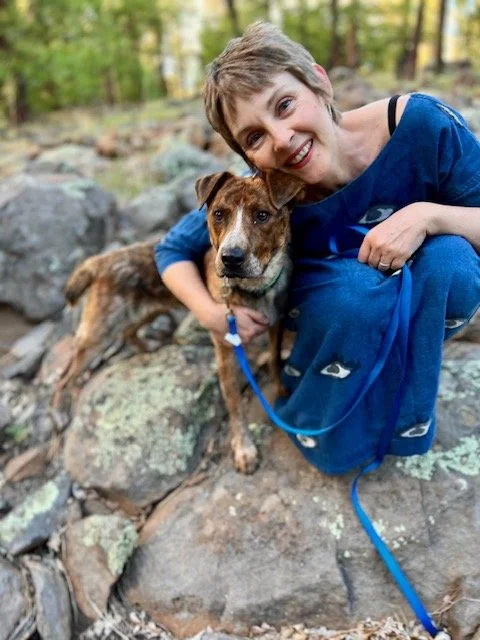
When I contextualize our present time within the long arc of human history, it helps me keep things in perspective. I give thanks for my life, family, and community every day and enjoy the sunshine, snow, and rain while walking with my dog in the woods. Frequently, I remind myself that there are billions of us throughout the world who long for peace, equity, a livable climate, a healed planet, and thriving future generations of life on Earth. I try to discern which contributions are mine to make during this tumultuous time and do my best to show up for them.
What is your motto in life?
I don’t have a motto per se, but here’s a traditional Scottish blessing I use often. I love to adapt the words and send blessings wherever they may be needed:
May the blessing of light be on you,
Light outside and light within.
May the blessed sunlight shine down upon you like a great fire, so that strangers and friends alike may come and warm themselves with it.
To learn more about Hilary Giovale and the people and organizations she has collaborated with, please check out the links below:
Second Edition of Becoming a Good Relative
Yeye Luisah Teish (wrote the foreword in my book)
Dr. Lyla June Johnston (wrote the closing words in my book)
Instagram: hilarygiovaleauthor
Renae Geerlings has truly done it all. Acting, producing, writing, both for print and the screen, and now, she’s adding podcasting to her extensive resume with MANE AF. She co-hosts this podcast with her husband and fellow actor Tyler Mane, as they delve into topics ranging from the fast-paced world of Hollywood to parenting adult children. She advocates passionately for animal rights as well as human trafficking awareness, which is a present theme behind her and Mane’s graphic novel, THE LAST SPARTAN.