
Nathan Spiteri's Journey to Healing
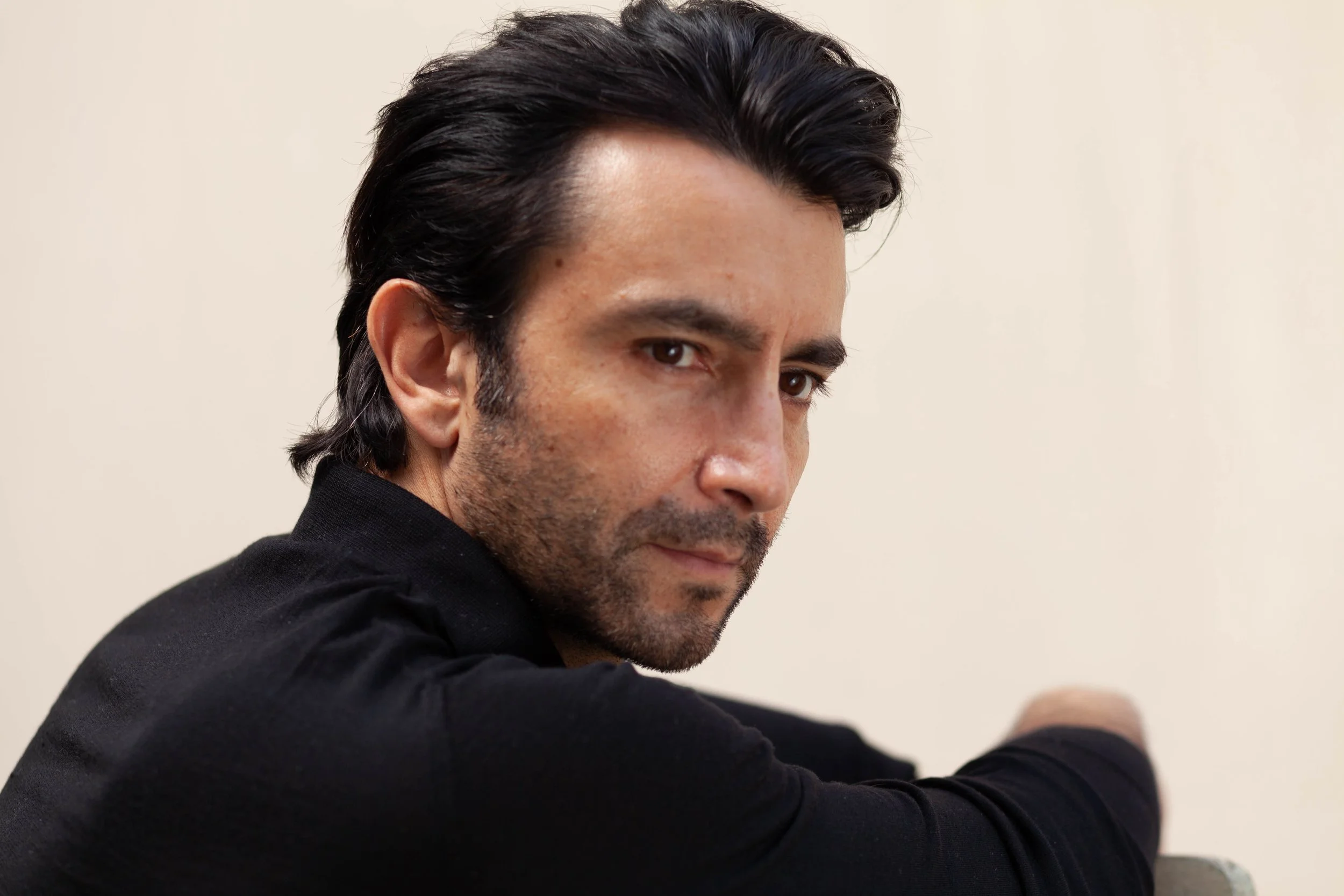
Courtesy of Nathan Spiteri
Actor and Writer Nathan Spiteri opens up about his experience with sexual violence in his recently released documentary “If You Tell Anyone” adapted from his memoir “Toy Cars: One Man’s Journey from Trauma to Triumph.” He details how the abuse affected his life and how exercising vulnerability has helped him take back his power. Spiteri works with organizations like NO MORE Foundation, Child Liberation Foundation, and Voices Beyond Assault in the fight to raise awareness about sexual violence. To learn more about Nathan Spiteri and his new documentary, read on.
Where are you based?
I am based in LA, but go between NYC and LA.
What inspired you to get into acting and writing?
I found acting as a young boy after the abuse. I’d lock myself away in front of the TV, disappearing into films and shows because they were the only place that felt safe. Storylines, characters, whole worlds — they let me escape the reality I was living. Writing began at school, where I discovered how much I loved putting words on a page. Essays turned into stories, and eventually I realized I wasn’t just doing it for class. I was good at it, and it became another way to express what I couldn’t say out loud.
You wrote your memoir Toy Cars: One Man’s Journey from Trauma to Triumph and then later adapted it into a documentary—If You Tell Anyone. What motivated you to create this book and documentary, and share your story with the world?
Honestly, writing a memoir was never part of my plan. After a major article about my story was published in Australia, a publishing house reached out and asked if I would consider turning my life into a book. After many conversations and a lot of care, I finally agreed. The first thing I told my publisher was: if sharing my story saves even one life, if it stops just one person from falling into addiction, drugs, violence, or sex the way I did, then it’s worth it. The documentary became a natural extension of that mission. I knew film could reach an even wider audience and become a powerful tool for education, awareness, and change.
Can you tell us a little bit about what the book and documentary cover?
The book is literally a complete biography of my life. I hardly leave anything out. It goes into great detail about my relationship with my abuser and what I did as a consequence, as well as what I have learned about myself and my healing process. The documentary covers the same, but with expert commentary from a therapist, the founder of the NO MORE Foundation, and my sister.
One thing that was never covered in the documentary is what happened to your abuser. We offhandedly learn he has died, but we don’t know if he was ever held accountable for his actions. Did his wife ever learn what kind of monster she was with?
Much later in life, I learned that he had died from early-onset Alzheimer’s and dementia. I don’t know exactly how much his wife knew, but part of me believes she must have known something. I never had the chance to speak with her, and that conversation now lives only in the silence between us.
How did you feel when you found out he had passed?
I was happy to learn that he had passed, purely for the fact that he could never hurt another young boy or girl. I would have loved to have spoken with him to get the closure I needed.
Courtesy of Dean Love
We noticed that only your sister was interviewed in the documentary. Why did you or the rest of your family decide not to involve them?
My sister is a school teacher and a very smart and well-spoken person. I knew she could articulate in words what she and the rest of the family were thinking and went through. I did ask the rest of the family, but they did not want to participate.
How has the relationship with your family changed since you came out about your experience?
My relationship with my family has shifted in such a powerful way. Before I shared the truth about my abuse, things between us were strained. We were close, but not connected. Once I finally opened up, everything changed. They began to understand who I truly was, and why I struggled as a child and teenager with depression, violence, and addiction. We recently went on a family holiday, and for the first time in my life, I felt a genuine bond with them—a real sense of connection and belonging.
As a man, why is it important to you to share your story of abuse?
As a man, sharing my story matters because male sexual abuse is still dismissed, ignored, or buried in silence. The stigma is heavy, and far too many people look away instead of facing it. Yes, it’s an uncomfortable subject, but that’s exactly why we must speak up. We need to start the conversation, educate the world, and help people understand the lifelong impact of child and male sexual abuse. Only then can we break the stigma and create real change.
How has society made it harder for men to share their stories of abuse?
Society has made it hard for men to share their stories due to shame and toxic masculinity. From the youngest age, boys are taught not to show weakness or pain and not to let people see through the cracks. Therefore, we keep it inside and suppress our abuse for many years — or all our lives.
What do you hope to inspire within and educate others about through this documentary?
What I hope people take from the documentary is the understanding that survivors are never alone; they will be loved, believed, and heard. That’s all any of us truly want. I also hope to educate those who haven’t experienced abuse themselves, so they can better understand, communicate with, and support the survivors in their lives as they navigate their healing.
Courtesy of Dean Love
How does experiencing trauma at a young age affect the growth and development of a child?
Experiencing trauma at a young age can shape a child’s development in powerful and often painful ways. Trauma can disrupt the brain’s growing architecture, making it harder for children to feel safe, trust, and regulate their emotions. It can influence how they see themselves, how they connect with others, and how they navigate the world. Many children become hyper-alert, anxious, withdrawn, or confused about their own worth. Others may act out, replicate harmful patterns, or struggle in school, friendships, or future relationships. But here’s the truth that matters most: with safety, support, and loving connection, a child’s brain and heart can heal. Their story is not over. Their future is not defined by what was done to them; it is shaped by the care, protection, and voice we help them reclaim.
Sexual violence often leads to self-isolation. Why is it important to find connection with safe and loving people after experiencing abuse?
Sexual violence can push survivors into silence and isolation, but healing cannot grow in the dark. Finding connection with safe, loving people is vital because shame loses its power when spoken, and the nervous system begins to calm when met with trust, compassion, and steady support. Safe connection reminds survivors that they are not alone, that what happened was not their fault, and that they are still worthy of love, belonging, and a future built on strength rather than fear.
Why is having education and openness about sexual violence so important?
Education and openness about sexual violence are essential because silence protects the abuser, not the survivor. When we teach children and adults the truth—the words, the signs, the boundaries, the realities—we break shame, prevent harm, empower reporting, and create a culture where survivors are believed, supported, and safe to heal.
How has exercising vulnerability and sharing your story helped you move forward in healing? Why should more people practice being vulnerable?
Exercising vulnerability and sharing my story became the moment I stopped carrying my past alone. Speaking the truth stripped shame of its power and allowed connection, compassion, and understanding to enter the places where silence once lived. Vulnerability helped me move from victim to survivor, because when I opened my heart, healing finally had room to begin. More people should practice vulnerability because it is not weakness; it’s the doorway to freedom. When we speak honestly, we invite others to see us, support us, and walk beside us. And in that shared space of truth, we discover the courage to grow, the strength to heal, and the reminder that none of us are ever meant to do this life alone.
You are connected to sexual violence nonprofits such as NO MORE Foundation, Child Liberation Foundation, and Voices Beyond Assault. Can you tell us a bit more about these organizations, their missions, and how you’re involved?
I’m honored to work alongside organizations like NO MORE Foundation, Child Liberation Foundation, and Voices Beyond Assault, each standing on the front lines of preventing violence and protecting survivors. NO MORE Foundation works globally to end domestic violence and sexual assault by raising awareness, shifting cultural norms, and empowering communities with education and resources. As an ambassador, I help amplify that message and bring the male survivor narrative into spaces where it’s been far too silent. Child Liberation Foundation (CLF) is dedicated to ending child sex trafficking around the world.
My role as a global ambassador allows me to advocate, raise awareness, and support initiatives that rescue children and dismantle the systems that exploit them. Voices Beyond Assault focuses on supporting and amplifying survivors through education, resources, and community. I contribute by sharing my story, elevating survivor voices, and promoting healing pathways rooted in hope and empowerment. Each organization aligns with my mission to break the silence, shift the stigma, and ensure every survivor knows they are seen, heard, and never alone.
Courtesy of Nathan Spiteri
What advice would you give to someone who found themselves in a similar situation?
If you find yourself in a situation like mine, please know that you are not to blame, you are not broken, and you do not have to carry this alone. Tell someone you trust. Reaching out is the first act of reclaiming your power. Healing isn’t quick or easy, but it is possible, and there are people ready to walk beside you with compassion, belief, and love. You deserve safety. You deserve support. And you deserve a life beyond the pain.
What advice do you have for someone who may be afraid to speak up about abuse they’ve endured?
If you’re afraid to speak up about the abuse you’ve endured, your fear is valid, but your truth is stronger. You don’t have to tell the whole story at once—just start with one safe person, one moment of honesty, one breath of courage. Speaking up doesn’t make you weak; it makes you free. When you finally share your story, you’ll discover that you will be believed, you will be supported, and you will never have to walk this road alone again.
Are there any upcoming projects you are currently working on that we should be on the lookout for?
Upcoming projects include a feature film based on my memoir Toy Cars. That is my baby and my priority at the moment. I also have speaking engagements and keynotes to look forward to, as well as continuing work with the organizations I’m involved with.
How do you stay positive?
I stay positive by remembering that healing isn’t a straight line; it’s a choice I make every day. I focus on the small wins: showing up, speaking honestly, connecting with people who lift me, and turning my past into purpose. And when the hard days come, I remind myself that I’ve survived worse, I’m still here, and there is strength in simply taking the next step forward.
What is your motto in life?
“Freedom is of the mind, not of the body. Speaking and living my truth is a powerful thing, and my truth is my power and my ultimate freedom.” It reminds me that healing begins the moment we choose honesty over silence, connection over shame, and courage over fear—one voice, one step, one story at a time.
To learn more about Nathan Spiteri, please check out the links below:
My website: www.nathanspiteri.com
Instagram: @nathanspiteri

On Jan. 30, over 3 million pages of files related to the investigation into the Epstein case were released by the Department of Justice. These files included over 2,000 videos and 180,000 images. Trump is named over 1,800 times alongside mention of other powerful figures including Elon Musk and Bill Clinton.