
Our Favorite Progressive Candidates in 2026 - Sonya Halpern, Georgia State Senate District 39
The Democratic Party in Georgia this year is performing strongly. Senator Jon Ossoff is leading his challenger by an 8-point margin, and Atlanta Mayor Keisha Lance Bottoms is only 2 points behind her Republican opponent. In the 2020 presidential election, Georgia was won by Joe Biden, the first time a Democrat won the state since 1992.
The strength of the Democratic Party in Georgia is mostly thanks to the large population of politically-engaged African American citizens, mostly concentrated in the Atlanta metro area. Specifically, Black women, like Stacy Abrams, Nikki Merritt, and Kim Jackson are the strength of the Georgia Democratic Party. Merritt’s and Jackson’s Senate colleague Sonya Halpern (she/her) is running for re-election. After graduating from college, Sonya moved to New York to start her business career, steadily climbing the ladder. In 2011, President Obama named her to the the President’s Advisory Committee on the Arts at the John F. Kennedy Center for Performing Arts in Washington DC, making her the chair of the committee three years later. Sonya works to strengthen her community and constituency by advocating for affordable healthcare, consumer protection, and providing pathways to employment for underserved youth.
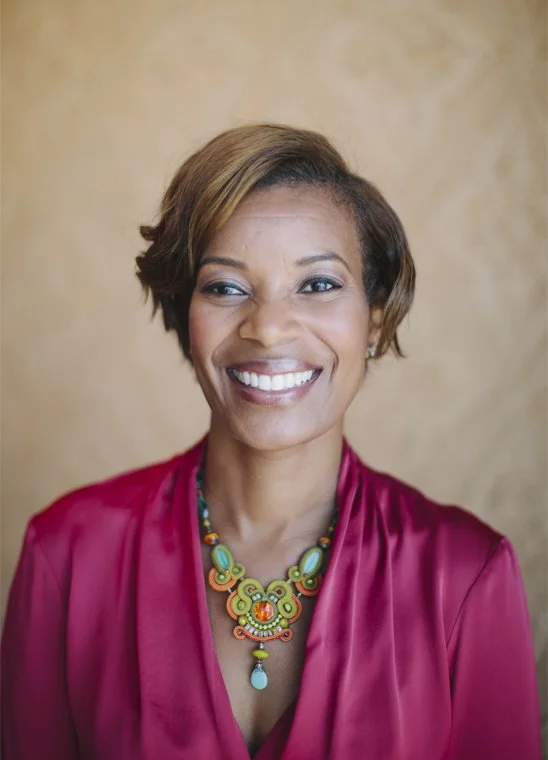
Where are you based?
Atlanta, Georgia. It’s home.
What is your position?
I’m a Georgia State Senator representing Senate District 39, which includes parts of Atlanta, the City of South Fulton, College Park, East Point and Union City.
How would you briefly summarize your platform?
I come back again and again to one core belief: where you start in life should not determine where you finish.
That’s personal for me. My parents grew up poor in rural Jim Crow Mississippi and became the first in their families to graduate from college. Education opened doors for them that changed the trajectory of their lives — and ultimately mine.
I want more Georgians to have that same opportunity to move forward. But for too many families, the barriers are simply too high. A child born into poverty shouldn’t have the odds stacked against them from the beginning, and a family doing everything right shouldn’t be one illness or unexpected expense away from financial crisis.
So much of my work comes back to removing those barriers — making sure our children get an education that prepares them for what comes next, expanding pathways to good jobs and economic opportunity, and making healthcare more accessible and affordable. That’s what my platform is about: giving more people a fair shot at building a good life.
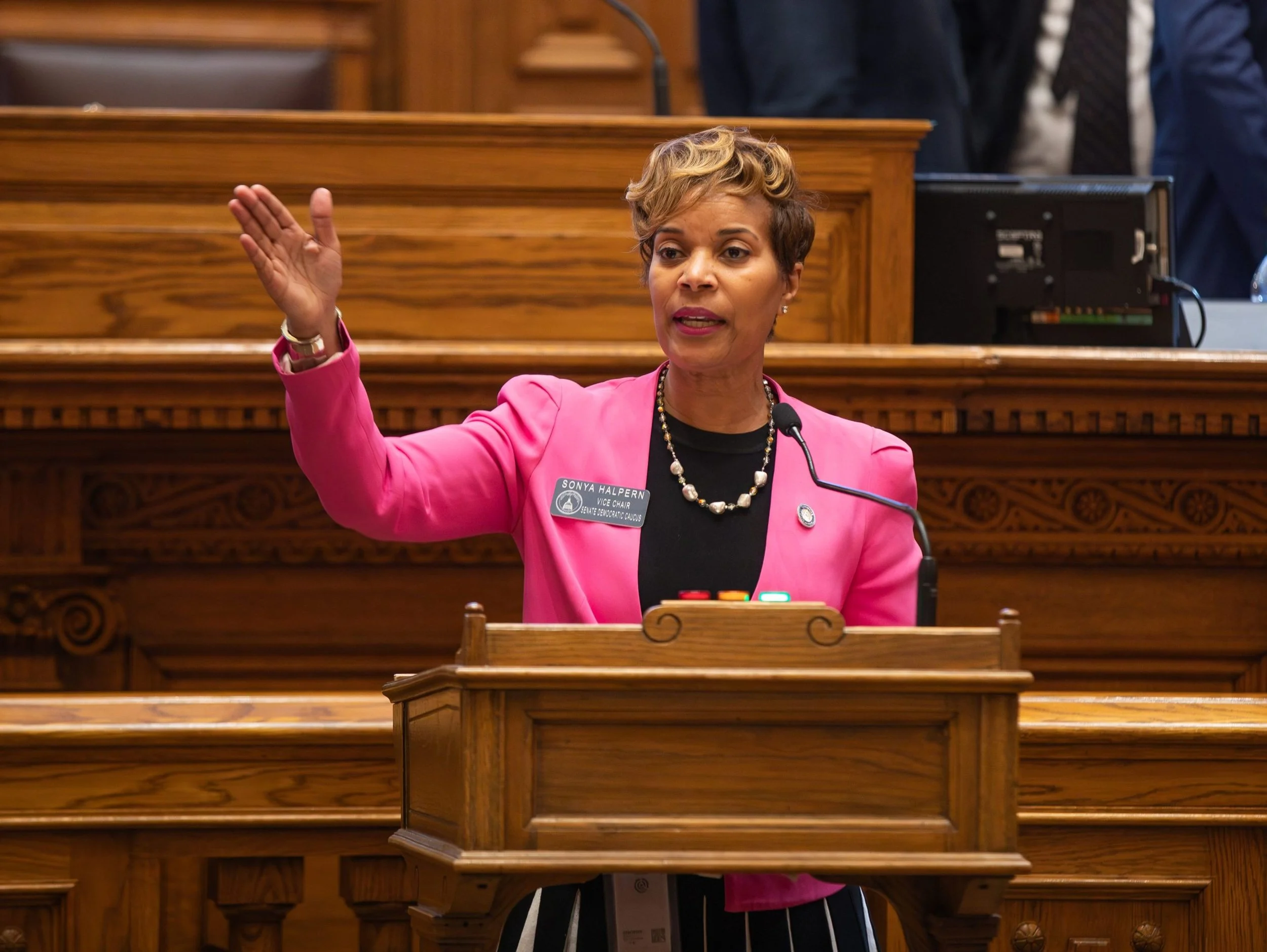
© Itoro N. Umontuen
What inspired you to run?
I didn’t grow up thinking I would run for office. By the time I ran, I had already built a career in business, was raising a family and had spent years deeply involved in nonprofit, cultural and community organizations. I was also politically engaged — supporting candidates I believed in and working to get more women off the sidelines and involved in the political process.
Looking back, there was a throughline across all of it: access and opportunity. Who gets a chance? Who gets left out? What are the barriers standing in the way? Those were questions I cared about in business and in my community work, and they were also what ultimately drew me to elected office.
I always knew that some of the barriers people face are systemic and that good public policy should open the doors to opportunity. Eventually, I decided I wanted to be more directly involved in turning bold ideas into policy — and after years of supporting others who stepped forward to run, I decided to step forward myself.
What change are you hoping to bring to your district and country?
My district is one of the most socioeconomically diverse in our state — and in the country. I represent more than 191,000 people with very different backgrounds, experiences and points of view. But they want many of the same things: good schools, safe communities, the ability to support their families and a chance to get ahead.
I care deeply about the policies that help make those things possible — economic opportunity, education, healthcare, consumer protection and workforce development. But I also want people to believe that government can still work — that we can solve problems and make people’s lives better. At this moment in our country, I think people need to see that it's still possible.
How long have you been in office? What do you consider to be your major accomplishments so far?
I’ve been in office for six years, and I’m proud of the range of issues I’ve been able to work on — from consumer protection and small business to workforce development and career pathways. I’ve authored or sponsored 20 pieces of legislation that have become law and helped secure more than $20 million in state funding for transit, facilities and community partnerships in the communities I represent.
One thing I’m especially proud of is the bipartisan work I’ve led to establish a statewide music office. Georgia has an extraordinary musical legacy, but music is also an economic engine — creating jobs, supporting artists and venues, attracting visitors and contributing to communities across our state. I’ve been working to get Georgia to recognize music as an important piece of our creative economy — and to invest in it more intentionally. Four years and counting, and I’m still at it!
What do you feel are the most important issues right now, why, and how do you plan to tackle them?
Affordability and economic mobility are at the top of the list for me.
Georgia has an extraordinary economy. Agriculture and tourism are major economic drivers. We have the world’s busiest airport and one of the country’s fastest-growing ports, and companies from around the world are choosing to do business here. And yet I meet people every day who don’t feel that prosperity in their own lives.
That’s the disconnect I think we have to address.
Economic growth matters, but I want to know what that growth means for the people who live here. Can you afford a home? Can you find childcare? Is there a good school in your neighborhood? Can you see a doctor without worrying about what the bill will do to your family? Can your child see a path from where they are today to where they want to go?
Those are the questions that drive my work, because ultimately that’s how people experience an economy — through their own lives. And it’s why I’m so focused on the things that make it possible for people to get ahead: affordable housing and childcare, good schools, access to healthcare and pathways to good-paying jobs.
America is extremely divided these days. How would you hope to bridge that divide with your constituents to better unite Americans?
I’m an optimist by nature, but I’m not naïve about how divided we are.
One thing public service has taught me is that you can learn a great deal when you enter a conversation genuinely curious about why someone sees the world differently than you do. That doesn’t mean abandoning your values or pretending disagreement doesn’t matter. It means listening long enough to understand what is underneath it.
I spend a lot of time in rooms with people who don’t necessarily agree with me. But some of the most meaningful progress I’ve seen happens when we can put our differences aside long enough to roll up our sleeves and work on the problem in front of us.
I believe understanding comes before strategy, and listening comes before action. That doesn’t solve every disagreement. But it’s a much better starting point than assuming we already know everything about one another — especially if we’re actually trying to get good things done.
How do you see your unique identity and background as an asset to you in office?
I bring a lot of different parts of who I am into this work. I’m a Black woman, a wife and mother of three, a businesswoman and a nonprofit leader. I’ve worked in corporate America, built a consulting practice, served on boards and spent years in community and cultural organizations. I’ve been in rooms where the bottom line mattered, rooms where the mission mattered, and plenty of rooms where people with very different interests had to figure out how to get something done.
All of that means I tend to look at problems from several different angles. I don’t automatically assume government has the only answer. Sometimes government needs to lead. Sometimes we need to bring the right people together. And sometimes government needs to get out of the way.
I know that range of experience gives me a useful perspective that makes me an effective legislator.
What is your motto in life?
“To whom much is given, much is expected.”
I’ve been blessed with tremendous opportunities in my life, and with people who have invested in me along the way. I’ve always believed those blessings come with a responsibility to give something back. For me, that means leaving people and places better than I found them. That’s probably the simplest explanation for why service has always been part of my life.
Where can we find out more about you?
You can learn more about me and my work at SonyaHalpern.com and follow me on social media at @sonyahalpern_. I’m always interested in connecting with people, hearing different perspectives and discovering an idea I haven’t considered before.
Instagram: sonyahalpern_
Facebook: sonya4GA
X: sonyahalpern_


Angie Nixon (she/her), a Florida State Representative, is running of the Democratic nomination. There has not been a Democrat in the U.S. Senate from Florida since 2018. Angie is a Black millennial ally to and fighter for the LGBTQ+ community who advocates for economic justice for the working class: a $25 minimum wage, rent stabilization, curbing corporate purchasing of residential housing, protecting reproductive rights, Medicare for All, and universal childcare and Pre-K.
Angie co-wrote a children’s book with her daughter called The Adventures of Moxie McGriff to help her embrace her natural hair, which ultimately transformed into a movement to boost self-esteem in young Black girls. She co-founded the Melanin Market in Jacksonville, FL, to provide healthy food options in a food desert while supporting local minority-owned small businesses. Angie also owns a bookstore and coffee shop in Jacksonville called Cafe Resistance, which she specifically created to serve as a community hub, provide free tutoring, and proudly stock the books that extremist Republicans in Florida are trying to ban. In May of this year, Angie was reprimanded by the Florida State House because for protesting the racist new congressional voting maps and she is now being prosecuted by DeSantis for peacefully protesting these maps in his office after he refused to meet with her.