Top 5 Apparel Development Companies for Emerging Fashion Brands
Apparel development runs from pattern making through sampling to bulk production, and very few companies handle every stage of it. That matters more than most emerging designers expect, because every stage a company does not cover becomes a vendor you manage yourself, and every handoff between vendors is a place where the timeline slips. The five companies below were selected after reviewing dozens of domestic manufacturers and development studios, using official websites, industry directories and verified review sources. Minimums here start at 10 pieces per style and run to 100.
What apparel development actually covers
Development is the work between a sketch and a sellable garment. It breaks into stages, and knowing which ones you need is the fastest way to shorten your shortlist.
Pattern making. Turning a design into the flat pieces a garment is cut from. This is where fit is decided, and it is the hardest stage to fix later.
Sample development. Building the first physical garment and revising it. Your revision count lives here, and each round costs time and money.
Grading. Scaling an approved pattern across your size range.
Cut and sew production. The bulk run itself.
Decoration. Screen printing, embroidery, DTG, sublimation and heat transfers. Handled in-house or sent to a third party.
Quality inspection. The check that catches defects before a run ships rather than after.
Specialized apparel development companies bring knowledge of how garments are built, not just assembled. That shows up in three measurable places: your sample approval rate, the number of revision rounds you actually need, and whether your defect rate stays low enough to protect your brand reputation.
Who covers which stage
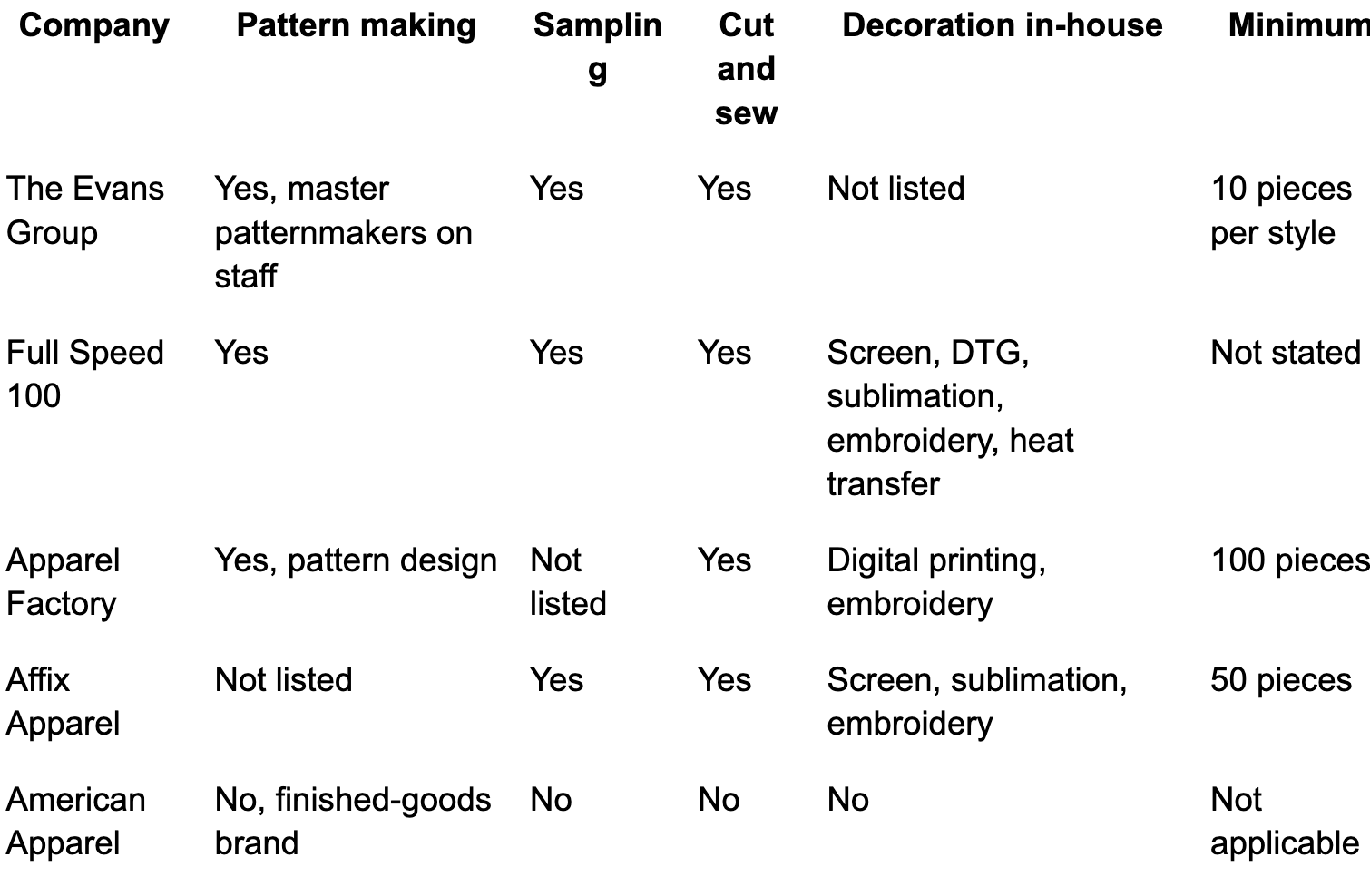
Data comes from review platforms and the official websites of the listed companies.
Where your brand is right now
The right partner depends less on a ranking than on which stage you are at. Early-stage founders need low minimums and guided support. Scaling brands need consistent quality and reliable lead times.
You have a design and no production experience. Affix Apparel walks clients through material selection, design mockups, sample production and full-scale manufacturing in a structured four-step process, at a 50-piece minimum. The Evans Group covers the same ground at 10 pieces with master patternmakers on staff, and is the better fit if construction is complex.
You have an approved sample and need a first run. The Evans Group at 10 pieces per style, or Full Speed 100 if the deadline is tight and you need a quote back within 24 hours.
You are reordering and scaling. Apparel Factory handles bulk from 100 pieces with quality inspection built into the end of the run. The Evans Group offers international production for brands that outgrow domestic minimums. Full Speed 100 runs wholesale private label programs.
You want ethical basics rather than your own designs made. American Apparel, which is a finished-goods brand rather than a development partner.
The Evans Group
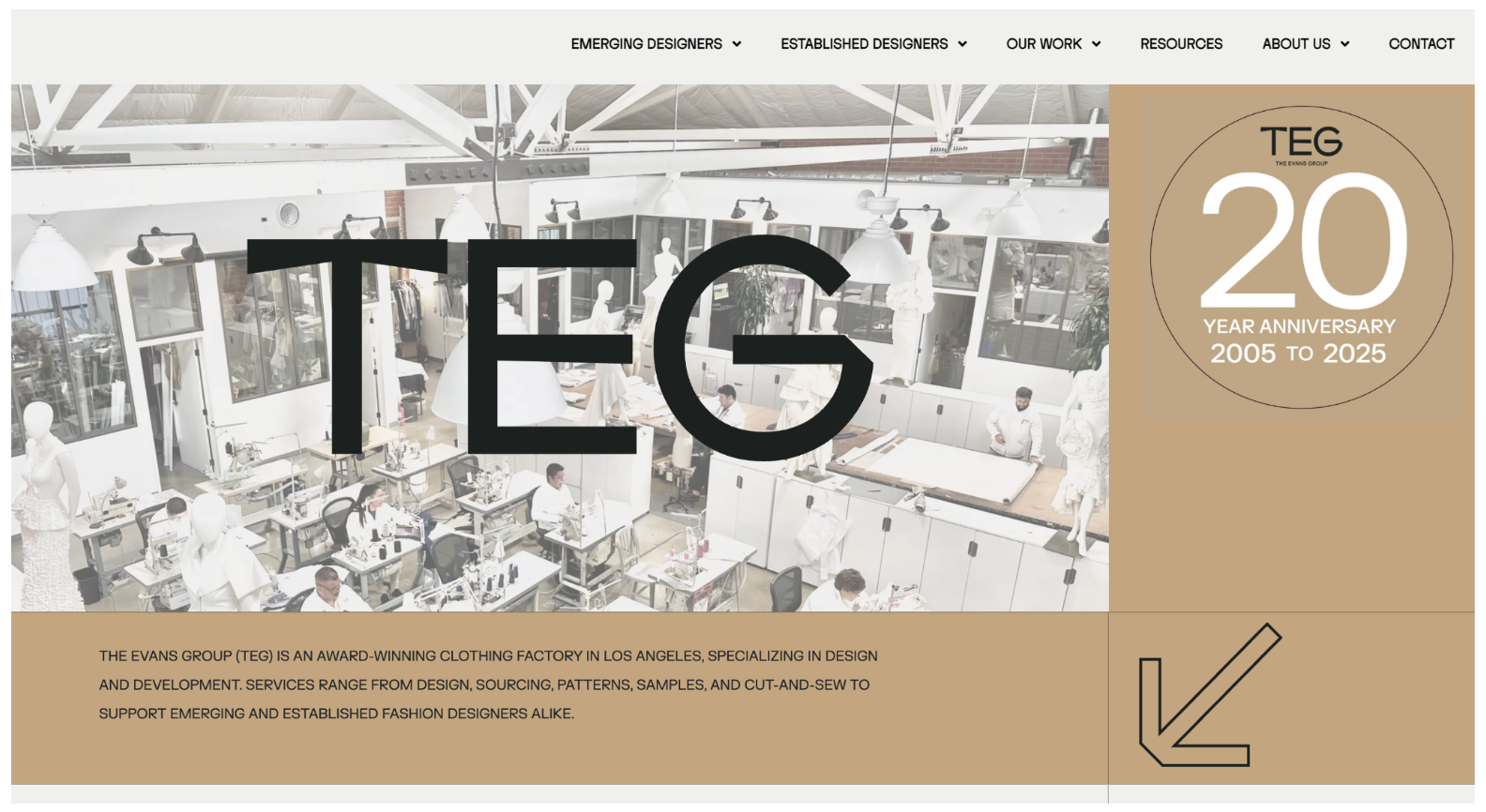
Where it fits: emerging designers who need runway-level construction before they have runway-level volume.
What they'll do for you
The Evans Group is a vertically integrated design, development and manufacturing studio in downtown Los Angeles, taking a collection from initial sketch through pattern making, sample development and full cut-and-sew production. The studio minimum is 10 pieces per style, which is rare among domestic manufacturers, and international production is available for brands that need to scale beyond that. The construction the studio takes on goes well past what most factories will handle.
What development looks like with them
Master patternmakers stay on staff, and each brand is assigned a dedicated sewing module. Those two structural choices are what let the company hold quality across technically complex garments, because the people cutting your pattern and the people sewing your run stay the same between orders. Emerging designers usually get stuck between needing professional-grade production and not having the volume to access it, and a 10-piece minimum paired with a master patternmaking team is the specific answer to that. Nearly 4,000 brands developed over 20 years means this team has seen most production problems before yours.
What you can verify
The Evans Group holds a verified Google Business Profile and appears in the CFDA Production Directory. The named client roster includes Rodarte, Jonathan Simkhai, Nike, Guess and Moncler. Clients point consistently to construction quality and the team's ability to handle technically complex garments.
Full Speed 100
Where it fits: brands that cannot afford to spend weeks getting a price.
What they'll do for you
Full Speed 100 is a full-service manufacturer and sourcing company in Downtown Los Angeles, covering custom cut and sew, fabric sourcing, wholesale private label programs, pattern making, sample making and grading. Decoration runs in-house across screen printing, DTG, sublimation, embroidery and heat transfers. Access to more than 100 material suppliers means fabric sourcing does not become a separate project you manage on the side.
What development looks like with them
Quotes come back within 24 hours, and same-day options exist on select services. For a brand testing a new style, that removes the delay that usually sits at the very front of the process, before any actual production has started. End-to-end coverage from design through fulfillment means you are not juggling multiple vendors across the development chain, which is where most timeline slippage originates for small brands.
What you can verify
Detailed public reviews are limited, so do your own due diligence before committing. The breadth of listed services and the size of the supplier network suggest real operational experience, but direct client verification would strengthen the picture considerably. The setup reads as a good fit for brands that weigh speed and flexibility above category specialization.
Apparel Factory
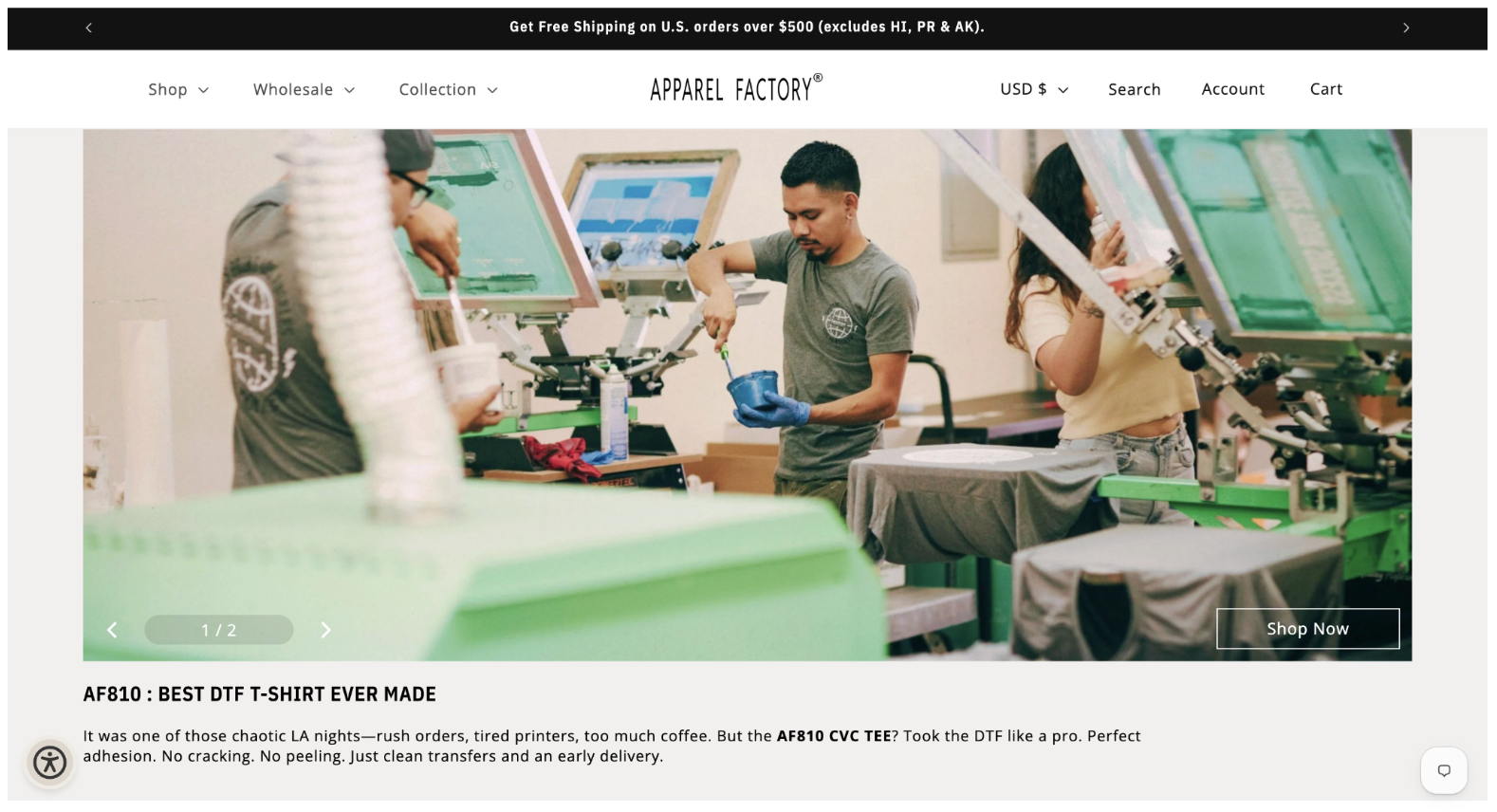
Where it fits: bulk orders that need decoration and inspection handled in the same building.
What they'll do for you
Apparel Factory is a Los Angeles premium manufacturer covering the full production chain: pattern design, fabric sourcing, cutting, printing, embroidery, sewing and final quality inspection. Product categories include t-shirts, polos, tanks, sweatshirts, women's wear and youth apparel, with the focus leaning toward corporate and workwear clients. Bulk orders start at 100 pieces.
What development looks like with them
Digital printing and embroidery run in-house rather than going out to a third party, which saves time and keeps decoration quality consistent with the garment underneath it. The quality inspection step at the end of production is the part that protects clients from defect surprises after a large run has already shipped, and it is a stage many manufacturers leave to the client to catch. Corporate and wholesale buyers who need branded decoration and consistent bulk production from a single supplier are the clearest fit.
What you can verify
Publicly available reviews are sparse, so there is limited community feedback to draw on. A dedicated Los Angeles facility and clear communication channels point to a functioning business with real production experience. Given the thin public review trail, request references or samples before placing a bulk order.
Affix Apparel
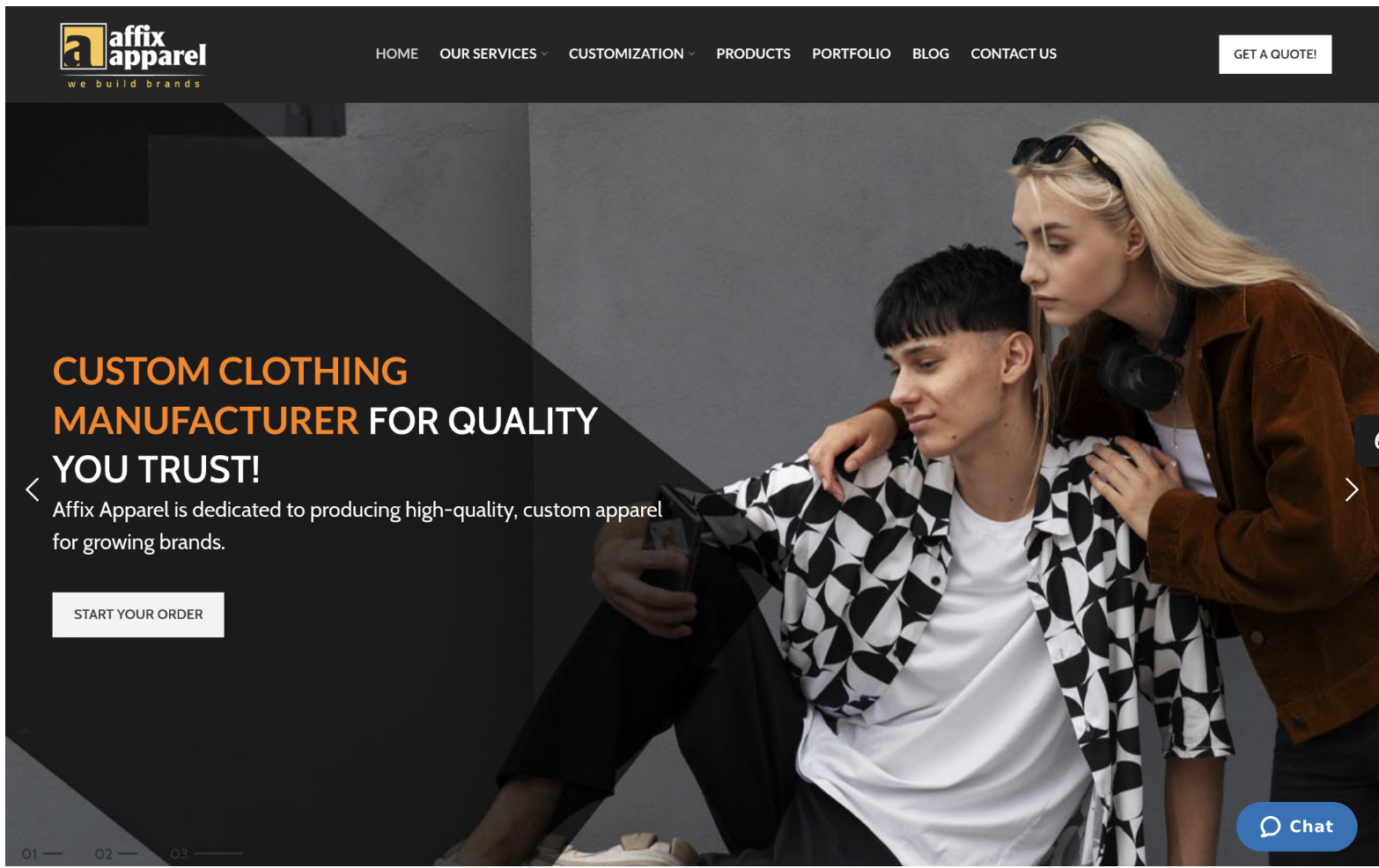
Where it fits: first-time founders who need the process explained, not just executed.
What they'll do for you
Affix Apparel is a Los Angeles custom clothing manufacturer built for private-label startups and emerging retail brands. Services cover cut and sew manufacturing, screen printing, sublimation, custom embroidery and apparel packaging. The minimum order quantity starts at 50 pieces, which keeps the door open for brands not ready to commit to a large production run.
What development looks like with them
Clients move through a structured four-step process: material selection, design mockups, sample production, then full-scale manufacturing. New founders often struggle to find manufacturers willing to guide them through production rather than simply execute a tech pack, and the client collaboration model here addresses that directly. The guided approach matters most for founders who do not yet know what they do not know, because the expensive mistakes in a first collection happen in the decisions nobody told them they were making.
What you can verify
Public reviews are limited, which is common for smaller domestic manufacturers that rely on direct referrals rather than platform visibility. The structured approach and the emphasis on client communication are consistent themes in the feedback that does exist.
American Apparel
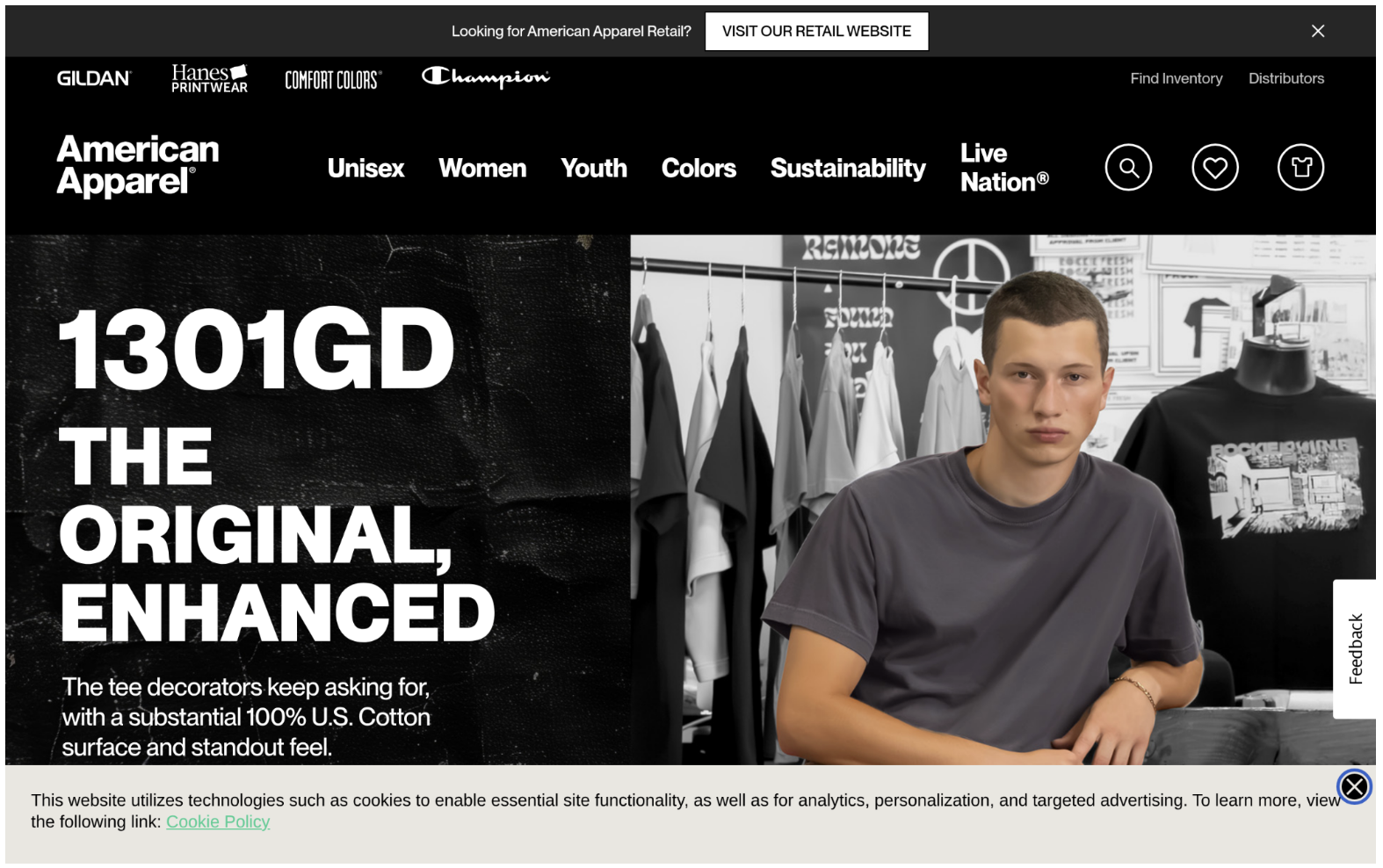
Where it fits: ethical positioning and finished basics, not development work.
What they'll do for you
American Apparel is a Los Angeles-founded clothing brand established in 1989, now operating as an e-commerce brand under parent company Gildan Activewear. It produces sustainable basics for women, men and kids. This is a finished-goods brand rather than a development partner, so it does not take a design from pattern to production for you.
Why it is on this list
The company built its reputation on sweatshop-free, ethically produced apparel with fair compensation for garment workers, and that labor standards record, built over decades, gives it credibility newer operations are still working to establish. Brands and buyers who need a verified ethical production reference point in their supply chain story have one here. Positioning around body positivity, diversity and responsible production remains central to the brand, and the shift to a fully digital retail model changed how the company operates without changing the manufacturing commitment.
What you can verify
Public reviews skew toward the retail consumer experience rather than the manufacturing side. The reputation for ethical production and quality basics has held through the ownership transition, and customers who care about responsible sourcing respond well to the brand's transparency around worker compensation.
Questions that reveal a good development partner
Three of the five companies here have thin public review data. Ask for numbers instead, because the answers separate a partner from a vendor.
What is your sample approval rate on first submission?
How many revision rounds does a typical first sample take?
What is your on-time delivery rate on bulk orders?
What is your defect rate per production run?
Which stages do you handle in-house, and which go to a third party?
Can I see work in my garment category specifically?
A company that tracks these figures will answer directly. One that cannot has told you where its process is loose.
What to compare before committing
Comparing price lists is not enough, because cost per unit is only one input into what a development relationship actually costs you in time and revisions.
Industry and domain experience. Look for documented work in your specific garment category. A manufacturer that specializes in workwear may be the wrong partner for a fashion-forward collection with complex construction, even if both are technically cut and sew.
Features and services. Confirm whether the company handles the full development chain from pattern making through sampling and bulk production, or only part of it. Gaps in service mean you are managing multiple vendors and absorbing the coordination yourself.
Pricing structure. Understand cost per unit at your expected production volume, and what changes as you scale. Some companies price low at entry and shift significantly at higher quantities, so get the numbers for both your first run and your intended volume.
Results measurement. Ask about sample approval rates, average revision rounds and on-time delivery rates for bulk orders. These numbers tell you more than any sales pitch, and a partner that tracks them is one that manages its own quality.
Compliance. Check that the manufacturer understands relevant labor standards and production certifications, including WRAP, GOTS, OEKO-TEX and CPSC apparel safety standards. This matters most if you sell into markets that require documentation.
How this list was built
The goal was to surface apparel development companies that genuinely serve fashion brands, not the ones with the most polished websites. Every company was assessed using publicly available information gathered across multiple source types.
Initial data collection. A longlist was built from industry directories, trade resources and manufacturer databases relevant to domestic apparel production. Review platforms, brand forums and production-focused communities were searched for names that came up repeatedly among designers and brand founders. Companies appearing across multiple credible sources moved forward.
Shortlisting. Options without verifiable public presence or documented production experience were removed. Review patterns were analyzed to separate consistent, specific feedback from vague or thin commentary. Companies where public information was too sparse to support a conclusion were flagged, noted in the profiles above, and weighted accordingly.
Verification of claims. Service claims from each company's website were cross-referenced against third-party sources where possible. Named client relationships, production capabilities and minimum order details were checked against external mentions, directory listings and verified review content. Where discrepancies appeared, the more conservative interpretation was used rather than accepting the company's self-description at face value.
Authority signals. Each company's broader footprint was assessed through trade directory listings, industry publication mentions, recognized client relationships and any public record of work on collections or projects. Companies with stronger verifiable authority signals were weighted more favorably than those with thinner public profiles.
Development-specific evidence. The final filter focused on evidence tied to development work rather than manufacturing generally. That meant dedicated service pages covering pattern making, sampling and production, plus verified client reviews referencing the development process rather than only product quality. Case studies and named project examples demonstrating real fashion manufacturing outcomes carried the most weight.
Bottom line
First collection, no production experience → Affix Apparel at 50 pieces, guided through four steps
Complex construction at low volume → The Evans Group at 10 pieces per style
A deadline and no time to wait on a quote → Full Speed 100
Bulk runs with decoration and inspection in-house → Apparel Factory from 100 pieces
Ethical basics off the shelf → American Apparel
Early-stage founders need low minimums and guided support. Scaling brands need consistent quality and reliable lead times. These five sit at different points on that spectrum, so match the partner to where your brand is now and where you expect it to be after two or three production cycles.
Back to school season is in full swing and with it, the endless journey of back to school shopping. As a college student, I am less likely to go out in search of colorful new notebooks and pencils like I used to as a kid because I spend all my time on my laptop now, but there’s still one thing we are often on the hunt for.