
What's Actually In Your Acrylic Powder?
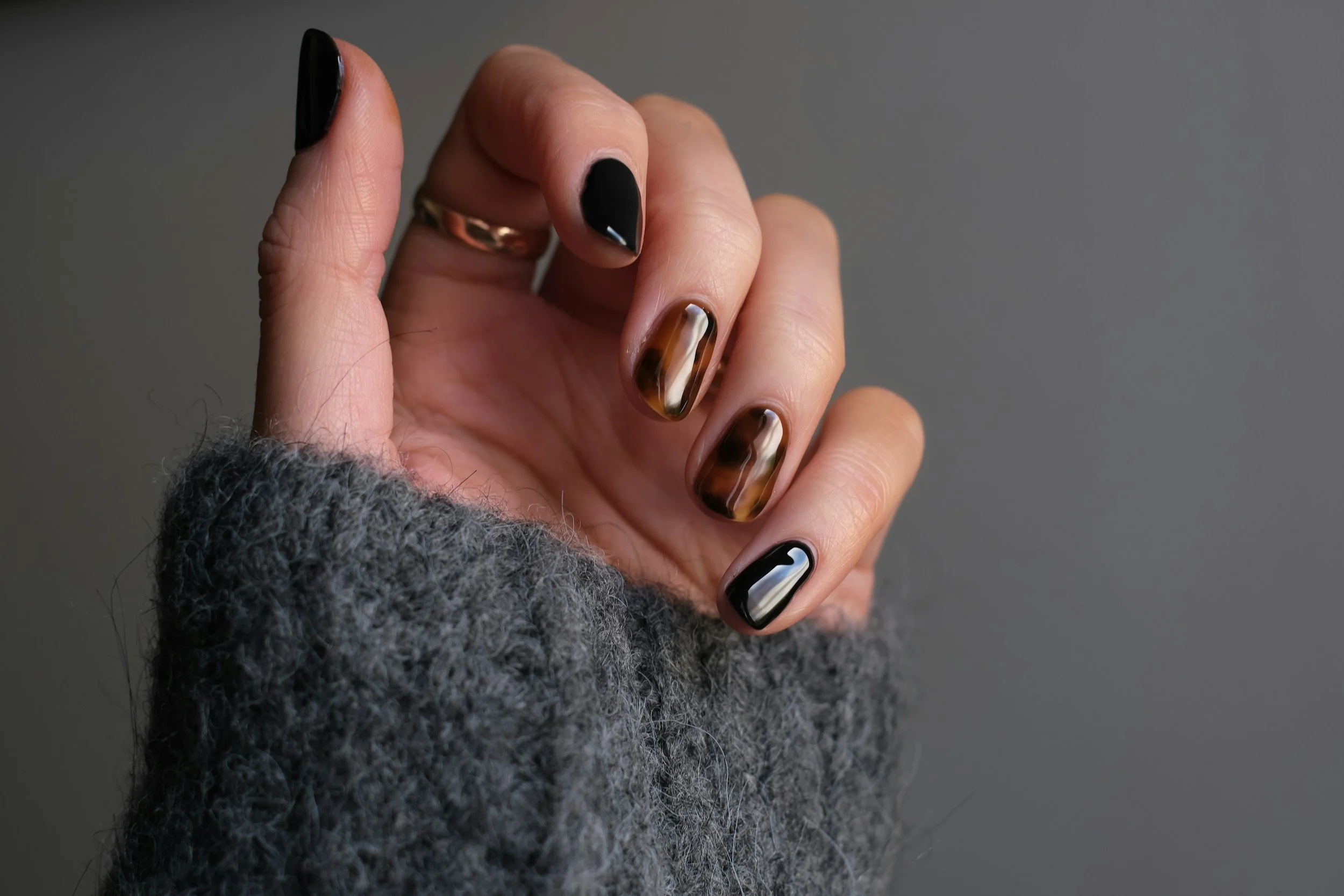
Every acrylic set starts the same way: dip the brush, pick up a bead, sculpt. A busy nail tech might repeat that motion a hundred times a day yet ask what's actually inside the pot of powder, and most people, professionals included, come up short. That's worth fixing, because the powder you choose decides how your beads flow, how your sets cure, how they look in week three and, in some cases, what happens to the natural nail underneath. Here's what's really in there and what separates a powder that performs from one that just fills the pot.
It's Not Powder It's Polymer Microspheres
Acrylic powder isn't powder the way flour is powder. Under a microscope, it's millions of tiny, near-perfect spheres of polymer most commonly polyethyl methacrylate (PEMA), polymethyl methacrylate (PMMA), or a copolymer blend of the two. Those beads are the backbone of every enhancement you'll ever build.
When the spheres meet liquid monomer on your brush, they absorb it and soften. The monomer then polymerizes its molecules link into long chains that weave around and through the beads, and the bead you placed levels out and hardens into a single dense, durable network.
Particle size is everything at this stage. When every sphere is milled to the same size, each one absorbs liquid at the same rate, your mix ratio stays predictable, and beads flow smoothly without bubbles. When sizes are all over the place the hallmark of cheaply made powder some beads flood while others starve. The result is cloudiness, air pockets and weak spots you won't discover until a set fails early.
The Supporting Cast
Beyond the polymer itself, a quality powder contains a short list of ingredients, each with one job:
Benzoyl peroxide. The initiator the spark. Added in tiny, tightly controlled amounts, it kicks off polymerization the moment powder meets liquid. Too little and the set cures slow and weak; too much, or blended unevenly, and you get brittleness, heat spikes and premature yellowing.
Titanium dioxide. The same mineral that makes sunscreen white gives whites and cover shades their opacity and depth.
Pigments. Cosmetic-grade colorants create the pinks, nudes and brights, while a trace of violet in clear and pink powders offsets the slight yellowing that UV exposure causes over time.
Nothing exotic. The real difference between a premium powder and a cheap one isn't a secret ingredient it's how precisely these few ingredients are measured, milled and blended.
The Methyl Methacrylate Question
No honest conversation about acrylic ingredients can skip MMA methyl methacrylate. Back in the 1970s, the FDA concluded that liquid MMA monomer was a “poisonous and deleterious substance” with no place in nail products, and the majority of US states have since banned or restricted it. MMA bonds so aggressively that a knocked enhancement tends to take the natural nail with it, it's notoriously difficult to soak off, and it's linked to severe allergic reactions in both clients and techs.
Here's the nuance most articles miss: the MMA problem lives mainly in the liquid, not the powder. In powder form, methacrylates are already polymerized PMMA polymer is a different substance from liquid MMA monomer, which is why it's considered safe enough to appear in everything from dental work to bone cement. The powder-side risk is subtler: poorly processed powder can carry leftover unreacted monomer and other impurities from manufacturing. Unbranded bargain products with no ingredient list are exactly where that kind of corner-cutting hides. If a powder arrives with no manufacturer name, no ingredient information and a price that seems too good to be true, trust your instincts and leave it on the shelf.
Where Cheap Powders Cut Corners
Most budget powders don't contain anything scandalous. What they contain is inconsistency:
Fillers. Inert bulking agents stretch the expensive polymer further and weaken the finished enhancement.
Irregular particle sizes. Skipping precision milling saves money and shows up on the nail as bubbles, streaks and patchy cure.
Unstable pigments. Cheaper colorants can fade, shift or yellow within weeks, especially under UV.
Uneven initiator. Benzoyl peroxide that isn't blended uniformly creates hot spots that cure brittle and dull.
No traceability. Plenty of brands never touch manufacturing at all. They buy white-label powder from unnamed factories, which means this month's batch may not behave like last month's and nobody can tell you what changed.
None of this appears on a label. It shows up later, as lifting, discoloration and clients who don't rebook.
What's In DeEnti Acrylic Powder
We hold our own products to the standard this article sets, so here's our answer to the question in the title.
Every pot in our acrylic nail powder collection starts with premium acrylic polymer no fillers manufactured by us in the USA under GMP systems. DeEnterprises is family-owned, and we've been making professional nail products for more than 40 years, so nothing in the pot is a mystery to the people who made it.
Because we manufacture rather than resell, we control the details that decide how a powder performs: uniform particle size for a buttery, self-leveling bead and bubble-free application; precisely blended initiator for a reliable cure with superior strength and adhesion; and stable, cosmetic-grade pigments for a crystal-clear, non-yellowing finish that still looks right at the fill appointment. It's the same formula across the whole range gel-like clears, cover pinks, nudes and true colors and in every size, from 2.1 oz pots for at-home users to bulk pound sizes for busy salons and the batch you order next month will behave exactly like the one on your desk today.
The Bottom Line
You don't need a chemistry degree to buy acrylic powder well. Three questions cover it: Who actually makes it? What's in it? Will the next batch behave like this one? If a supplier can answer all three without hesitation, you've found a powder worth trusting and your clients' nails will show the difference long before a lab ever could. Browse https://www.deenterprises.com/ for more American manufactured product including Acrylic Liquid.

In the world of makeup and skincare, the 2020s have been defined by little to no visible product on the face. “Clean girl” minimalism and the “no make-up make-up look” have long lapped the 2010s passion for big, blocky eyebrows, cut creases with thick eyeliner, blinding highlighter and overdrawn lips. As someone who began her makeup journey during that heavy, colorful era, I yearn for the days when people wanted to go outside wearing more than the latest in an endless parade of lip oils.