
Our Favorite Progressive Candidates in 2026 - Bride Rose Sweeney, Ohio State Senate, District 23
In 2026, Ohio is a swing state at all levels! Both the Governor’s race and the U.S. Senate races are rated by pollsters as toss-ups, which is encouraging to Democrats after Ohio veered heavily to the right-wing 10 years ago, with high-ranking right-wing figures like Jim Jordan, Max Miller, Bernie Moreno, and Vivek Ramaswamy epitomizing that political shift. Several U.S. House races are also competitive. At the state level, throwing Republicans out of power in both legislative houses is unlikely, but if Democrats pick up two seats in the Ohio State Senate, they can break the GOP supermajority strangling human rights, individual freedoms, and the working class in the state.
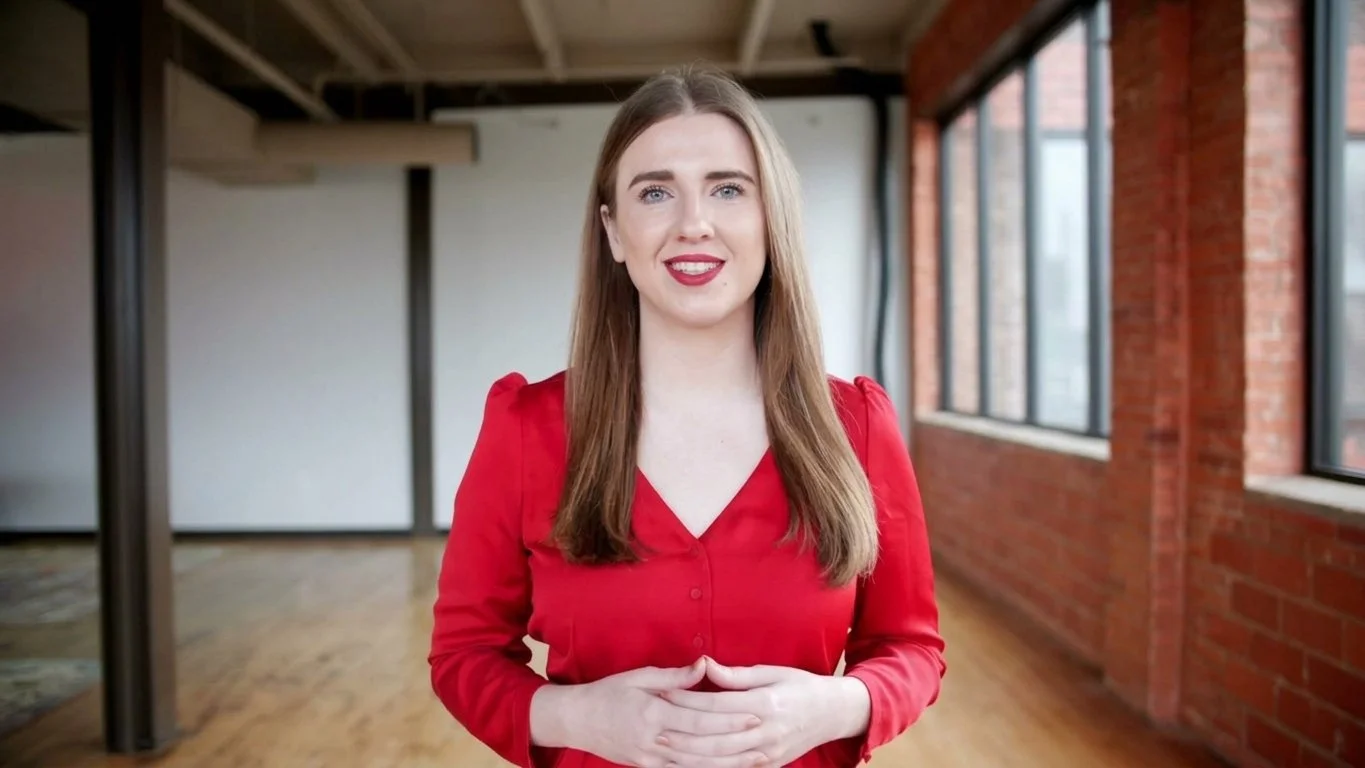
To break the supermajority, one Democratic candidate who needs to win is Bride Rose Sweeney (she/her/hers), a current state representative representing West Cleveland and its western suburbs. First elected at age 25, this millennial has been in office for eight years and was the youngest Democratic member in the House during her first term. In 2022, she received an award from the Ohio Election Officials Association as a leading voice for democracy and voting rights. Bride is most passionate about funding schools fairly, eliminating political corruption, and investing in public transportation.
Where are you based?
I grew up in the Westpark neighborhood in the city of Cleveland. I now represent Westpark and the west side of the city of Cleveland as well as the cities of Westlake, Rocky River, Bay Village, and Fairview Park.
What is your position/what position are you running for?
I currently serve as the Ohio State Representative for district 16 and I’m running for Ohio Senate district 23 this year.
How would you briefly summarize your platform?
Too many kids in Ohio don’t know where their next meal is coming from. Too many seniors are being pushed out of their homes. Too many families are struggling when it doesn’t have to be this way.
I don’t have the luxury of waiting for the perfect solution or the perfect political moment. Even against a Republican supermajority, my job is to deliver for people right now. I fought for universal school meals. We didn’t get there, but we made school meals free for 75,000 more kids. That’s not enough, but it proves progress is possible and that the work matters.
So my platform is this: move the needle as far as I can today, and never mistake that for the finish line. That’s why I’m also working to build lasting Democratic power, even with gerrymandered maps and an opposition that has more money and more influence.
My job is simple: serve the public and show Ohioans that Democrats can deliver, no matter the obstacles.
What inspired you to run?
I grew up around politics, so I understood early that it isn’t abstract. It shapes every part of our lives. But I never pictured myself as the one on the ballot.
That changed when I went to work at the Statehouse and saw how power is actually used. I watched decisions that hurt working families get made behind closed doors, with little accountability and even less resistance. What Ohioans needed and what the legislature produced were two different things.
I believed Democrats, even in a superminority, could do more than introduce bills that go nowhere. We could hold the powerful accountable and still pass meaningful policy, if we were willing to do the work.
After a few years as a staffer, I looked at who was running to represent me and realized that, at 25, I had more experience inside the legislature than they did. I didn’t have to stay behind the scenes, writing speeches and shaping someone else’s message. I could step forward and be the kind of leader I felt was missing.
I ran because Ohioans deserve better, and I wasn’t willing to wait for someone else to fight for them.
What change are you hoping to bring to your district and country?
More than fifteen years of unchecked one-party control has done real damage to Ohio. We see it in rising energy costs, in underfunded public schools, and in the fact that Ohio ranks near the bottom of the country on basic measures like infant mortality and life expectancy.
The change I'm fighting for is to make politicians work for the people again. That starts with reversing the damage, and with leading by example: proving that the problems we face are not impossible to fix. Even against a Republican supermajority, I've worked to show that you can still pass meaningful policy and force progress if you're willing to do the work and push back.
But small wins aren't enough. We need to break the cycle of one-party rule that allowed this to happen in the first place. I'm working to hold those in power accountable, deliver real results now, and build the Democratic strength needed to bring balance back to Ohio.
The status quo isn't working, and Ohioans are paying the price. What I most want to change is the belief that this is how things have to be. Lawmakers and the public alike have come to accept systemic problems that have gone unaddressed for far too long. We don't have to accept them. It is in our power to have a government that works better for all of us. But we have to believe that before we can build it.
How long have you been in office? What do you consider to be your major accomplishments so far?
I’ve served as a State Representative since November 2018. In a Republican supermajority, showing up isn’t enough. My job is to deliver.
I’ve passed laws that improve people’s lives: expanding long-term support for kids with disabilities, banning police ticket quotas, making it easier to transfer college credits, and reforming how colleges withhold transcripts. I’ve strengthened election security and advanced rail safety reforms after the East Palestine derailment. And when I can’t stop a bad bill outright, I work to make it less damaging.
As Ranking Member of the House Finance Committee, I fought for and helped secure the largest state investment in public transit in Ohio history in last year’s transportation budget. In the 2023 budget, I helped deliver a $1.5 billion increase for public schools, the largest in more than 17 years, and boosted Medicaid funding to lift home care workers from about $12 an hour toward $18.
The accomplishment that matters most to me is the Fair School Funding Plan. For more than two decades, Ohio ran an unconstitutional school funding system that shortchanged students and leaned too hard on local property taxes. Plenty of people said it couldn’t be fixed. As the lead Democratic sponsor, I helped prove them wrong and pass the most significant overhaul of school funding in a generation. The legislature still hasn’t fully funded it, and that fight isn’t over.
In a system designed to stall progress, I’ve focused on proving that results are still possible. I’m not slowing down.
What do you feel are the most important issues right now, why, and how do you plan to tackle them?
The most important issue in Ohio right now is corruption and the outsized influence of special interests. In my first year in office, the legislature passed House Bill 6, which added charges to Ohioans’ electric bills to hand an energy company a billion-dollar bailout it didn’t need. The company got the bill passed by secretly funding a $60 million bribery scheme, the largest in state history. The Speaker who pushed it through was convicted. It confirmed what too many Ohioans already suspected: policy in this state can be bought.
A handful of people were charged, but the legislature has not passed a single law to stop it from happening again. The same kind of dark money that bought House Bill 6 can still shape our laws today, and that leads me to believe it may have been just the tip of the iceberg.
I’m not saying every decision in Columbus is corrupt. I’m saying the legislature answers to the well-connected before it answers to the people, and the consequences are everywhere. In the most recent budget, lawmakers set aside a billion dollars for billionaire-owned professional sports teams and passed a flat income tax that gave most Ohioans nothing and sent the bulk of the money to the wealthiest. At the same time, they shortchanged public schools, underfunded Medicaid and proven public health programs, cut rural broadband, and pulled back support for early literacy.
That’s not an accident. That’s what happens when special interests drive the agenda. Break that grip and Ohio would be in a fundamentally better place, even with the current political makeup.
So my approach is direct: call it out, force transparency, and deliver results wherever I can. I introduced the Ohio Anti-Corruption Act to drag dark money into the open and curb its pervasive influence. And I’m building the political power to change the system itself, because until we do, we’ll keep getting the same outcomes.
Nothing has defined my work more than the fight for fair school funding. I didn’t come into the legislature knowing education would be my focus, but once I saw how broken the system was, I couldn’t look away.
At a Cleveland public school, a principal told me about a young girl who showed up in a winter coat with no shirt underneath after fleeing domestic violence at home. When I asked the principal what her school needed most, she didn’t mention funding formulas or staffing shortages. She said, “A washer and dryer.” At another school, a nonprofit had an extra $1,000 and let the teachers decide how to spend it, figuring they’d throw a pizza party. The teachers asked for underwear for their students.
That’s where we are. And at the same time, the state says these schools are overfunded and that more resources aren’t the answer. It’s not just absurd, it’s offensive.
None of this is complicated. It’s a choice. The Ohio Constitution requires us to fund public education, and we are failing that duty. We hand billions to wealthy interests while districts like Cleveland face layoffs and cuts. We underfund schools, punish them for the results, and refuse to acknowledge the reality so many Ohio children are living in. Funding schools the way our own constitution requires should be the starting line. In Ohio, it has become the fight.
People ask what progress looks like in Ohio. Locally, it can be as simple as helping a school get a washer and dryer. Statewide, more than half of our public school children are economically disadvantaged, and we are so far behind that the fight for progress is, for now, a fight for the basics: schools funded to meet the needs of the children in them. We fought to get an independent study of what that takes. It was commissioned by the state’s own Department of Education and Workforce, and it found that Ohio is underfunding these exact students by more than $3,000 each. Across more than 900,000 children, that is roughly $3 billion a year.
You can’t build anything without a floor to build on. That’s what the Fair School Funding Plan is. Before it, Ohio had no framework for what it actually costs to educate a child. I sponsored the plan and built it with educators and lawmakers from both parties, using real evidence of those costs, and it became law in a legislature Republicans control. Realism is how things get done here. Now we have the framework, and we know it can work. We just need to fund it. The floor is where the work starts. It isn’t where I intend to stop.
America is extremely divided these days. How would you hope to bridge that divide with your constituents to better unite Americans?
We are deeply divided, and it’s easy for people to feel like nothing is ever going to change. That apathy is dangerous, because real change only happens when people believe their voice matters and stay engaged. And there is a real effort to make people feel that way. Cynicism keeps the status quo in place and benefits those already in power.
The way we start to bridge the divide is by showing people that government can still work for them. That means electing leaders who serve the public, not just their party or special interests, and being willing to work with anyone to get good policy across the finish line. I may disagree with someone on 99 percent of issues, but I focus on the 1 percent where we can make real progress and improve people’s lives.
When people see elected officials delivering results instead of playing political games, trust starts to rebuild. That’s how we begin to close the divide: by proving that change is still possible, and by reminding people that the power has always belonged to them.
How do you see your unique identity and background to be an asset to you in office?
When I was first elected, I became the first woman ever to represent my district, and when I was sworn in, I was the youngest member of the legislature. From the beginning, people told me I wasn’t qualified or didn’t have the life experience to do this job.
I took that personally and channeled it into the work. I put my head down and focused on delivering results. That led me to become the lead Democrat on the House Finance Committee, one of the most powerful committees in the state, which writes a balanced budget of roughly $100 billion a year. I am one of the youngest people in state history to hold that role.
That experience shaped how I lead. I know what it feels like to be underestimated, and I don’t take this position for granted. It has made me more focused, more driven, and more committed to proving that who gets a seat at the table matters.
Now I’m determined to leave the door open wider for the next generation, especially young women. There were people who made the Statehouse a little less hostile for me, and I want to do the same for those who come next. Representation isn’t meant for a select few. It should reflect all of us.
If you’re willing to work hard and fight for the people you represent, you belong in positions of power. I want more people to see that as possible.
What is your motto in life?
Almost anything is possible with enough hard work.
Where can we find out more about you?
You can find me on Instagram and Twitter @RepBrideSweeney as well as on Facebook and my official Ohio House website. And my newest account on Tiktok @Bride.Rose.Sweeney.


To break the supermajority, one Democratic candidate who needs to win is Bride Rose Sweeney (she/her/hers), a current state representative representing West Cleveland and its western suburbs. First elected at age 25, this millennial has been in office for eight years and was the youngest Democratic member in the House during her first term. In 2022, she received an award from the Ohio Election Officials Association as a leading voice for democracy and voting rights. Bride is most passionate about funding schools fairly, eliminating political corruption, and investing in public transportation.