Our Favorite Progressive Candidates in 2026 - Meghan Kallman, Rhode Island Senate District 15
Rhode Island has a long history of progressivism. The birthplace of religious freedom in America, Rhode Island has been reliably progressive for decades (including going for Carter in the 1980 presidential election and Dukakis in 1988). As such it is a policy lab for new ideas to make the American economy and society more egalitarian and benefit a wider scope of Americans.
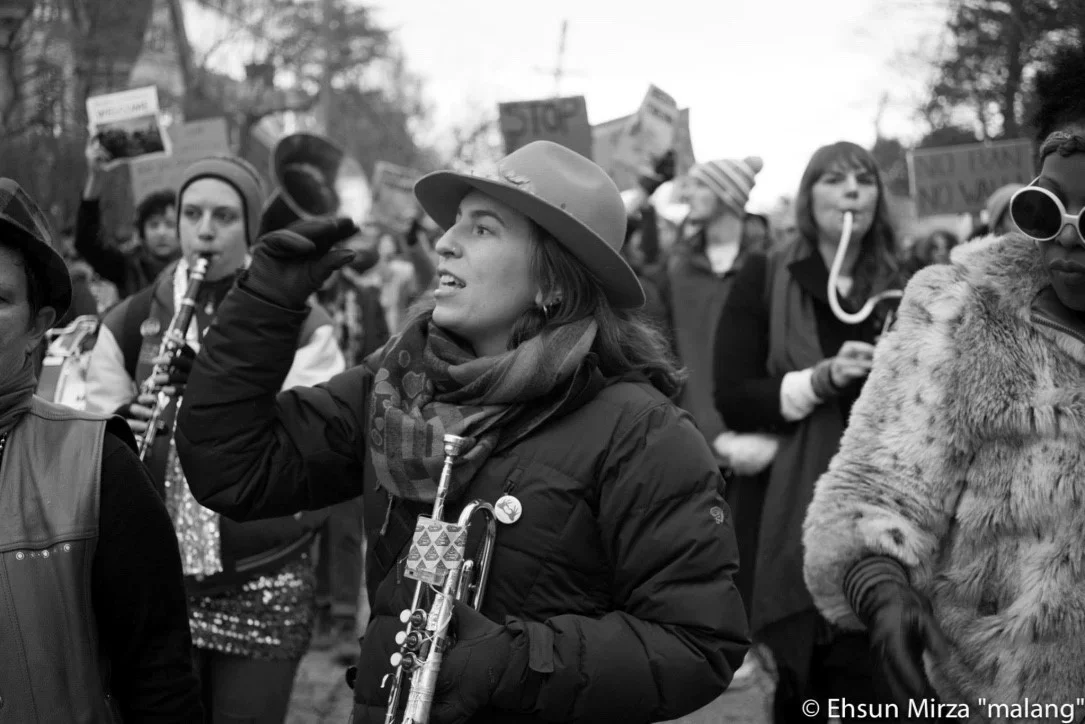
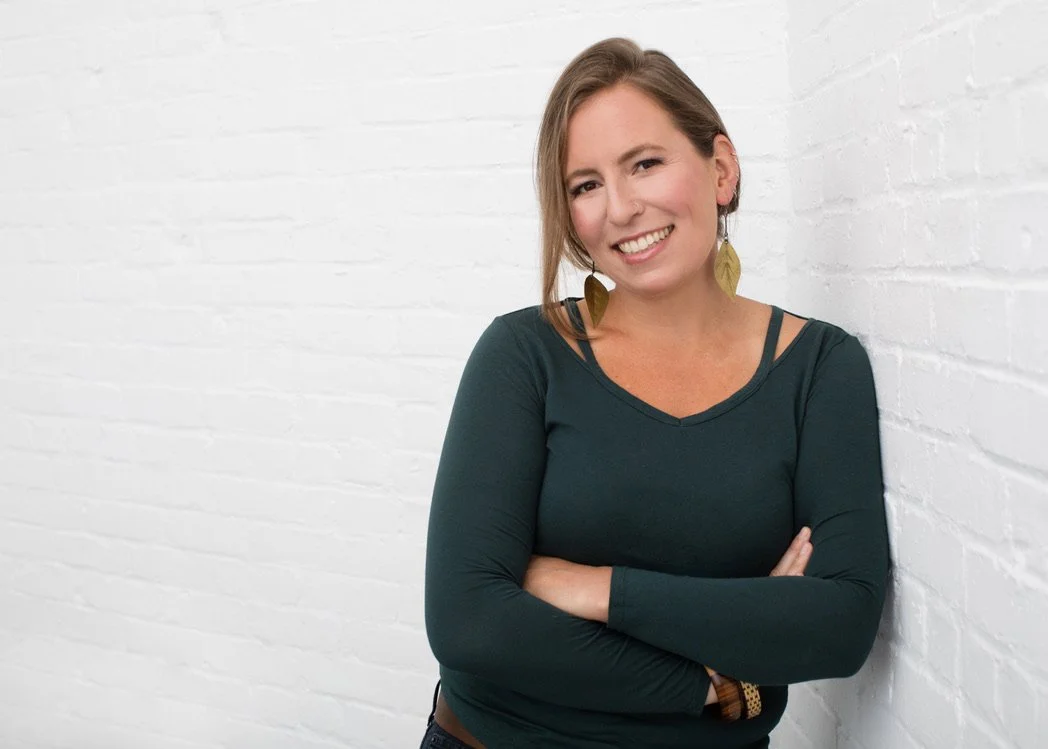
Today we are profiling a Rhode Island Senator who has been championing progressive laws since her election in 2020. Meghan Kallman (she/her), is a triple-sociology major who after college went to work for Amnesty International. Five years before entering state government, she co-founded Conceivable Future, a nonprofit organization that advocates for climate and reproductive justice. This millennial community organizer is also a professor at the School for Global Inclusion & Social Development at the University of Massachusetts at Boston, and is an avid trumpeter (see photo below). She is most passionate about social, environmental, and economic justice.
Where are you based?
I live in Pawtucket, Rhode Island. The district that I represent encompasses basically the western half of Pawtucket, and a part of the East Side of Providence.
What is your position/what position are you running for?
It has been my privilege to serve as the State Senator for Rhode Island’s 15th district. I am running for re-election.
How would you briefly summarize your platform?
I am running on an platform of social, environmental, and economic justice. Audre Lorde once said there’s not a single-issue struggle because we don’t lead single-issue lives, and that’s a good description of why I believe that issues are linked. The challenges we’re facing right now are connected (high energy costs, for instance, have something to do with our lack of access to renewables. A lack of affordable housing is related to the outsized power that large corporations, including landlords, have). I have built campaigns around the conversations I have with constituents, often from the front steps of my home in Pawtucket. Most mornings you can find me on my front steps with my dog and a cup of coffee, talking with neighbors on their way to work or school; those conversations guide my work at the State House. We have accomplished a huge amount, together, using our shared wisdom and experience. From the free R-Line buses, to the Secure Choice Retirement Savings Program to statewide housing policy, my work at the State House has kept working people at the center of the conversation. We can have a state and a community that helps everyone thrive, and I’m committed to helping us get there.
What inspired you to run?
I’d had an uninspiring conversation with a political candidate who had come to my door, about climate change. I was a postdoc at the time (studying climate change), and I’m a Millennial, and obviously climate and its connections to democratic meltdown, etc., is a hugely consequential thing for all of us, but for young people especially. This fellow knocked on my door, and asked me what I was concerned about. And when I told him “climate change”, it became clear that he’d not put any thought into the issue, and was unprepared to take it seriously. I closed the door thinking “If that’s the state of play, I’m going to have to give it a shot, because our state of play needs to be more serious”. And when the next cycle started, I pulled papers to run for city council, a role in which I served for four years before I ran for State Senate.
What change are you hoping to bring to your district and country?
Rhode Island has the power to take care of people right now. And because Washington is in crisis, Rhode Island can, and must, lead. When the federal government is melting down, states have the power to truly change people’s lives. Rhode Island is small enough that we can take care of each other, and we have what we need to protect each other from the worst of what is coming out of Washington.
How long have you been in office? What do you consider to be your major accomplishments so far?
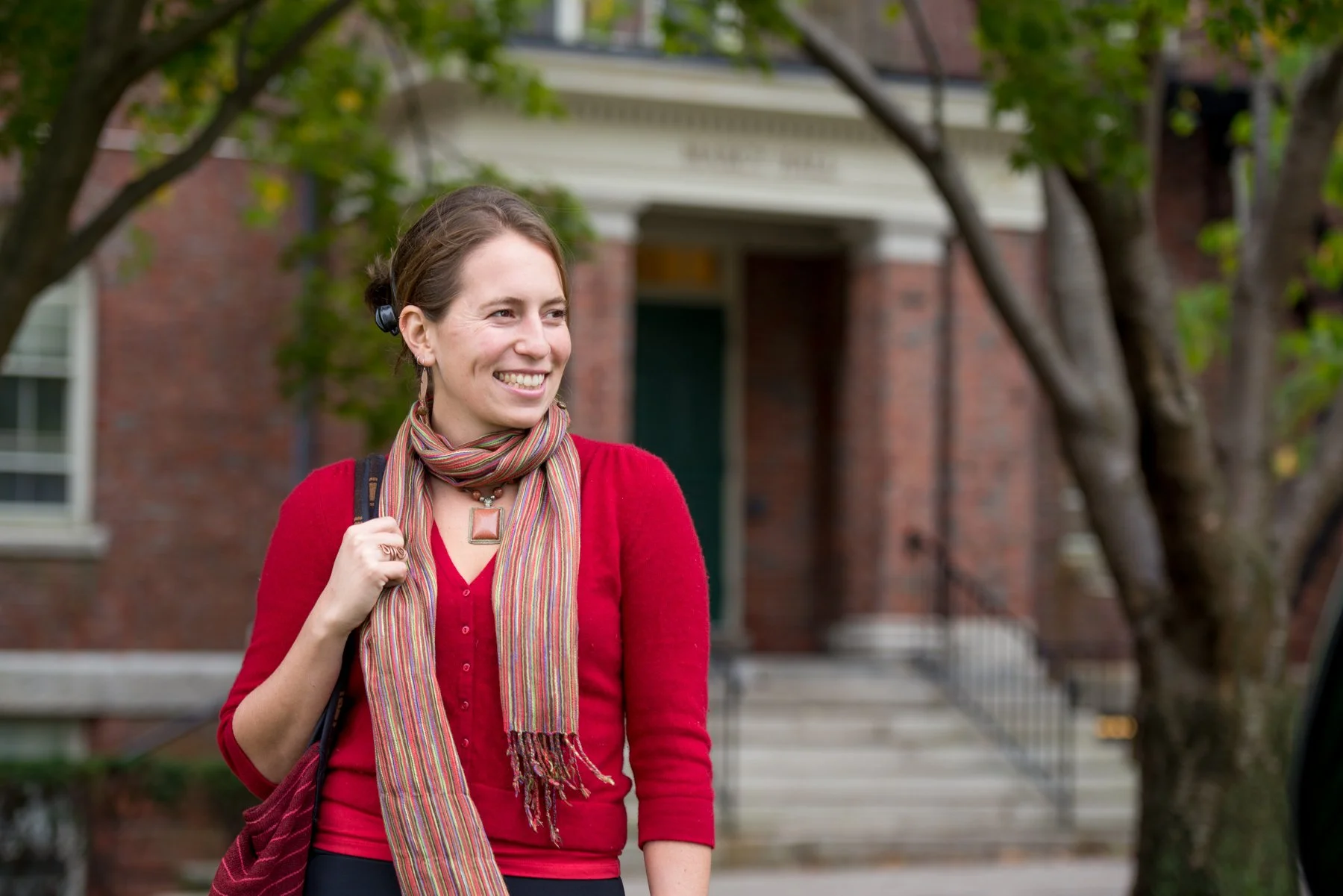
I just finished my sixth year in the RI Senate (we have two year cycles in the State Senate, which is shorter than many). Since taking office, I have concentrated my concentrated my work on policies that support working people, women, public health, and the environment. I wrote the law that created the Housing Land Bank, a permanent source of funding to build and preserve homes that people in the district can afford, and passed legislation allowing Rhode Island’s old mills and closed schools to be converted into housing. I banned the toxic PFAS “forever chemicals” found in everyday products, created strong penalties for wage theft, protected workers’ tips, and created the Secure Choice program so employees at small businesses can save for retirement. I was the author of the Taylor Swift Tax, a program that brings a degree of tax equity to Rhode Island by imposing a surcharge on second homes valued at over a million dollars (this is sometimes called a mansion tax), and have cosponsored multiple gun safety bills. I passed the Protect Our Courts Act in 2026, so residents can go to court without fear of civil arrest from federal agents such as ICE. I also helped make the R-Line, the busiest bus route in the state, free to ride, as well as crash data bill providing transparency around traffic accidents. I was the prime sponsor of the bill that permitted pharmacists to prescribe FDA-approved contraceptives, easing the burden of access for Rhode Islanders.
As I said earlier, Climate was one of the major reasons I ran, and my own history also means that I think about those issues differently. A longtime climate researcher, activist and organizer, climate work has been front and center since I took office. I was the prime sponsor of the Building Decarbonization Act and the Building Benchmarking Act (which passed overwhelmingly in 2026 and was vetoed by the governor; we’re working on an override). I co-founded the Save RIPTA coalition to make sure that our public transit system stays funded, healthy, and whole — for climate reasons, economic justice reasons, and support for the local economy. I was the prime sponsor of the 2024 Comprehensive PFAS ban, which was what it sounds like — a comprehensive ban on added pFAS in consumer products. In 2021-2022 I was the sponsor of a bill that made our state’s busiest bus line free, which was a win for the climate, for working families, and for transit infrastructure generally. I also passed a 2023 bill for transit-oriented development, making zoning for dense housing possible near big train/bus stations.
I am continuing to work on the links between housing and climate resilience - as RI badly needs more housing, and we also need to build it in a way that bakes in good transit infrastructure and climate readiness. This year I passed a bill to harmonize and reduce parking requirements for housing, and in general, I’m heavily focused on public transit and its nexus with housing and climate resilience. Rhode Island is small, dense, and poorer than most of New England, and while I’ve also been championing housing for my whole time in office, I feel like there’s a lot of work at this intersection that needs doing. Climate resilience and transit and housing are not separate issues - they are strands of the same braid, and we must make public policy with that understanding.
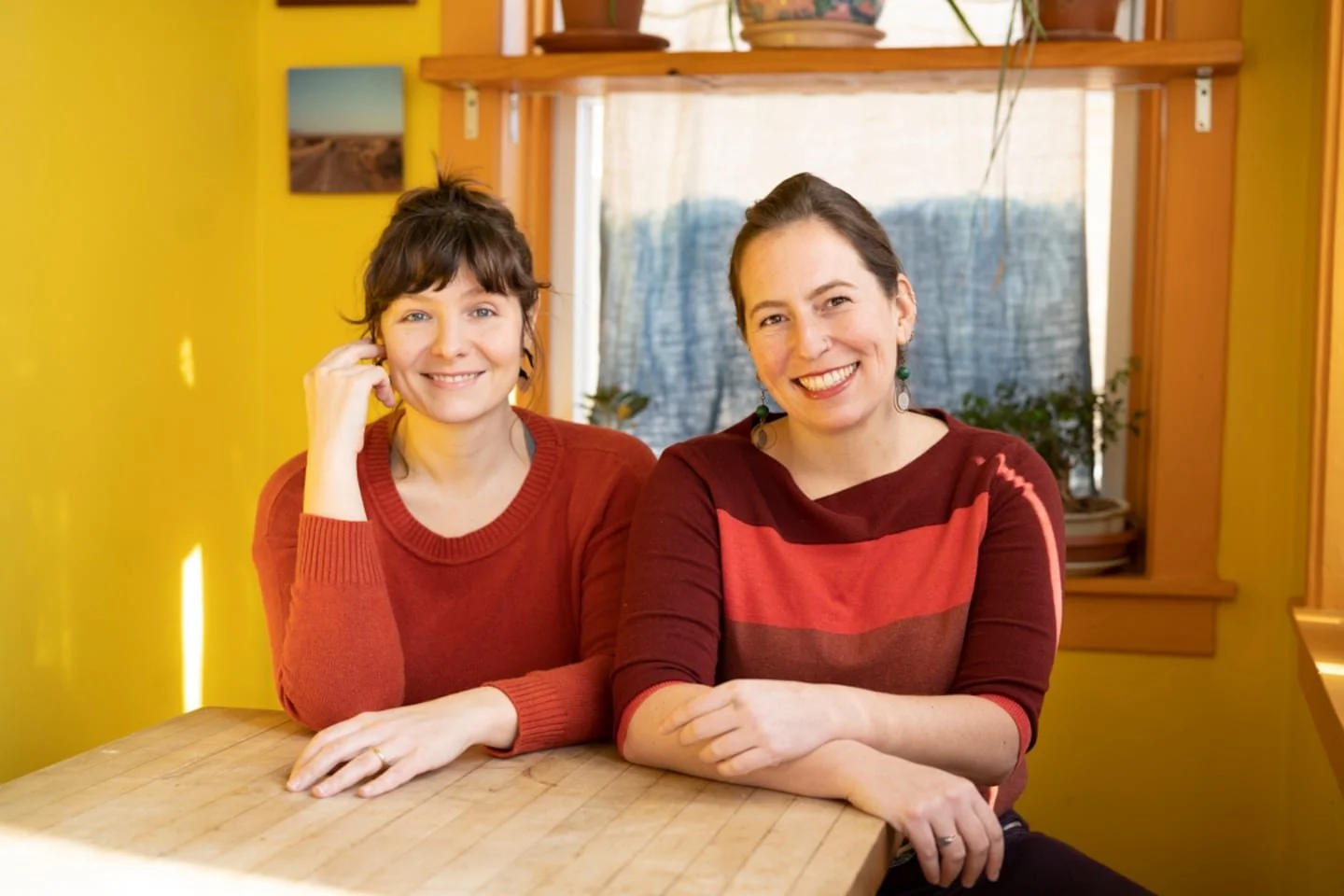
With her Conceivable Future co-founder Josephine Ferorelli
What do you feel are the most important issues right now, why, and how do you plan to tackle them?
In a new term, I will press to finish efforts already underway — my own efforts and those of my allies. I am fighting for dedicated funding for public transit through the Save RIPTA coalition I helped start, working to let faith communities build affordable housing on land they already own, and to change how the state taxes high-value real estate so the tax code asks more of those at the very top. I continue to support efforts to expand access to healthcare and education, as well as to make our funding formula more equitable and ensure that all Rhode Island students have access to excellent education (primary, secondary, and post-secondary) and opportunities to thrive. I am also supporting the Voting Rights Act, which takes on new significance after the recent Supreme Court ruling, as well as getting the Rule of 90 over the finish line, further work on immigration, and the bill I have sponsored for many years on Medical Aid in Dying (sometimes called Death with Dignity). As with my work previously, my legislative agenda keeps people at the center of the conversation, especially when Washington is failing to do so. We are Rhode Islanders, and we take care of each other here.
America is extremely divided these days. How would you hope to bridge that divide with your constituents to better unite Americans?
My strategy has always been to keep the focus on working people’s needs. That’s not to say that ideology and conflict doesn’t exist around wedge issues (e.g. guns, abortion), but it is definitely to say that when we focus on the needs of workers, families, and kids, we tend to have better results. I have one Republican colleague in particular who is a partner on a lot of my initiatives, especially Medical Aid in Dying – and I’m grateful for that partnership and I reciprocate where I can. We don’t need more purity tests. We need more coalition building. I won’t agree with my colleagues on everything and I don’t have to — but I can and must start on the places where we do share a vision. In Rhode Island we are deep blue and have a democratic trifecta, so the disagreements are often within the party itself. But by focusing on concretely meeting people’s needs, and responsiveness within that, we can help bring people together and a create a state that keeps us all safe and healthy.
How do you see your unique identity and background to be an asset to you in office?
One of the reasons it’s important to have a diversity of people in leadership roles is that a diversity of experiences makes us more responsive as a team! For instance: I experienced housing insecurity as a child, which made me extra-super-100% committed to making sure that no Rhode Island child has to experience that. It’s driven a lot of my work on housing over the years. I got the benefits of education systems that worked: a public high school that enabled me to get scholarships to college and graduate school, for example, and I want those same systems to work for others. My day job is as a professor and a researcher, and I often say that some of my most important political skills I learned as a teacher (the ability to read the room, to play the long game, to look for how to unlock the potential in a group of people, to evaluate data, to foster teamwork). And I’m a musician, which requires a different kind of thinking than policy, as well as keeping me plugged into the world of arts. This is just my own mix — everyone has their own special mix, which gives them their own special gifts.
What is your motto in life?
Someone once told me that the secret to having it all is loving it all, and I think about that a lot.
Where can we find out more about you?
www.electmeghan.com, Instagram @meghan.kallman

Forget them Wendy are a musical duo that prioritizes their collaborative efforts in their song writing and dedicates their advocacy to those with disabilities. We get to deep dive with them on their songwriting inspirations, how the two of them met, and what fans can expect from their upcoming album.