
Wallpaper as Art: How Statement Prints Became the New Gallery Wall
More people are using wallpaper the way they used to use art. Instead of hanging a group of framed prints, they put one bold, large-scale pattern on a wall and let it carry the room. It covers more of the wall than a gallery arrangement and takes less effort to put up. This piece looks at why that shift is happening and how to make it work in your own space.
From wall covering to wall art
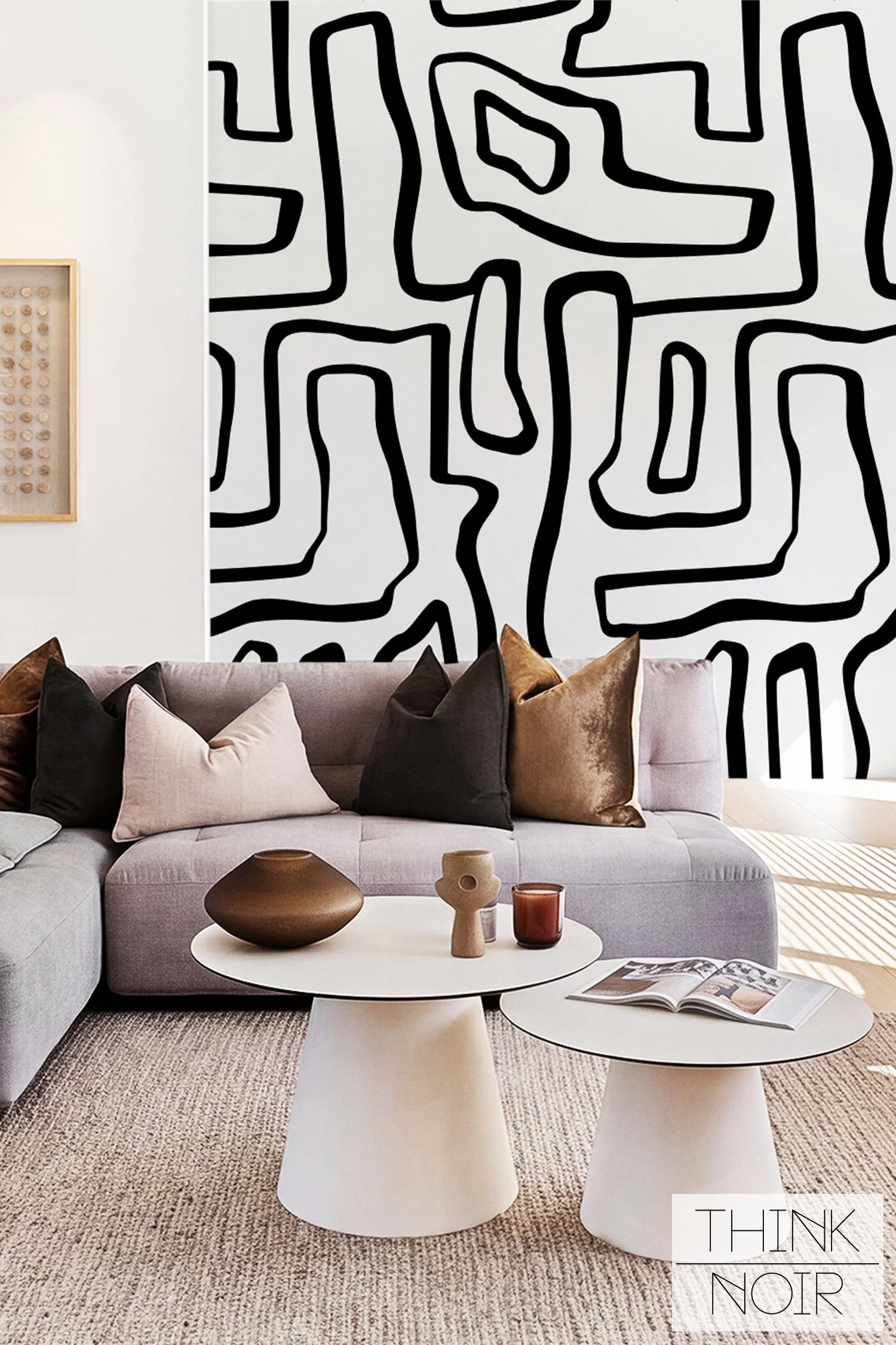
For a long time, wallpaper sat in the background. It went behind the furniture and the art and was not meant to be noticed. That has changed. A lot of newer designs are printed at a large scale, with bigger shapes and bolder patterns, so the wall becomes the thing you look at first. It is less a backdrop and more a feature, and people are increasingly choosing it for exactly that reason.
Why one big print beats a wall of small frames
A gallery wall takes work. You have to collect the pieces, match the frames, measure the spacing, and get it all to line up. A single patterned wall does a similar job in one step. It fills the whole wall with one image, so it reads as a single focal point instead of a grid of small frames. You get a similar effect with less planning, and there is nothing to hang or level.
The prints leading the shift
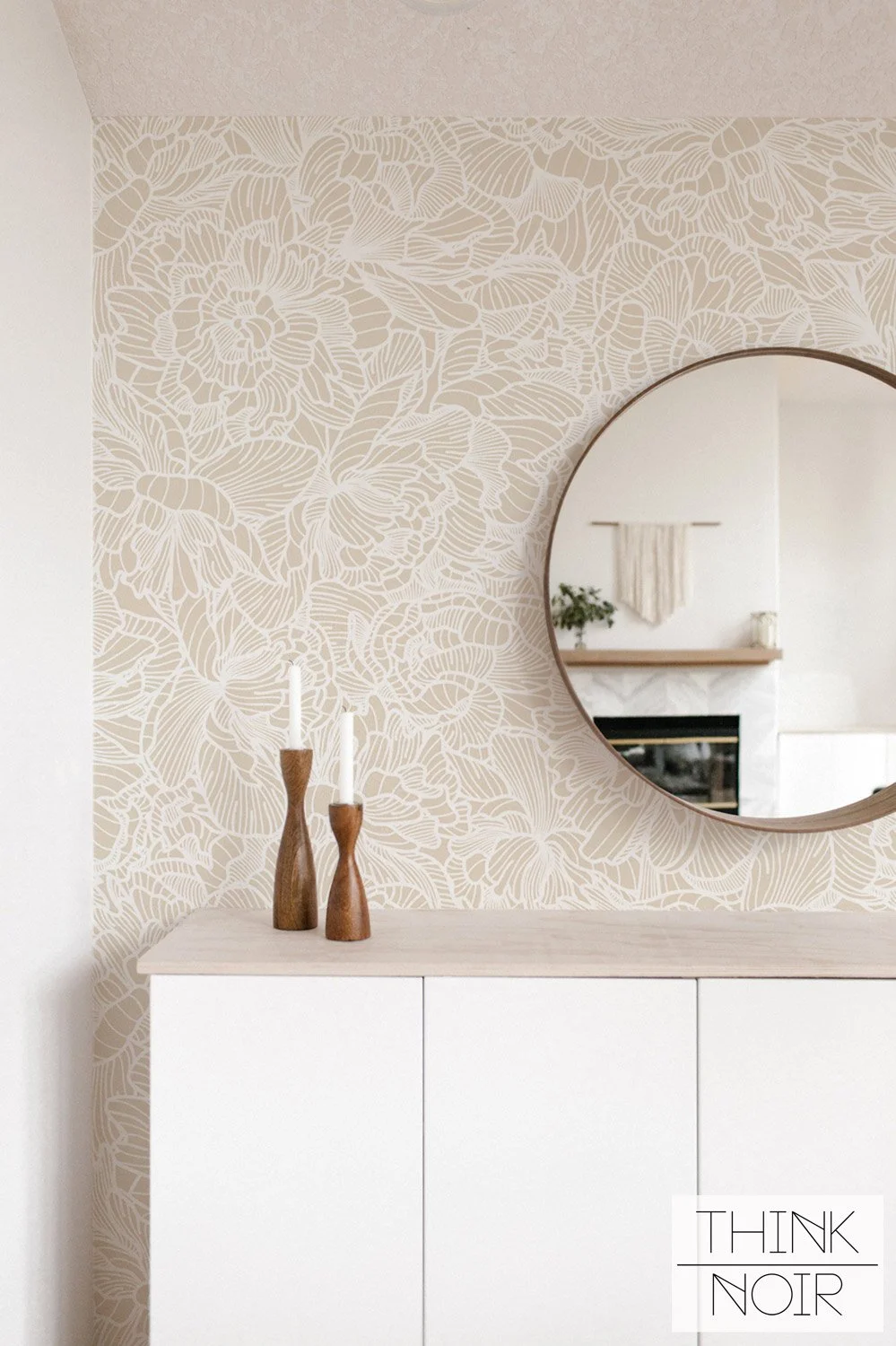
A few kinds of print are driving this, and they share one thing: scale and intention. Graphic and geometric designs bring the clean, confident energy of an art print or a poster. Full murals, all sweeping palms or abstract washes of color, turn a wall into a scene you step into. And large-scale florals, drawn big and often set against a moody ground, read as painterly and modern rather than sweet. A bold statement floral wallpaper is one of the clearest examples of a pattern that behaves like a piece of art, but the principle holds across every style. Small, timid, repeating patterns still feel like wallpaper. Big, bold, well-drawn ones feel like art, whatever the motif.
How to hang wallpaper like art
The secret is to curate, not decorate. Choose one wall, usually the one the room already faces, and let the print be the single strong voice in the space. Keep the surrounding walls quiet and the furniture simple, the way a gallery keeps its walls white so the work can breathe. Treat the print as the piece and everything else as the frame. Done this way, a bold wallpaper does not compete with your art. It becomes art, and the room organizes itself around it. Give it space and light, the way a gallery does, and even a loud print reads as calm and deliberate rather than chaotic.
Where the art world and the home meet
What makes this moment interesting is how close it brings interiors to the gallery. Artists are designing wallpaper, and wallpaper is borrowing the language of art: scale, edition, statement, point of view. For anyone who loves fashion and art, that overlap is the fun part. Choosing a print for your wall has become a creative decision on the same level as choosing a piece to hang, and it fills far more of the room. The wall is no longer the thing the art hangs on. The wall is the art.
FAQ
Is wallpaper really considered art now? In the sense that matters, yes. Large-scale statement prints are chosen and displayed the way art is, as a single bold focal point, and they fill a whole wall rather than a small frame.
What kind of wallpaper works as a gallery-wall alternative? Big, confident designs of any style: graphic and geometric prints, full murals, and large-scale florals. The larger and more intentional the pattern, the more it reads as art rather than as background.
How do I stop a bold wallpaper from overwhelming a room? Limit it to one wall and keep everything around it calm. Quiet neighboring walls and simple furniture let the print stand as the single statement, exactly the way a gallery frames a piece.
The takeaway
The gallery wall is not gone, it has just grown up and moved onto the whole wall. A single statement print gives you the drama and the point of view of a curated art display, in one confident stroke, with nothing to measure or hang. Choose one wall, let the print lead, and keep the rest of the room quiet. That is all it takes to turn a blank wall into the most talked-about piece in the house.


Over my past eight weeks of studying in New York City this summer, I learned a new lesson seemingly everyday. Before then, I had only been on a handful of weekend trips with my friends where we squeezed in every Broadway show we could manage, took Ubers everywhere and never turned down a cocktail or a coffee.