Lonely Kids Club Talks Sustainable Fashion and Unique Graphic Design
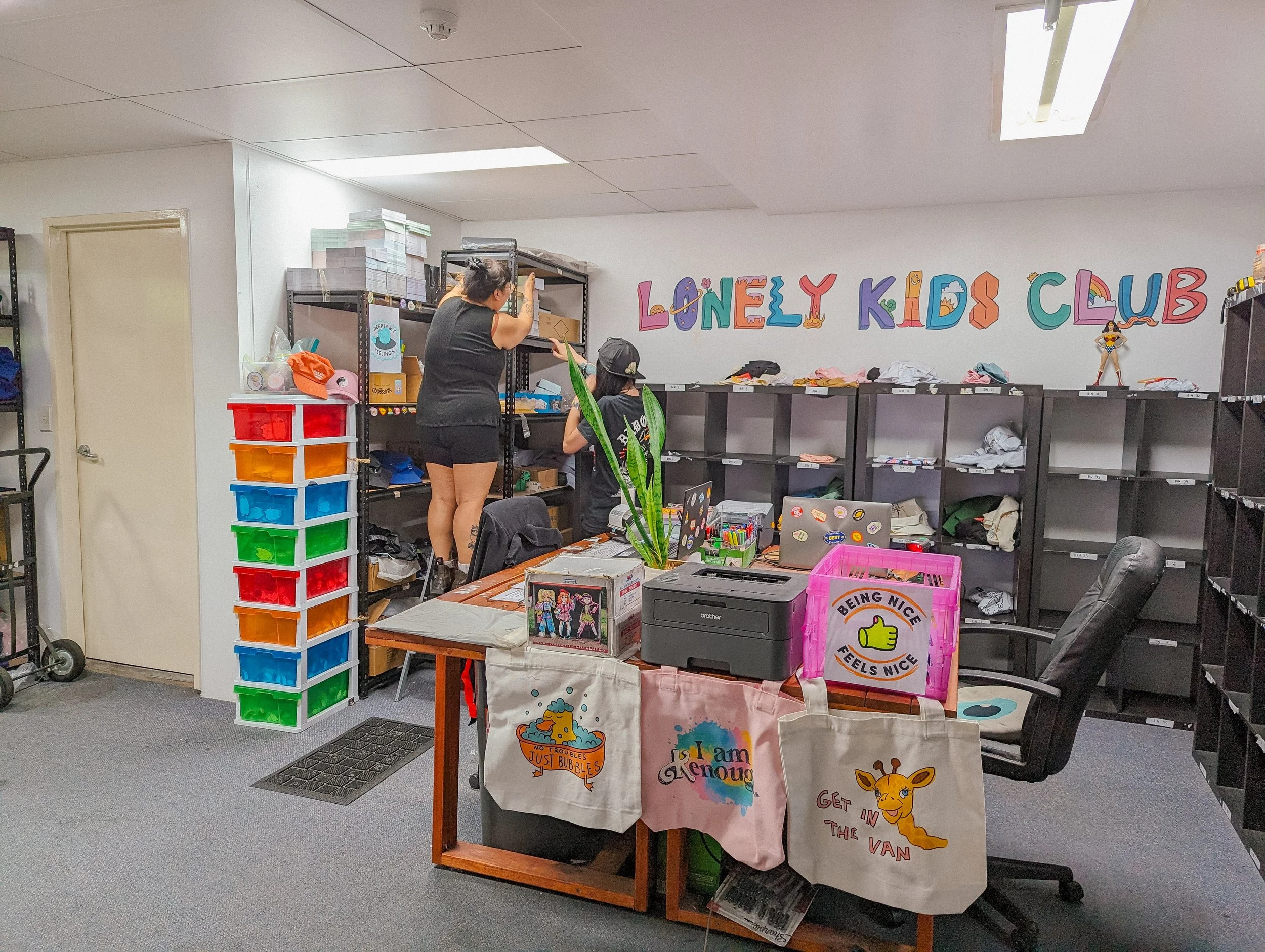
Photo supplied by Lonely Kids Club
Lonely Kids Club is an Australian-based fashion label that specializes in featuring creative, individual artists on their clothing while maintaining a strong dedication to sustainable business practices and shirts that feel comfortable and clever. Their brand is passionate about mental health advocacy and queer rights and inspiring people to be uniquely themselves.
Where are you from?
Sydney, Australia. Our studio is in Artarmon, on the north shore, which is where we print and pack our orders.
How has your hometown influenced your creative instincts and career pursuits?
There’s a lot of Australia in what we make. Birds, local references and a fairly ridiculous sense of humour all turn up in the designs. An ibis can be the whole point of a shirt. It doesn’t have to be more complicated than that.
The early days of the label were tied to markets and gigs here. I was selling shirts out of plastic tubs outside shows, so there was a very direct connection between making something and meeting the person who wanted to wear it. I still like that part of it.
Tell us a little bit about the unique, creative company name - Lonely Kids Club. Where did it come from and what does it mean to you?
It started as a joke between me and a friend, and I just rolled with it. It wasn’t meant to be a sad name. To me it meant putting creativity and happiness ahead of what other people thought you were supposed to do.
That still fits. You can like something a bit strange and find other people who get it. We do still get the occasional person asking if we’re an actual kids club, though.
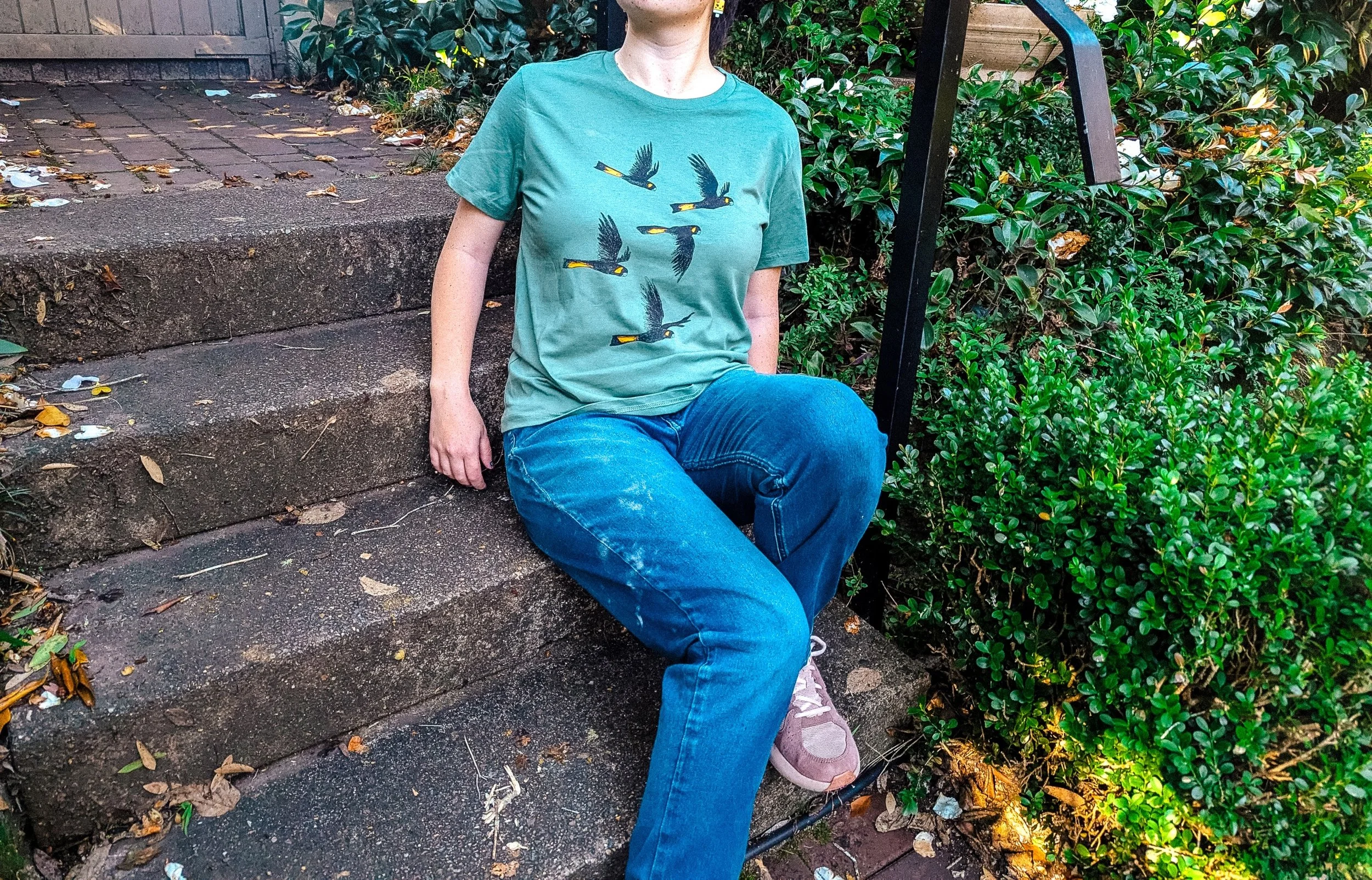
Artwork by Bridget Farmer, photo supplied by Lonely Kids Club
What inspired you to get into fashion design and sustainability? What inspired the creation of Lonely Kids Club?
I really liked T-shirts and wanted to make them. Clothes had helped me feel more like myself, and a weird shirt could start a conversation without me having to be particularly good at starting one.
I was studying construction at UNSW and was pretty miserable doing it. I left the degree and went to Europe for a while. By the time I came back, I was much more certain that I wanted to give the label a go. We launched in 2011.
I also wanted to feel comfortable with what I was selling and how people were treated along the way. That’s shaped how we work, from paying artists a commission to printing after someone orders instead of making a whole batch and hoping it sells.
What was your first product?
T-shirts. We launched the website in March 2011 with five designs, then waited about three weeks to sell a single one. It was a fairly humbling start.
I’d found an artist in Melbourne whose drawings I loved and spent a week living in his shed while we made the first designs. The business was very small and self-funded, with boxes of shirts in my bedroom.
What, in your opinion, are the biggest issues of sustainability in fashion today and how can we as consumers combat them?
I think a big part of it is making more clothing than anyone needs, then encouraging people to replace it as quickly as possible. There’s a lot of pressure to keep buying something new.
For us, printing to order means we can avoid making hundreds of finished shirts in a design before we know whether anyone wants it. There’s still a footprint. The blank garments have to be manufactured, and printing uses materials and energy. I don’t want to pretend otherwise.
As a customer, I’d start with buying something you actually want to keep wearing. Look after what you have, and ask brands specific questions about where things are made and who is doing the work. The responsibility can’t all sit with the person buying the shirt, though. Businesses have to make better decisions too.
What are some of your preferred or favorite techniques and materials?
Our main range uses direct-to-garment printing with water based inks, mostly on AS Colour blanks. I like a good cotton tee with artwork I want to wear. That’s still what I get excited about.
Working this way gives us room for very different drawings. Kayla Reay’s coloured-pencil birds can sit alongside a much simpler illustration or some wonky lettering. We work with the artists to get their drawings onto the garment without losing what made us like them in the first place.
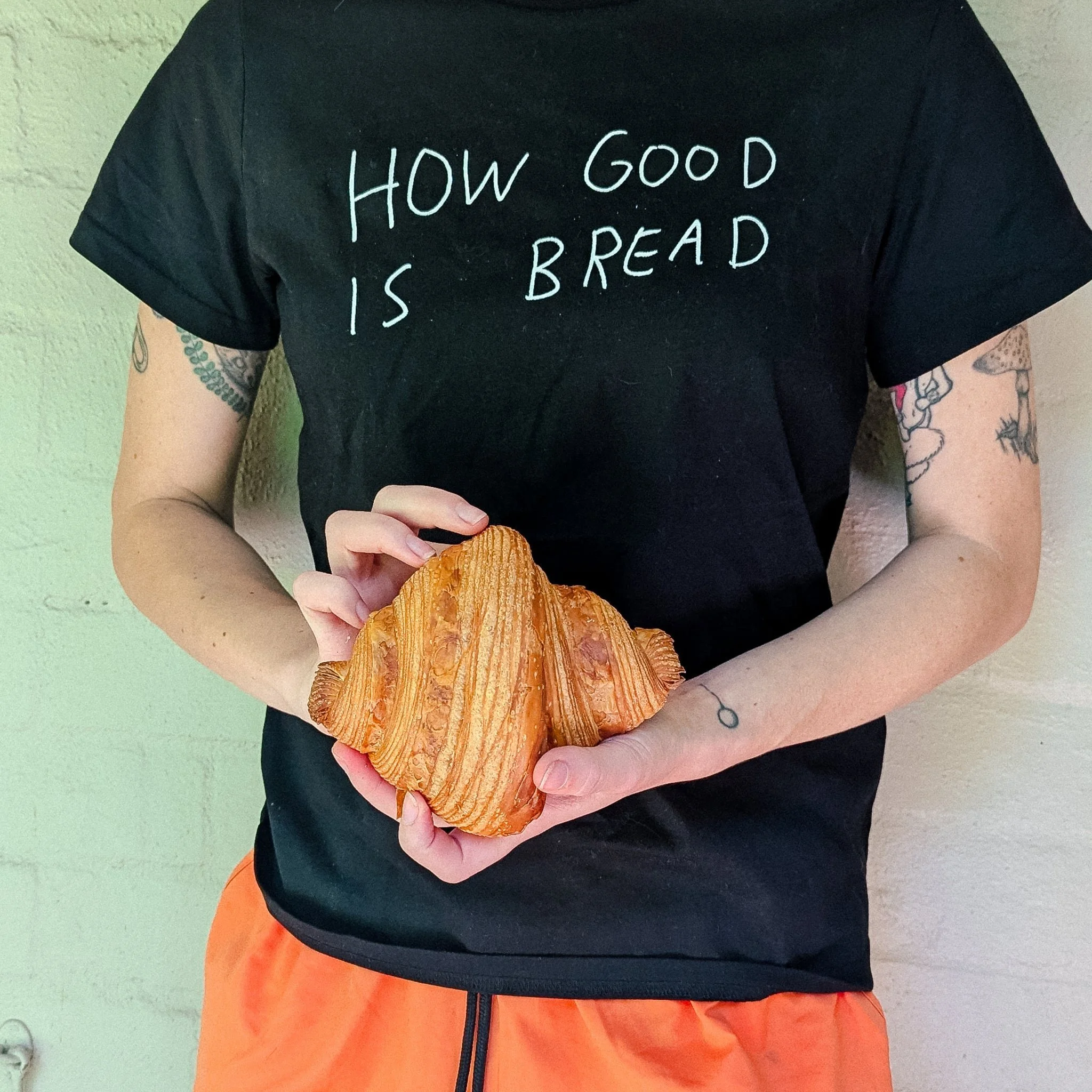
Artwork by Warwick Levy, photo supplied by Lonely Kids Club.
You have such a range of fun T-shirt designs! Do you have some that have really stood out for you over the years? What are some of your favorites?
The Bread Tee is a favourite. It’s such a simple design, but it’s still the most popular T-shirt I’ve personally designed. I wouldn’t have predicted that.
Cecil the sloth is a big one in the history of the label. A customer shared our Cecil jumper in a Facebook group and it took off. That was the first time I thought the business might actually work.
And Get In The Van, by Claire Harrison, has become a real favourite with customers. I like that the range has room for something beautifully drawn and something very silly. Sometimes they’re the same shirt.
Where do your design ideas come from?
Ordinary things, Australian references and whatever is making me laugh. A lot of the time the starting point is quite small.
The artists bring a lot of it too. They have ideas and ways of drawing that I wouldn’t come up with myself. I want people to be able to recognise the individual artist in the finished work.
I usually start with whether I like the idea and would want to wear it. You can spend ages on something you think is brilliant and have it go nowhere, then a very simple drawing connects with people. I’ve learnt to leave room for that.
How have your preferences for creating changed through the years of working since 2011? How has your own personal style shifted in that time?
Working with different artists has given the range room to go in directions I wouldn’t have thought of myself. We started with five tees, and now there’s everything from detailed bird illustrations to very simple jokes.
My own work has followed what’s happening in my life too, from my dog Louie to becoming a dad. I like that people can see a bit of me in the drawings.
I still wear graphic tees, just with a more relaxed fit these days.
We love that you are a small in house company! Can you please describe the process behind making your clothing? What does a typical assembly look like or a typical day on the job in general?
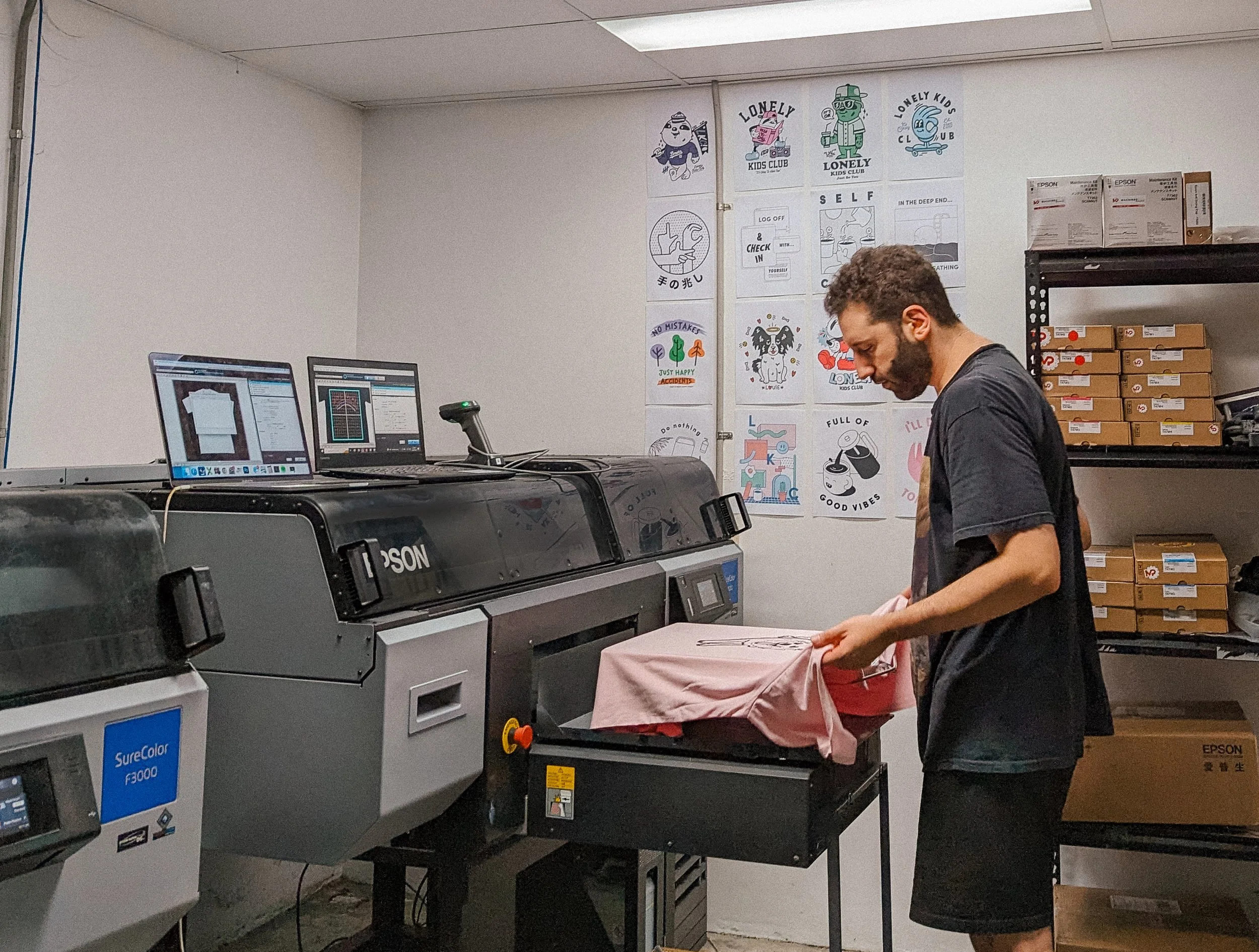
We keep blank garments and print them when someone places an order. The blanks are manufactured overseas, mostly by AS Colour. We do the printing and packing in Artarmon, so it’s important to be clear that local printing doesn’t mean the whole garment was made in Australia.
An order goes through printing, curing the ink and a quality check before we pack it. We include little extras like an art print, sticker and magnet. The artists keep the rights to their artwork and receive a commission from sales.
There are four of us including me. I move between emails, website work, working with artists and helping print or pack when needed. I’m also a part-time stay-at-home dad to three girls, including twins, so there are plenty of times I’m catching up after the kids have gone to sleep. It’s a juggle.
We love that you partner with some nonprofits with some of your designs. Can you tell us about your work with Game on Cancer? What does this cause and organization mean to you?
Game On Cancer is an initiative of Cure Cancer that brings the gaming and streaming community together to raise money for cancer research. We’ve worked with them on charity tees, including Science Meets Gaming, designed by Claire Harrison. We donate 100% of the profits from that tee to Game On Cancer.
I like that there’s a way for people to support the research through something they already enjoy. Someone gets a shirt they want to wear, Claire’s artwork reaches more people, and the profits go towards the research. It gives us a practical way to help through what we do.
We love that you are also passionate about mental health and pride. Can you tell us a little bit about how you have uplifted those causes?
Mental health has always been personal to me, and the queer community is very close to home too. Those things show up in the designs and in how we want people to feel around the label.
We work with queer and non-binary artists and have supported A Gender Agenda through sitewide fundraisers. Our longstanding artist Jaimie McCaw helped bring that connection to us.
We also have the Lonely Kids Club Club, our private Facebook group. People share selfies and wholesome memes, have a chat or reach out when they need support. I want there to be room for someone having a rough time as well as someone who just wants to show everyone their new shirt.
We know you are also a gender neutral company. What inspired that?
Honestly, I don’t see why a shirt with a pigeon on it needs a gender. We’ve had one range from the beginning. You choose the design you like and the fit that works for you.
Clothes helped me feel more like myself when I was younger. I wanted other people to have that freedom too, without feeling like they were shopping in the wrong section or needed permission to wear something.
What advice do you have for artists just starting out in their careers and are trying to find their voice?
Make things you actually like, and give yourself room to try things that might not work. You don’t need to arrive with a perfect, finished style before you put anything out into the world.
Working with different artists has reminded me how much I like being able to recognise someone’s way of seeing things in a drawing. You don’t have to make what everyone else is making.
And do the boring maths if you’re hoping to make a living from it. Your time has to be part of the price. You can be very busy and still not be making enough to keep going.
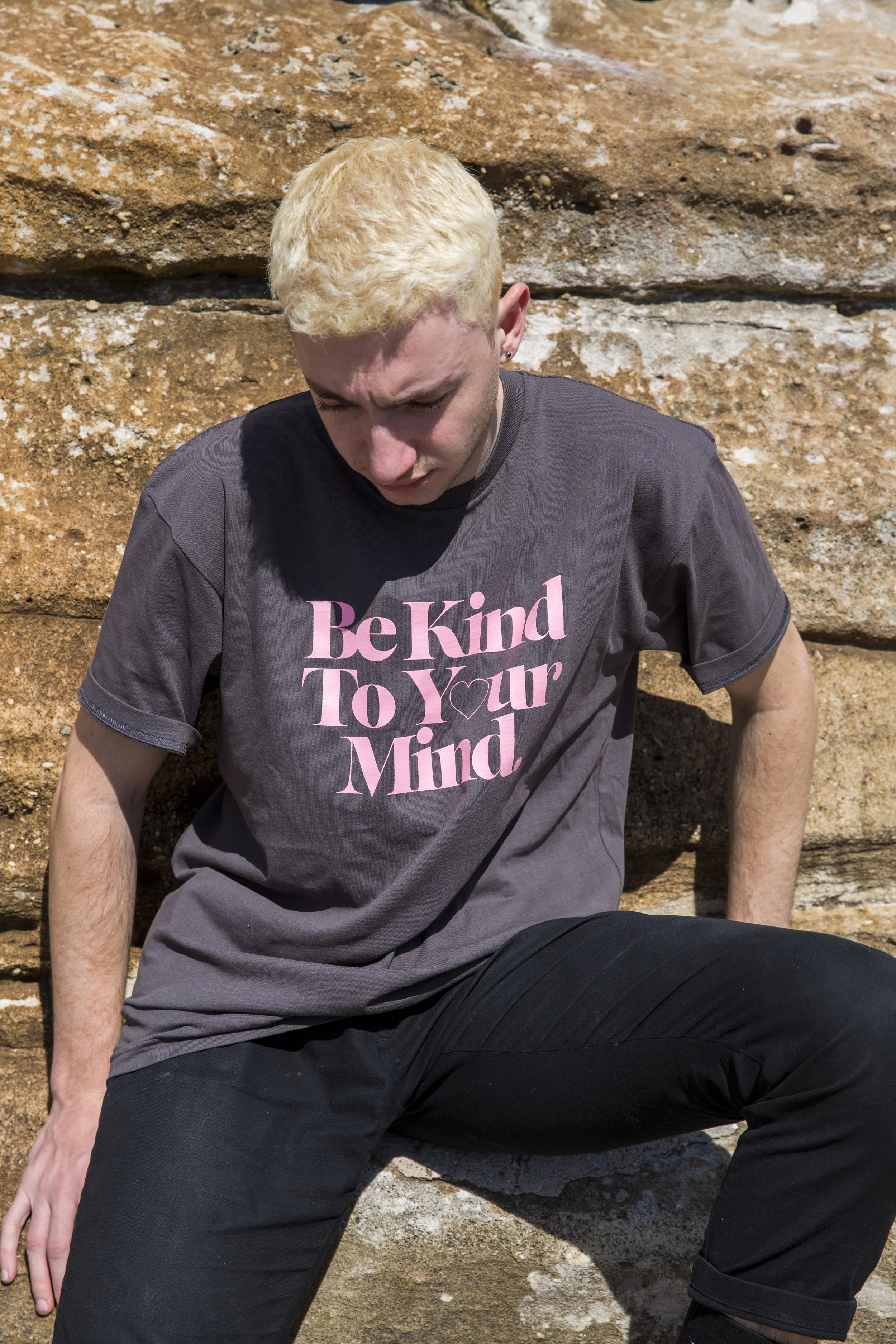
Artwork by Rachel Peck, photo supplied by Lonely Kids Club.
It has been a crazy last few years, and we expect at least three more. How do you stay positive in general about the unknown and motivated as an artist?
I’ve had ideas I was sure would work that absolutely didn’t. We made a range called Velcro World, where you could move patches between shirts and hats. We had the Velcro sewn onto everything by hand. I thought it was a great idea. It tanked.
Learning to let something go without deciding the whole business is a failure has been important. There’s always going to be something I can’t predict.
Being able to keep doing this still means a lot. I get to work with people whose drawings I love and make very silly shirts for a living. That’s a pretty good reason to turn up again.
What is your motto in life?
Make things you like and treat people properly.
To learn more about Lonely Kids Club, please check out the links belos
Website: lonelykidsclub.com
Graphic tees: lonelykidsclub.com/collections/t-shirts
Instagram: @lonelykidsclub69


As the leaves begin to turn and temperatures drop, fall ushers in not just a change in weather but a shift in our wardrobes. This season, however, fashion is undergoing a more profound transformation—one rooted in sustainability. From ethically sourced knits to recycled materials and timeless layering pieces, sustainable fall fashion is demonstrating that style and environmental consciousness can coexist harmoniously. In a world increasingly aware of the impact of fast fashion, this autumn’s trends are all about making mindful choices without sacrificing aesthetics. Here’s a look at how to stay on-trend and eco-conscious this fall.